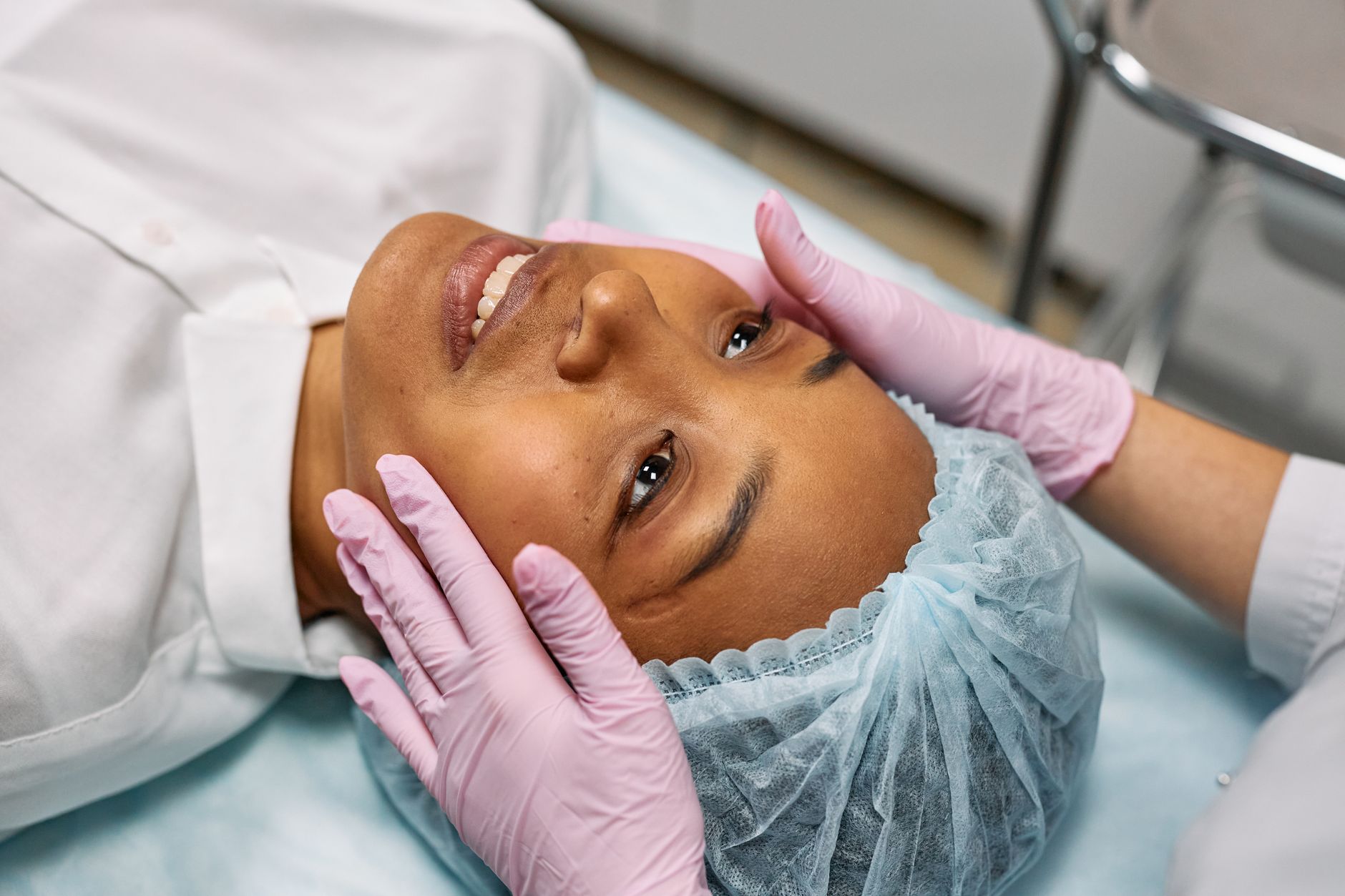
Where Are Facelift Scars Located, and Are They Visible in Daily Life?
During facelift surgery, the aim is to reposition lax facial and neck tissues while placing the incisions as discreetly as possible within natural creases and the hairline. Scars are usually planned along the crease in front of the ear, around the earlobe, within the groove behind the ear, and along a short line extending into the scalp.
Redness, swelling, or firmness may be present during the first few weeks; these changes generally decrease over time. Whether scars are noticeable from the outside depends not only on the incision locations but also on healing speed, skin pigmentation, genetic scar tendencies, sun exposure, and the surgical technique.
Anatomical Placement of the Incision Lines
- In front of the ear: The incision is generally placed within the ear’s natural crease or along the transition line in front of it.
- Around the earlobe: The surgeon carefully distributes tissue tension in this area to help prevent pulling on the earlobe.
- Behind the ear: Depending on laxity in the neck and lower face, the scar may extend into the groove behind the ear or toward the hairline.
- Scalp: When necessary, the incision can be planned within the hairline; its shape and hair density influence this decision.
Complete disappearance of scars cannot be guaranteed. However, an appropriate incision plan, meticulous suturing, follow-up appointments, and sun protection may help the scar become softer, flatter, and more harmonious with the surrounding tissue.
Safety and Surgical Standards for Facelift Incisions in Turkey
When planning a facelift in Turkey, patients should choose a clinic or hospital that holds a Ministry of Health-approved Health Tourism Authorization Certificate and operates in the relevant specialty. This certificate is intended to ensure that health tourism services are provided under certain administrative and operational conditions; it does not, by itself, demonstrate the surgeon’s individual expertise or guarantee the outcome.
A specialist in Plastic, Reconstructive and Aesthetic Surgery evaluates the incision line together with the facial anatomy, ear structure, hairline, and neck laxity. The surgeon’s experience with approaches such as SMAS plication, SMASectomy, deep-plane facelift, or limited lower facelift should be specifically discussed. The important point is that the surgeon explains why the selected technique is considered appropriate for your facial structure.
What to Check for Scar-Related Safety
- Whether the surgery is planned at a licensed hospital or authorized healthcare facility
- Whether an anesthesia assessment is performed if general anesthesia or sedation will be used
- Whether previous surgeries, wound-healing problems, and a tendency to develop keloids are reported to the surgeon
- Whether the effect of the incision line on the earlobe, sideburn area, and hairline is explained before surgery
- Whether the follow-up schedule, suture monitoring, and communication after returning home are provided in writing
Photographs should be used only as a general guide. Comparing two results directly can be misleading when the lighting, angle, and follow-up period are not the same.
What Is Included in a Facelift Package in Turkey and How Are Scars Monitored?
A health tourism package may include airport or in-city VIP transfers, hotel accommodation, interpreter support, and initial wound-care materials or products considered appropriate by the clinic; the exact scope should be checked clearly in the contract. The length of stay in Turkey for a facelift is generally planned at approximately 7 to 14 days, depending on the extent of surgery and the surgeon’s follow-up schedule.
Before surgery, a facial and neck examination, standard photography, a general health assessment, and any necessary blood tests may be performed. Details such as whether the incision will extend to the hairline, sideburns, or behind the ear; whether SMAS or a deep-plane approach is required; and whether drains will be used are clarified during this assessment.
Care That Affects Scar Appearance During the First Weeks
- Attend follow-up appointments and suture checks on the dates specified by the surgeon
- Do not rub the incision line, and use care products only as recommended by the clinic
- Protect the area from direct sunlight during healing and use sunscreen only after the incision has completely closed and according to the healthcare team’s guidance
- Discuss the timing of hair coloring, strenuous exercise, sauna use, and activities that place pressure on the face with the surgeon
Wound healing often changes over the course of weeks and months. If redness persists, pain progressively increases, discharge or wound separation occurs, or a marked color change is noticed, contact the surgical team rather than waiting while abroad or at home.
Facelift Costs in Turkey and Comparison by Country
The approximate average price of facelift surgery in Turkey generally ranges from €4,500–€8,500, depending on the scope of treatment. This range is provided only as a market indication; the total cost may vary according to whether the procedure is a mini facelift, full facelift, neck lift, or combined with eyelid surgery, as well as the hospital, anesthesia, and accommodation arrangements.
| Country | Approximate price range | Price currency | Notes on what may be included |
|---|---|---|---|
| Turkey | €4,500–€8,500 | Euro | Hospital, anesthesia, and logistics items may vary according to the scope of surgery. |
| United Kingdom | £10,000–£18,000 | GBP | The private hospital, surgeon, and city can significantly affect the price. |
| Germany | €9,000–€15,000 | Euro | The scope of surgery and hospital services varies between clinics. |
| United States | $15,000–$30,000 | USD | Surgeon, anesthesia, facility, and regional fees may increase the total cost. |
When comparing quotes, do not look only at the total figure. Request an itemized breakdown showing the surgeon’s fee, hospital use, anesthesia, postoperative check-ups, transfers, accommodation, interpreter services, and any potential additional procedures separately.
Factors That Affect Facelift Costs and Scar Planning
The cost of a facelift and the extent of the incision scars may be influenced by the same surgical decisions. The following points provide key references when comparing quotes.
- The surgeon’s qualifications and experience: Fees for surgeons who regularly perform facelifts and work with SMAS and deep-plane anatomy may vary according to the surgical scope, operating time, and intensity of follow-up. In particular, review follow-up photographs showing the earlobe contour, hairline, and transition to the neck.
- Technique and method: SMAS plication, SMASectomy, deep-plane facelift, mini facelift, and neck lift do not require the same incision length or the same degree of tissue intervention. The approach is selected according to the degree of laxity and the target area; a more extensive plan does not always mean a better result.
- Clinic location: Hospital, operating room, accommodation, and logistical costs may differ in cities such as Istanbul, Ankara, Izmir, and Antalya. A central location alone is not an indicator of surgical quality; licensing, the surgical environment, and follow-up arrangements should be assessed together.
Skin type, smoking, previous scars, bleeding tendencies, and postoperative care conditions are also important when considering scars. Providing this information completely can help the surgeon prepare a more realistic incision plan.
Next Steps for Managing Scars After a Facelift
During your initial consultation, focus not only on the facelift technique but also on understanding the proposed incision map and the reasons behind it. Asking the surgeon for examples supported by follow-up photographs showing front, side, and rear views at least 6 to 12 months after surgery can support a more informed assessment.
- Will the incision remain in front of or behind the ear, and how far will it extend along the hairline? This question can help you understand external visibility and possible changes in the sideburn area.
- What are the differences in scar length and healing between SMAS plication and deep-plane facelift? The depth of surgery should not be considered separately from the scar; the surgeon should explain which method is appropriate for your facial anatomy.
- How will follow-up continue if redness, firmness, or wound separation occurs after returning home? Online consultations, coordination with a local doctor, and emergency communication procedures should be established in writing beforehand.
No surgeon can guarantee an invisible scar or a specific healing time. The most reliable plan is one that clearly explains the incision locations, possible visibility, follow-up dates, price inclusions, and communication process in the event of complications.