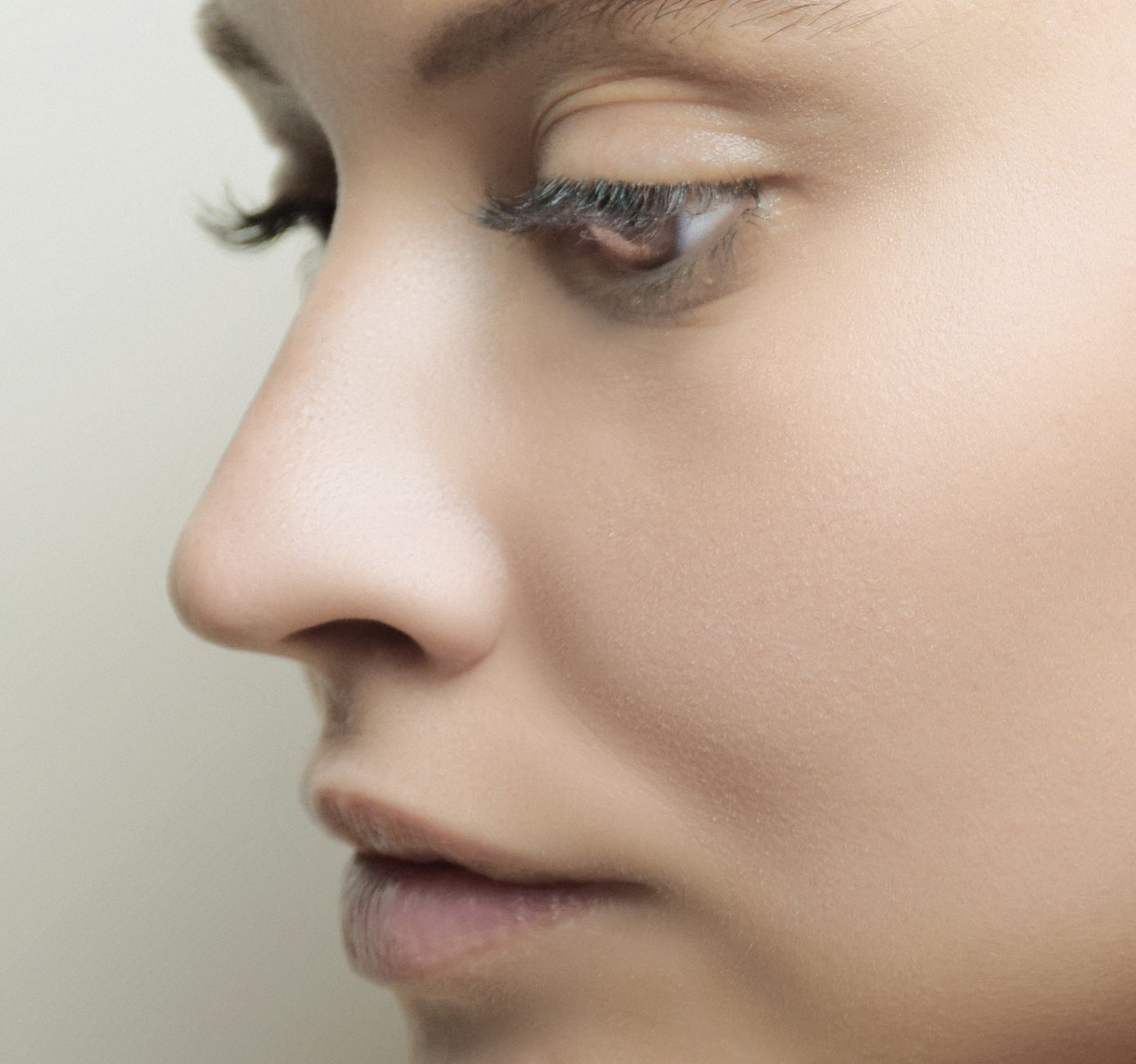
Why Does a Natural Appearance Differ for Every Face in Rhinoplasty?
Rhinoplasty aims to create a shape that harmonizes with your face and, whenever possible, provides a good balance of nasal function rather than making every nose conform to the same template. For this reason, a successful rhinoplasty result is assessed together with the height of the nasal bridge, the angle of the nasal tip, the position of the nostrils, and the overall proportions of the face.
It is not medically expected for everyone’s nose to look the same after surgery. Since bone and cartilage structure, skin thickness, existing deviation, previous operations, and the healing process vary from person to person, the surgical plan is also prepared individually.
Facial proportions and the desired aesthetic line
During a rhinoplasty consultation, the nose is not examined in isolation; the relationship between the forehead, lips, chin, and nose is also considered. For example, a very long nasal tip on a short face or an excessively small nose on a strong profile may disrupt the face’s natural balance. Therefore, even when computer simulation is used, the image should be viewed not as a guaranteed surgical result but as a tool to help discuss expectations and surgical goals.
Rhinoplasty Safety in Turkey: Authorization and Surgical Planning
When choosing a clinic for medical tourism in Turkey, check whether it holds a current Health Tourism Authorization Certificate issued by the Ministry of Health of the Republic of Türkiye. An up-to-date certificate is an official indication that the institution is authorized to provide international health tourism services; however, the surgeon’s specialty, operating room conditions, and follow-up arrangements should also be examined separately.
Safe planning for rhinoplasty may include an in-person examination, an internal nasal assessment, evaluation of breathing complaints, and, when necessary, investigations such as endoscopy or computed tomography. Turkish ear, nose and throat specialists and plastic, reconstructive, and aesthetic surgeons can assess different surgical scenarios, including open or closed rhinoplasty, septoplasty, turbinate problems, and revision surgery. The choice is made according to your nasal anatomy and functional needs; no single technique is considered suitable for everyone.
Key areas assessed before surgery
- The shape, asymmetry, and strength of the nasal bones and cartilage
- Septal deviation inside the nose and breathing capacity
- Skin thickness, fatty tissue, and the visibility of the nasal tip cartilages
- Structural changes caused by previous trauma or surgery
- Whether expectations fall within the facial proportions and medically achievable limits
A Personalized Process in Turkey’s Rhinoplasty Packages
A medical tourism package may include airport or city VIP transfers, hotel accommodation, interpreter support, and essential guidance during the initial care period; you should confirm the scope in the written quotation. For rhinoplasty, the length of stay in Turkey is often planned at approximately 7–10 days, but this may vary depending on follow-up needs and the healing process.
During the initial consultation, photographs may be taken from the front, side, and different angles; an internal nasal examination is performed, and breathing-related complaints are recorded. After surgery, the application of an external splint or tape, an early check-up, and discharge assessment are planned. The surgical team should determine the flight date by taking swelling and the follow-up schedule into account.
Changes in appearance during recovery
After rhinoplasty, especially during the first few weeks, the nose may appear wider than planned or the tip may look more elevated because of swelling. Swelling continues to subside over weeks and months; depending on skin thickness and the procedures performed, it may take longer for the final contour to settle.
For this reason, comparing early photographs with the final result can be misleading. During follow-up visits, breathing, wound healing, and changes in shape are assessed together; if an unexpected symptom is noticed, you should contact the surgical team rather than relying on remote interpretation.
Rhinoplasty Costs in Turkey and Comparison by Country
The average package cost of rhinoplasty in Turkey may range from approximately €3,000–5,500, depending on the surgical scope and the services offered by the clinic. The figures below are approximate values provided for market research; they should not be used as definitive prices because examinations, the scope of the quotation, the need for revision, and exchange-rate fluctuations can affect the cost.
| Country | Approximate rhinoplasty cost | Currency | Scope generally considered |
|---|---|---|---|
| Turkey | 3,000–5,500 | € | Surgery, hospital, follow-up visits, and accommodation/transfers depending on the package |
| United Kingdom | 7,000–12,000 | £ | Surgery and hospital services; logistics are generally additional |
| Germany | 6,000–10,000 | € | Surgery and clinical services; travel expenses are generally excluded |
| United States | 10,000–18,000 | $ | Surgeon, anesthesia, and facility fees; follow-up and travel may be additional |
When comparing quotations, do not focus only on the total amount. Check in writing whether the surgeon’s consultation, anesthesia, operating room, essential non-medication care supplies, early follow-up visits, interpretation, and possible additional nights of accommodation are included.
Factors That Affect Rhinoplasty Cost and the Treatment Plan
- The surgeon’s expertise and experience: Primary rhinoplasty and revision rhinoplasty on a previously operated nose do not involve the same planning complexity. Situations such as rebuilding septal support or requiring a cartilage graft from the ear or rib can change the surgical scope.
- The technique and materials used: The open or closed rhinoplasty approach, use of ultrasonic piezo surgery, the need for septoplasty, and cartilage grafts used to support the nasal tip may affect the price. A piezo device is not necessary for every nose; suitability is determined through surgical examination.
- The clinic’s location: Hospital, operating room, accommodation, and transfer costs may vary between Istanbul, Ankara, Izmir, and other cities. A central location, ease of international access, and the hospital’s technical infrastructure may be reflected in the total quotation.
These factors also affect the process plan. For example, the preparation and follow-up schedule for a limited procedure focused only on the nasal tip may differ from those for a comprehensive operation addressing the nasal bones, septum, and nasal valve problems together.
Questions to Ask for a Natural Rhinoplasty Result
As you continue researching rhinoplasty, the following questions may help you express your expectations more clearly before your consultation:
- How will the nasal bridge and nasal tip be planned according to my facial proportions? You can ask what purpose photo analysis or 3D simulation serves and whether the simulation does not constitute a guarantee.
- If I have nasal deviation or breathing problems, will I need septoplasty together with rhinoplasty? A functional assessment clarifies not only the desired external appearance but also the breathing goals after surgery.
- If I have had rhinoplasty before, what type of cartilage support might be needed for revision surgery? You can request detailed information about the amount of existing cartilage, the possibility of a graft, and why revision surgery is planned differently from the first operation.
Before making a decision, assess the surgeon’s professional credentials, the official records of the institution holding a Ministry of Health Health Tourism Authorization Certificate, the written scope of the quotation, and the postoperative communication plan together. Final suitability cannot be determined through online content; it requires an examination and an individual medical assessment.