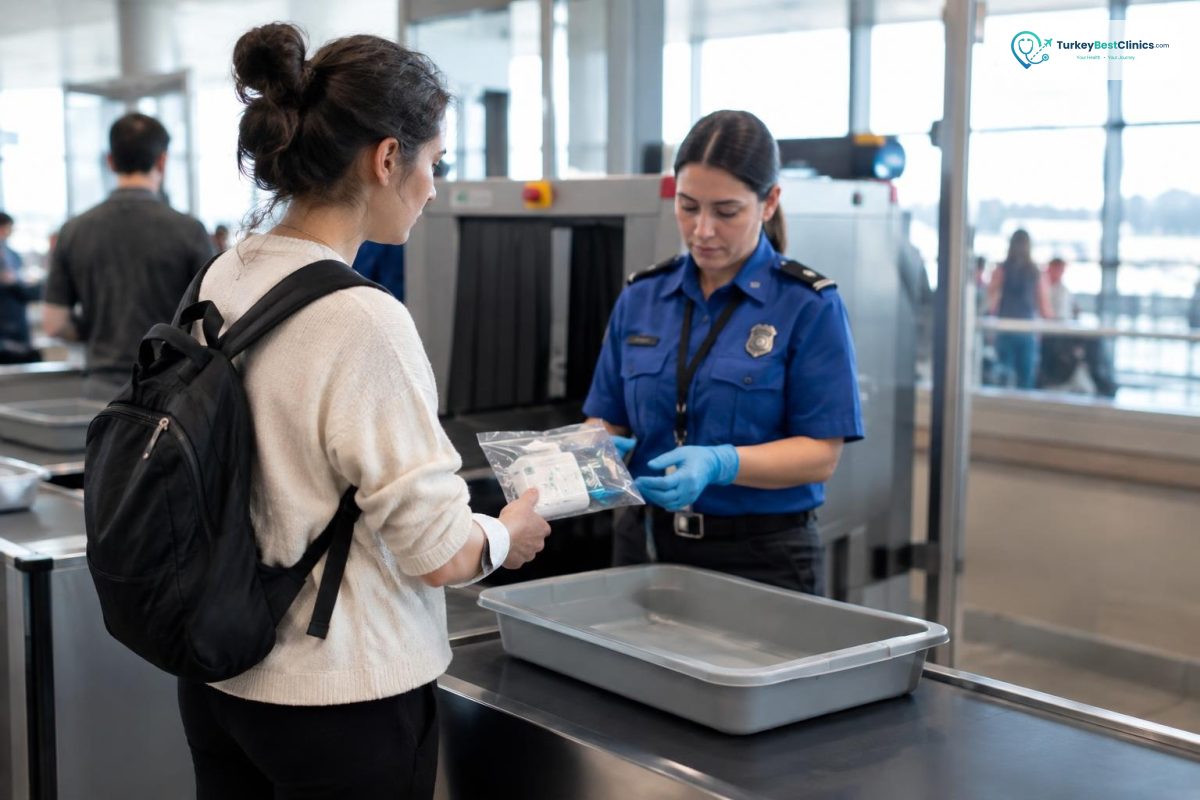
Documentation confirming that you have a drain or medical dressing is not automatically required at every airport. However, if a device, tube, fluid container or dressing is noticed during security screening, you may be asked to explain it. As different rules may apply when departing from Turkey, transiting and entering your country, the safest approach is to obtain up-to-date information before travelling through the official channels of the relevant airport, airline and destination country.
Having documentation available during screening can help you explain why you are carrying a drain or dressing without unnecessarily sharing detailed medical information. This documentation does not guarantee clearance through security; the final decision depends on the procedures of the relevant security authority and the screening conditions at that time.
How drains and dressings are assessed during security screening
The purpose of airport security screening is not to assess your medical condition, but to protect cabin and passenger safety. A drain, tube, surgical dressing, ostomy equipment or fluid collection container attached to your body may be visible during screening, and the officer may ask you to explain the nature of the equipment.
Not every drain is assessed in the same way. An externally visible tube, a closed drainage system, a thick dressing applied over a wound or sterile supplies that you are carrying may lead to different questions. Security procedures may also vary depending on the departure airport, the country where you transit, whether the flight is domestic or international, and how the equipment is carried in the cabin.
Even if you are not asked to provide documentation, a short and clear doctor’s letter may make the process easier in practice. The letter does not need to contain your complete medical history; it may state that the drain or dressing is medically necessary, is attached to your body and that you may need certain supplies during travel.
Medical documents you may carry
- A recently issued doctor’s letter explaining the medical necessity of the drain or dressing.
- A brief summary of the procedure or current treatment, preferably in English and, where necessary, in a language that can be used in the transit or destination country.
- A treatment summary containing the contact details of the healthcare provider overseeing your care; unverified or incomplete contact information should not be included.
- If applicable, a prescription, list of medical supplies or discharge document.
- If you require assistance during the flight, records of any special assistance or medical fitness correspondence with the airline.
It may be useful to keep a digital copy of the document securely alongside the original. Carrying a printed copy is a safer option in case your phone runs out of battery, you have no internet access or you cannot access the document offline.
Practical checklist before screening
Keeping your equipment and documents organised before reaching the security checkpoint can make it easier to provide an explanation. The steps below are not an official procedural sequence; they are practical checks to consider when preparing for travel.
- Inform the airline in advance: Tell the airline that you have a drain or dressing and whether you may need special assistance during the flight. Ask the airline to confirm in writing its rules on medical fitness, assistance in the cabin and the carriage of medical equipment.
- Check departure and transit points separately: The security procedures at your departure airport in Turkey, the transit airport and the destination country may differ. Take this into account particularly if you will undergo security screening again during transit.
- Keep your doctor’s letter accessible: Carry the document in your hand luggage, in an easily accessible folder, rather than in checked baggage. Before presenting it to a security officer, check which language it is written in and whether the essential medical explanation is clear.
- Do not change the drain or dressing yourself: Do not remove the tube, disconnect the container or open the dressing to pass through security. Such an action should only be considered on the instructions of your treating healthcare team and under appropriate clinical conditions.
- Separate spare supplies: Carry sterile gauze, dressing materials, fixation products and similar equipment in a separate, organised bag. Do not assume that every item will be permitted in cabin baggage; ask the airline and security authority in advance about the rules, particularly for sharp instruments.
- Check liquid rules separately: Fluids associated with drainage, cleaning products or other liquid medical supplies may be assessed differently under cabin-baggage liquid restrictions. Medical necessity does not automatically mean that any quantity will be accepted; confirm in writing in advance which product and quantity you may carry.
- Allow extra time: It may take time if the security officer asks for an explanation or conducts additional screening. Therefore, try to prepare earlier than the time recommended by the airline instead of arriving at the checkpoint at the last minute.
Privacy and communication when explaining the situation to security staff
Before screening begins, you can calmly explain that you have a drain or dressing attached to your body. If you have documentation, say that it is available; however, you do not need to describe your entire medical history in detail in the security area.
If you are asked to open the dressing or allow the equipment to be physically inspected, explain that this could damage the drainage system or wound area. You may request a more private discussion or screening area; how such a request is handled depends on the security procedures of the relevant airport.
Do not expect a definite outcome in advance regarding the screening method. The equipment used and alternative screening options may vary by airport. If you believe that any screening could cause pain, bleeding, pulling on the tube or disruption of the dressing, clearly inform the officer before the procedure begins.
If you are carrying sharp or specialised equipment
Some supplies needed for a drain and dressing may receive additional security scrutiny. Do not assume that scissors, needles, cutting devices, metal instruments or similar items will be permitted in the cabin. If you genuinely need such equipment during the flight, obtain written information in advance from the airline and relevant security authority about the product’s name, medical purpose and method of carriage.
Before placing a spare drainage container or dressing supplies in checked baggage, consider whether you may need access to them during the flight. Placing a medically necessary item only in checked baggage can cause problems if the baggage is delayed or lost. On the other hand, there is no guarantee that every item in cabin baggage will pass security; it may therefore be helpful to prepare the bag for both possible outcomes and retain the official responses you receive.
Risks that should not be overlooked
A doctor’s letter does not constitute a security exemption. It helps explain the medical nature of the equipment, but it does not remove the security officer’s authority to conduct screening. Similarly, approval from one airline may not replace the security rules of the transit or destination country.
The decision to fly with a drain is not solely a security matter. Travel suitability should also be assessed in relation to a recent procedure, signs of active infection, bleeding, pain, changes in drainage volume or flights requiring prolonged sitting. Consult the surgical or medical team caring for you before your flight date and request an opinion based on your individual health status regarding whether you are fit to travel.
Do not leave drainage fluid or medical waste at the airport at random. Ask the healthcare provider managing your treatment how used supplies should be packaged and disposed of appropriately. If leakage, an unpleasant odour or a full container is expected, obtain specific instructions from your healthcare team before the flight.
Final checks before travelling
- Have you received an individual assessment from your medical team regarding flying with a drain or dressing?
- Does your doctor’s letter clearly explain the medical necessity of the equipment?
- Have you checked the security rules at the departure, transit and destination points separately?
- Have you asked the airline about cabin baggage, special assistance and the conditions for carrying medical supplies?
- Will you be able to access the dressing supplies you need throughout the flight?
- Have you obtained advance answers through official channels about sharp instruments and liquids?
- Have you prepared your documents and contact information in both printed and offline digital formats?
As rules can change at short notice, do not make decisions based on old online forum comments or another passenger’s experience. Confirm current information through the official channels of the relevant airport, airline, transit-country authorities and destination country. The information on this page is for general informational purposes only and does not replace legal advice or an individual medical fitness assessment.
Related questions
- What information should I give the airline before flying with a drain or dressing?
- How can I carry medical supplies in my cabin baggage when departing Turkey?
- How can I assess whether I am medically fit to fly before leaving Turkey after surgery?