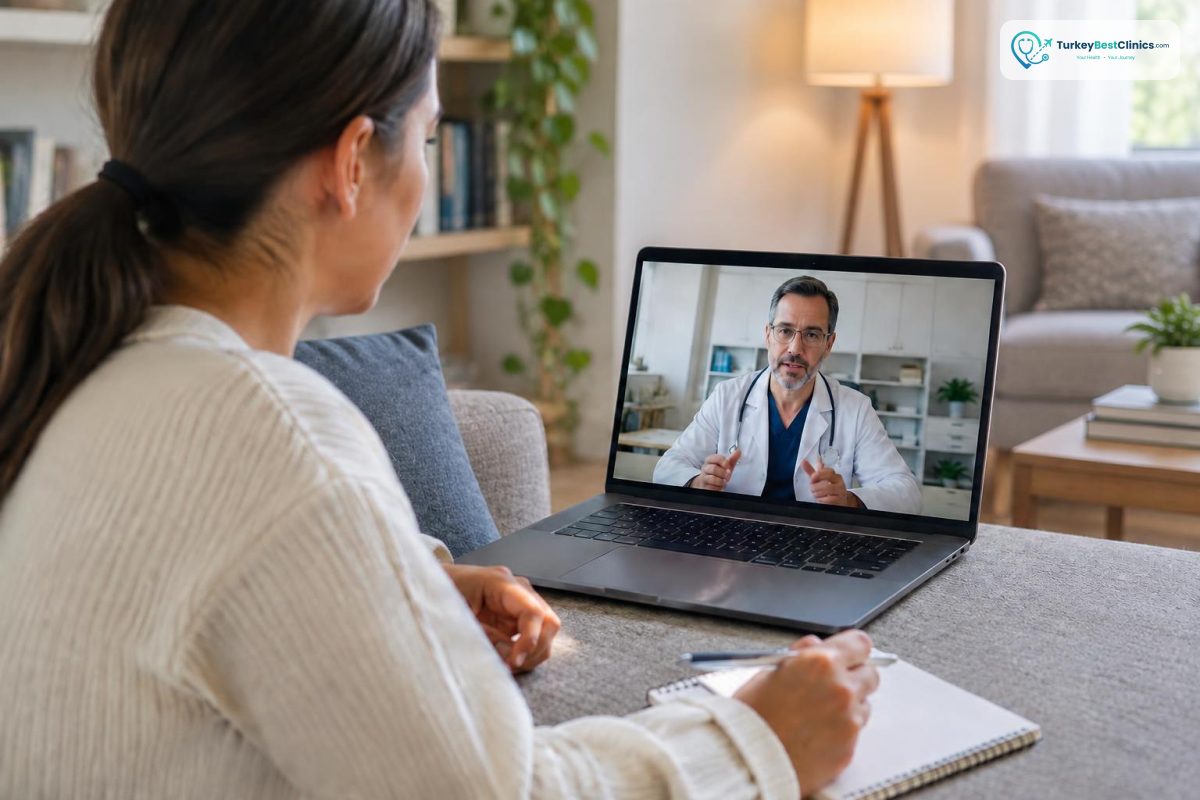
It depends on the circumstances. There may not be one universally applicable duration or standard scope for post-treatment remote follow-up support in Türkiye. How long follow-up continues and which services it includes are determined by the nature of the treatment, clinical assessment, discharge plan, the healthcare provider’s own procedures, and the contract you sign.
For a safe plan, do not rely solely on verbal explanations. Request the consultation dates, communication channel, situations in which you can contact the healthcare team, response time, follow-up or testing requirements, and additional fees in writing before treatment. This will help you understand more clearly what support to expect after returning to your country and when you should seek local healthcare services.
Factors determining the duration of a remote follow-up plan
The duration of remote follow-up should be assessed based on whether it is limited to the days you spend in Türkiye. Some plans include a brief check-up after discharge, while other treatments may involve multiple consultations at different stages of recovery. Therefore, being told only the total duration may not be sufficient; you should also find out on which dates or at which clinical stages follow-up will take place.
For example, the first check-up may be performed before you leave Türkiye. Later assessments may take place after you return home via video consultation, telephone, or a secure digital system. However, remember that these examples do not constitute a definitive plan for your situation and that the healthcare team’s treatment-specific assessment is what matters.
Topics that may affect the follow-up period
- Nature of the treatment: Surgery, dental treatment, hair transplantation, eye procedures, or follow-up for a chronic condition may involve different monitoring needs.
- Stage of recovery: Assessment of a wound, pain, swelling, or restricted movement during the first few days may not have the same scope as a later assessment of the outcome.
- Need for additional examinations: You may need to share photographs, laboratory results, imaging reports, or other medical documents.
- Assessment of complications: If an unexpected symptom occurs, it should be separately assessed whether a remote consultation is sufficient.
- Healthcare system in your country: You should discuss in advance how the checks recommended by the team in Türkiye will be performed in your country and to whom the results should be sent.
It is more informative to request the follow-up period together with the relevant check-up stages rather than simply as a start and end date on a calendar. For example, the discharge-day assessment, first-week check-up, subsequent outcome assessment, and the option of additional communication if needed can be listed separately. The document should also clearly state that the plan may change based on medical requirements or new findings.
Information that should be included in a written follow-up plan
Before treatment, request the remote follow-up plan in writing from the clinic or healthcare coordinator. The plan may be provided by email, as an attachment to the contract, in a patient information document, or as a record in a secure digital portal. Ask for the document to be explained in a language you understand and clarify any points you do not understand during the consultation.
Checklist: What details should you ask about?
- Duration and timing: When does follow-up begin, and until what date or clinical stage does it continue?
- Number of consultations: How many consultations are planned, and under what conditions can additional consultations be requested?
- Communication method: Which channels can be used—video consultation, telephone, email, or secure messaging?
- Appointment arrangements: Who schedules the follow-up consultation, how far in advance must it be requested, and how are schedule changes communicated?
- Response time: Through which communication channel and approximately when should you expect a response to routine questions and notifications considered urgent?
- Follow-up team: Will the consultation be conducted by the doctor who performed the treatment, another doctor, or the coordination team?
- Information to be reviewed: Will photographs, measurements, test results, imaging, or a symptom diary be required?
- Language support: In which language will the consultation be conducted, and what is the scope of interpretation support if needed?
- Fees: Are planned check-ups included in the price, and may additional consultations or document reviews incur a fee?
- Records and reports: Will you receive written recommendations, follow-up notes, or a summary that can be provided to a local doctor after the consultation?
Collecting the answers to these questions in a single document can reduce the risk of receiving conflicting information from different staff members. If the contract contains a general reference to follow-up but does not specify the duration or scope, it is appropriate to request a detailed plan separately in writing.
Distinguishing medical scope from coordination in remote follow-up
Remote follow-up does not always replace an in-person examination or emergency assessment. An evaluation via video or photographs may provide preliminary information about certain findings; however, remote communication may be insufficient when a physical examination, measurement, laboratory test, or imaging is required.
For this reason, the written plan should explain which issues can be assessed remotely and when you should contact the healthcare provider in Türkiye or local healthcare services in your country. If there is a possibility of an emergency symptom, do not assume that it is appropriate to wait for the team in Türkiye to respond; you may need to use the emergency healthcare system where you are located.
Sharing information with local healthcare services
If you need to see a doctor in your country, request the discharge summary, procedure report, documentation about the materials used, prescription information, or available test results related to the treatment in Türkiye. Ask the healthcare provider to explain which documents can be shared and through which channel personal health data will be sent.
When sharing data, also ask about the security features of email or messaging applications. The processing and transfer of personal health data to different countries may depend on applicable data protection rules, the healthcare provider’s policy, and the consents you have given. Rather than relying on a definitive legal assessment, it is safer to read the provider’s privacy and data-processing notice and, if necessary, seek independent legal advice.
Points to consider to prevent misunderstandings
Do not accept the phrase “free follow-up” without details. This phrase may cover planned follow-up consultations but may not include additional tests, new assessments, medication adjustments, complication evaluations, repeat procedures, or treatment costs in your country. Ask for included and excluded items to be separated in writing.
Do not confuse a guarantee with medical follow-up. Follow-up support does not mean that a treatment outcome is guaranteed. Outcomes may vary depending on the type of treatment, individual healing, compliance with aftercare instructions, and your health status. If there are conditions for revision or additional intervention, check how their scope, along with travel and accommodation expenses, is addressed in the contract.
Do not interpret the response time as a guarantee of emergency assistance. Even if the clinic has set a target response time, this does not replace emergency healthcare services. In particular, if you experience severe or rapidly worsening pain, difficulty breathing, fainting, heavy bleeding, high fever, or a rapidly deteriorating condition, you may need to seek emergency healthcare services where you are located.
Final check before signing
- Are the follow-up start date, check-up stages, and planned number of consultations provided in writing?
- Are the communication channel, operating hours, and expected response time clear?
- Are fees for additional consultations, tests, interpretation, or document reviews specified?
- Is it explained who is responsible for checks outside Türkiye and emergency visits?
- Are the medical conditions that could change the follow-up plan and how such changes will be communicated specified?
- Is information provided about consultation records, medical reports, and the sharing of personal data?
How can you put your information request in writing?
In a short message to the clinic, state that you will return to your country after treatment and that you want to understand the duration and scope of remote follow-up in advance. Then request a bullet-point explanation of the check-up dates, consultation method, responsible team, response time, additional fees, required documents, and the general approach to be followed in an emergency.
Compare the responses with the contract, treatment plan, and discharge documents. If the coordinator’s verbal explanation differs from the written documents, clarify in writing which information will apply before treatment begins; if uncertainty remains, consider seeking advice from an independent healthcare or legal professional.
Other questions you may wish to ask about this topic
- If a complication develops after treatment in Türkiye, which healthcare provider should I contact and within what timeframe?
- How can I request the medical records and discharge documents related to my procedure in Türkiye?
- How can the conditions and potential costs of revision or additional procedures be checked in the treatment contract?