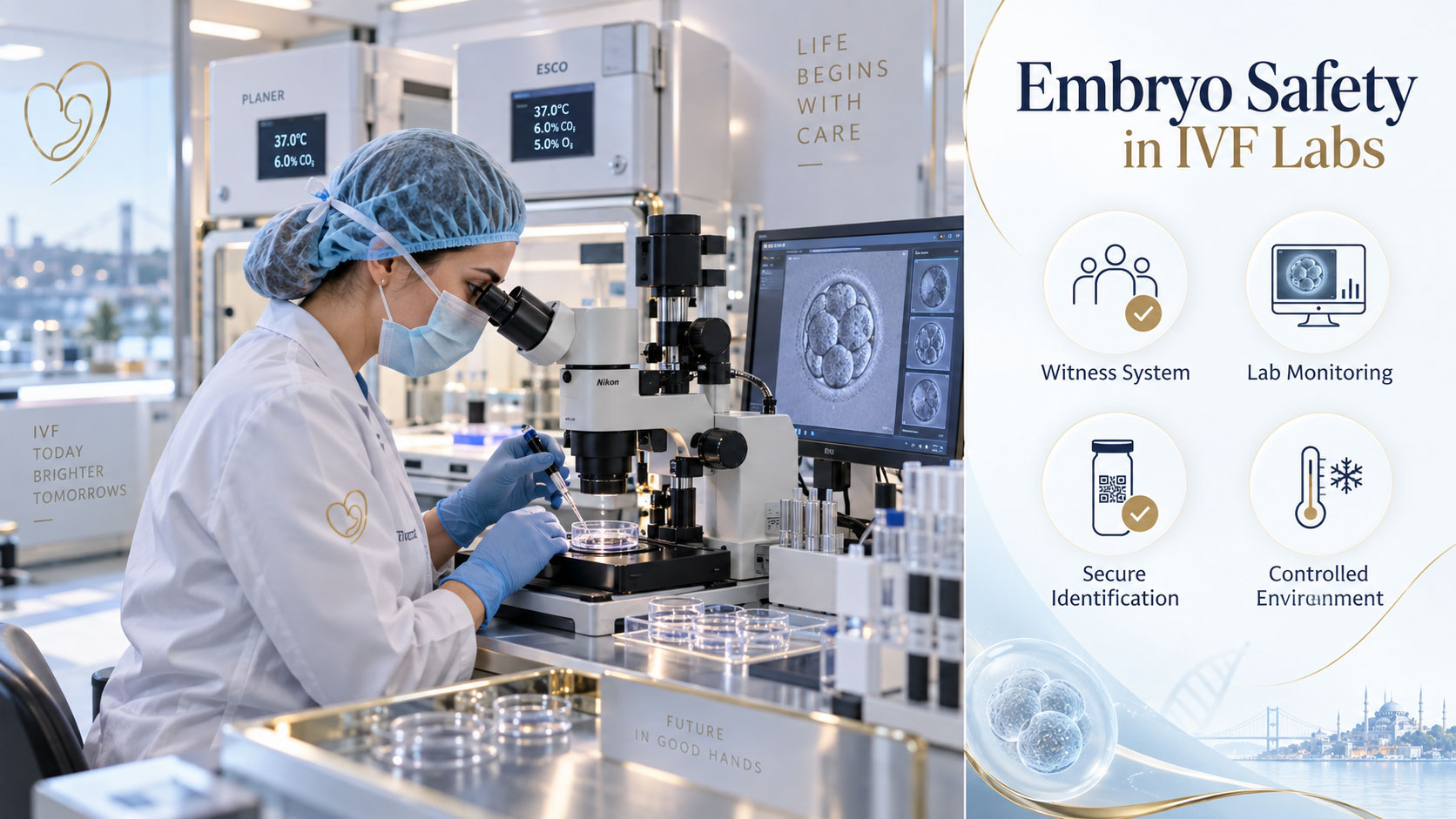
The Essential Safety Chain for Preventing Embryo Mix-Ups
In an IVF laboratory, eggs, sperm, embryos and biopsy samples may pass through different stages on the same day. For this reason, safety should not depend on the attention of a single staff member; it relies on identity verification, documentation, physical labeling and independent checks working together.
From the initial consultation through embryo transfer or the thawing of a frozen sample, the correct patient, sample and procedure must be matched at every stage. No system can guarantee an absolute zero risk of error; a reliable approach is to establish multiple barriers that prevent mistakes and ensure early reporting when an issue is detected.
Key information used for identity verification
- Full name as shown on the passport or official identification
- Date of birth or a unique file number created by the clinic
- Written consent forms and treatment-specific procedure records
- Labels on sample containers, culture dishes, tubes, pipettes and cryotank positions
In cases such as similar names, procedures should not be carried out using only the first and last name. Using two separate identifiers and comparing this information with electronic or written records is fundamental to the safety chain.
Authorization and Quality Standards for IVF Laboratories in Turkey
When choosing a clinic as part of medical tourism in Turkey, you can check whether it holds a Health Tourism Authorization Certificate issued by the Ministry of Health of the Republic of Türkiye. This certificate indicates that institutional and administrative requirements for providing healthcare services within the international health tourism framework have been met; by itself, however, it does not mean that a specific embryo safety technology is being used.
You should also ask which quality management systems the laboratory uses, how the embryology team’s responsibilities are defined, and how procedure records are audited. Turkish obstetrics and gynecology specialists and clinical embryologists take part in procedures such as intracytoplasmic sperm injection (ICSI), blastocyst culture, vitrification and embryo thawing. However, when assessing experience, it is more informative to request the annual procedure volume, the laboratory director’s details and quality indicators rather than relying only on the phrase “expert team.”
Documents to request regarding laboratory safety
- Health Tourism Authorization Certificate issued by the Ministry of Health
- The laboratory’s license and details of the responsible specialist
- The method used to maintain internal audit, equipment maintenance and calibration records
- Procedures for sample identification, dual witnessing and incident reporting
- Documents explaining the embryology team’s training, responsibilities and authority limits
Ask clearly which organization or standard the term “accredited” refers to. Holding a national authorization certificate and having been separately assessed against a specific quality standard are not the same thing.
What Is Included in IVF and Embryo Safety Packages in Turkey?
As part of an international treatment plan, airport-hotel-clinic VIP transfers, accommodation, interpreter support and guidance during the initial care period may be arranged according to the package. Since the contents can vary from clinic to clinic, the transfer days, number of accommodation nights and procedures covered by interpreter support should be clarified in writing.
From an embryo safety perspective, a key detail that should be included in the package is an advance explanation of the sample identification and tracking protocol. During the initial assessment, the medical history, previous IVF outcomes, sperm and egg evaluations, uterine imaging and necessary blood tests may be planned. The length of stay in Turkey for embryo transfer varies depending on whether the cycle follows ovulation or hormonal preparation. A short stay may be sufficient for the transfer stage alone, while cycles involving egg retrieval and fresh transfer may require more extensive planning.
Information to share with the laboratory before traveling
- Embryo development and freezing records from previous IVF cycles
- Genetic test reports and embryo biopsy documents, if available
- Sample numbers or cryobank records used by the previous clinic
- The plan for whether the transfer will involve a fresh or thawed embryo
If genetic testing is planned, embryo biopsy, sample labeling, transportation to an external laboratory and the entry of results into the patient file should be explained separately. In these steps, the safety chain is not limited to the laboratory where the embryo is located; it also includes transportation and reporting.
IVF Costs in Turkey and International Comparison
Identity verification and documentation procedures used to prevent embryo mix-ups are generally included in the quality processes of an IVF treatment package and are not priced separately as an “embryo safety fee.” The figures below are approximate international ranges for a standard IVF/ICSI cycle; medication, genetic testing, donor procedures, embryo freezing and additional storage periods are often assessed separately.
| Country | Approximate standard IVF/ICSI cost | Pricing note regarding embryo safety |
|---|---|---|
| Turkey | €3,000–€6,000 | Identification, documentation and basic laboratory checks may be included in most packages |
| United Kingdom | £5,000–£9,000 | Medication, storage and additional embryo procedures may be charged separately |
| Germany | €4,000–€7,000 | Legal scope and reimbursement conditions may affect the treatment plan |
| United States | $15,000–$25,000 | Laboratory, anesthesia, medication and genetic services may be itemized separately |
When requesting a quote, check whether the total price covers only egg retrieval and transfer or also includes ICSI, embryo culture, vitrification, first-year cryostorage and frozen embryo transfer. When comparing prices, clearly documented safety protocols may be a more meaningful criterion than a low initial price.
Factors That Affect Embryo Safety Costs and Procedures
Laboratory infrastructure and workflows vary between clinics. The factors with the most significant impact on cost and treatment processes can be assessed under the following headings.
- Scope of physician and embryology expertise: The division of responsibilities between the reproductive medicine specialist and the clinical embryology director during ICSI, blastocyst culture, vitrification, embryo thawing and biopsy is important. Annual procedure volume, the frequency of quality audits and access to the responsible specialist may affect the scope of the quotation.
- Electronic witnessing and laboratory procedures: Some centers use barcoded tubes and containers, while some laboratories also have RFID or electronic witnessing systems. These systems help verify sample identity electronically during procedures. Manual dual witnessing should be explained as a written backup procedure for situations in which an electronic system is unavailable or experiences a technical interruption.
- Cryopreservation materials and storage infrastructure: Embryos are generally frozen using vitrification in special carriers and stored in liquid nitrogen tanks. Cryotank alarms, temperature monitoring, tank redundancy, sample position records and identity verification before thawing may affect both the price and the operational plan.
- Clinic location: Laboratory operating expenses, transfer distances, accommodation and international coordination costs may differ between Istanbul, Ankara, Izmir and other cities. When choosing a city, consider not only travel convenience but also whether the laboratory is located within the same facility and whether samples are transported to another center.
You can ask the clinic directly: “At which points is identity verification performed during egg retrieval, ICSI, culture, freezing, storage and transfer, and what written backup procedure is followed if the electronic system is unavailable?” An answer supported by a workflow chart or written protocol summary is more informative than verbal reassurance alone.
Next Steps and Frequently Asked Questions About Embryo Safety
Which documents should I request during the initial consultation?
Request written information about the Health Tourism Authorization Certificate, the laboratory director, the sample identification procedure, the use of electronic witnessing and the cryopreservation record-keeping method. Also ask for the quotation to list embryo freezing, storage, thawing and transfer as separate items.
Does an electronic barcode system completely prevent embryo mix-ups?
No. Barcodes, RFID and electronic witnessing systems are important control layers that reduce the risk of human matching errors; they work together with accurate documentation, equipment maintenance, authorized staff checks and manual backup procedures. You should specifically ask which procedures activate the system and what happens in the event of an alarm.
What checkpoints are used during a frozen embryo transfer?
Before thawing, the patient file and cryotank position are compared; the identification details on the carrier, the transfer plan and the consent form are checked again. After the transfer, the clinic should record which embryo was used, how many embryos remain in storage and the tank location of the remaining samples.
How can I prepare before traveling from abroad?
Collect previous treatment reports, laboratory results, genetic testing documents and frozen embryo records in a single file. Before the consultation, asking the clinic in writing about identity verification, sample transportation, cryostorage duration and the incident notification procedure can make the treatment plan in Turkey more transparent.