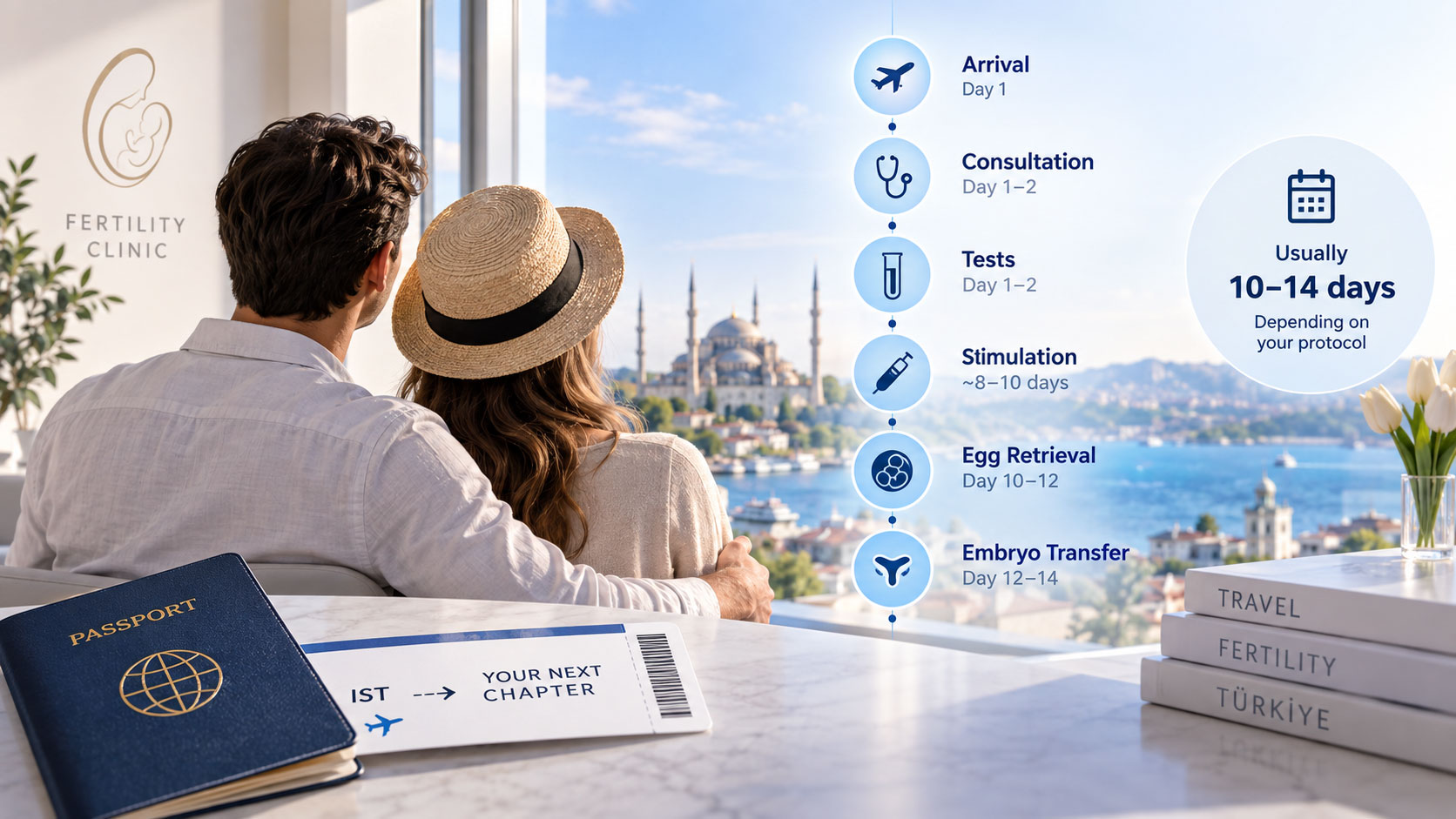
How Many Days Should You Set Aside for IVF Treatment in Turkey?
When you travel to Turkey from abroad for IVF treatment, the total duration is not limited to the days spent at the clinic. The initial assessment, ovarian stimulation, egg retrieval, embryo culture, and transfer plan are evaluated together.
With a fresh transfer protocol that proceeds from treatment initiation to embryo transfer, your stay in Turkey usually lasts 12–18 days. If the embryos are frozen for transfer at a later date, the first trip may last approximately 10–14 days. A second trip may be required for the transfer, or preparation checks may be completed in your country of residence.
These time frames are approximate planning estimates. Ovarian response, hormone levels, embryo development, endometrial thickness, and the need for genetic testing may change the schedule.
Timeline for Ovarian Stimulation and Embryo Development
Initial assessment and treatment plan
During the first few days, a gynecologist and fertility specialist review your previous treatments, ultrasound findings, and current medical reports. Transvaginal ultrasound, hormone tests, infection screening, and any additional assessments considered necessary form the basis of the treatment plan.
Semen analysis, advanced sperm assessments if previous results indicate a problem, and the couple’s medical history are also included in the planning process. Some test results may be available on the same day, while examinations requiring an external laboratory may take longer.
Injection medication and monitoring appointments
Ovarian stimulation usually lasts approximately 8–12 days. During this period, ultrasound and hormone monitoring are generally performed 2–4 times; the interval between appointments may become shorter depending on follicle growth.
Only the physician monitoring your treatment should determine medication doses and administration times. If unexpected symptoms such as abdominal pain, severe bloating, shortness of breath, or rapid weight gain occur during treatment, you should contact the clinic without delay.
Egg retrieval and the embryo laboratory
Egg retrieval is scheduled once the follicles reach an appropriate size. The procedure is generally performed under short-term sedation or anesthesia, and you may return to your accommodation the same day after a period of rest.
The collected eggs are fertilized with sperm in the laboratory. Where appropriate, intracytoplasmic sperm injection, or ICSI, may be used. Embryos are generally monitored until day 3 or day 5; transfer or vitrification of embryos that reach the blastocyst stage may then be planned.
IVF Safety and Authorization Checks in Turkey
When planning treatment from abroad, verify that the clinic operates within the scope of a Health Tourism Authorization Certificate issued by the Ministry of Health of the Republic of Turkey. You should also review the fertility center’s relevant license, the operating conditions of its embryology laboratory, and its biological material storage procedures in writing.
Assessment of fertility teams in Turkey should not be based solely on the number of procedures performed. Ask about the clinic’s approach to issues directly related to the IVF process, including differences in ovarian reserve, low ovarian response, repeated unsuccessful attempts, male-factor infertility, ICSI, blastocyst culture, and vitrified embryo transfer.
Embryo identification, laboratory records, monitoring of cryopreservation tanks, treatment consent forms, and an emergency communication plan are important components of treatment safety. Before traveling, clarify whether your medical documents are accepted in Turkish or English and whether translation is required.
What Is Included in an IVF Package for International Patients?
Depending on the planned package, VIP airport transfers, accommodation, interpreter support, and guidance required during the initial care period may be provided. Check which services are included in the price on the written quotation. IVF treatment in Turkey generally requires a schedule of 12–18 days, during which hormone results, semen analysis, previous IVF reports, and treatment protocols used previously are reviewed alongside the first ultrasound.
Before traveling, prepare the date your period began, previous ultrasound images, AMH and other hormone results, uterine assessments, semen analysis, and any genetic test reports. Some centers may begin the first stage of treatment in your home country and plan your travel to Turkey for egg retrieval or embryo transfer. This model depends on coordination between the clinic and the physician in your country of residence.
IVF Costs in Turkey and International Comparisons
The average clinic cost of IVF treatment in Turkey is generally estimated at €2,500–€5,000 for a basic IVF or ICSI cycle. This range does not always include medications, genetic testing, additional laboratory procedures, accommodation, and travel expenses.
| Country | Approximate clinic cost | Items usually assessed separately |
|---|---|---|
| Turkey | €2,500–€5,000 | Medications, PGT, additional embryo storage, and travel |
| United Kingdom | £6,000–£10,000 | Medications, waiting period, and additional laboratory procedures |
| Germany | €4,000–€7,000 | Insurance coverage, medication contribution, and additional procedures |
| United States | $15,000–$25,000 | Medications, anesthesia, laboratory services, and genetic testing |
When comparing prices, do not look only at the initial figure. Ask for the quotation to list egg retrieval, anesthesia, ICSI, embryo culture, fresh or frozen transfer, embryo storage during the first year, pregnancy testing, and the fee policy in case of cancellation as separate items.
Factors That Affect IVF Costs and Length of Stay in Turkey
- Physician expertise and experience: In complex cases such as low ovarian reserve or response, previous unsuccessful attempts, recurrent implantation problems, or male-factor infertility, the physician’s area of expertise and clinical approach in similar protocols are important.
- Technology and laboratory methods: Procedures such as ICSI, monitoring embryo development until day 5, time-lapse embryo observation, vitrification, post-thaw viability monitoring, and PGT when indicated may change the total cost.
- Clinic location: Clinic fees, accommodation options, and local transportation costs may differ in cities such as Istanbul, Ankara, Izmir, and Antalya. Distance from the airport and travel time for monitoring appointments can also affect the overall plan.
These variables may also affect the length of your stay in Turkey. For example, a blastocyst transfer plan, slower-than-expected preparation of the endometrium, or the decision to freeze the embryos may extend the first trip or lead to a second trip being planned.
Next Steps: How Should You Plan Your IVF Trip?
Before arranging flights and accommodation, ask the clinic for a personalized schedule, estimated length of stay, and detailed cost breakdown. Confirm in writing the start date of your menstrual cycle, the country in which medications will be started, and where ultrasound monitoring will take place.
- How does the length of stay differ between fresh embryo transfer and frozen embryo transfer during IVF treatment in Turkey?
- In which situations are blastocyst culture and vitrified embryo freezing planned?
- If PGT is planned, how are embryo biopsy, waiting for genetic results, and a second trip organized?
This information is intended for general planning and does not replace a definitive treatment schedule. The appropriate protocol, travel timing, and required tests should be determined after considering your medical history, ovarian response, sperm results, and embryo transfer plan together.