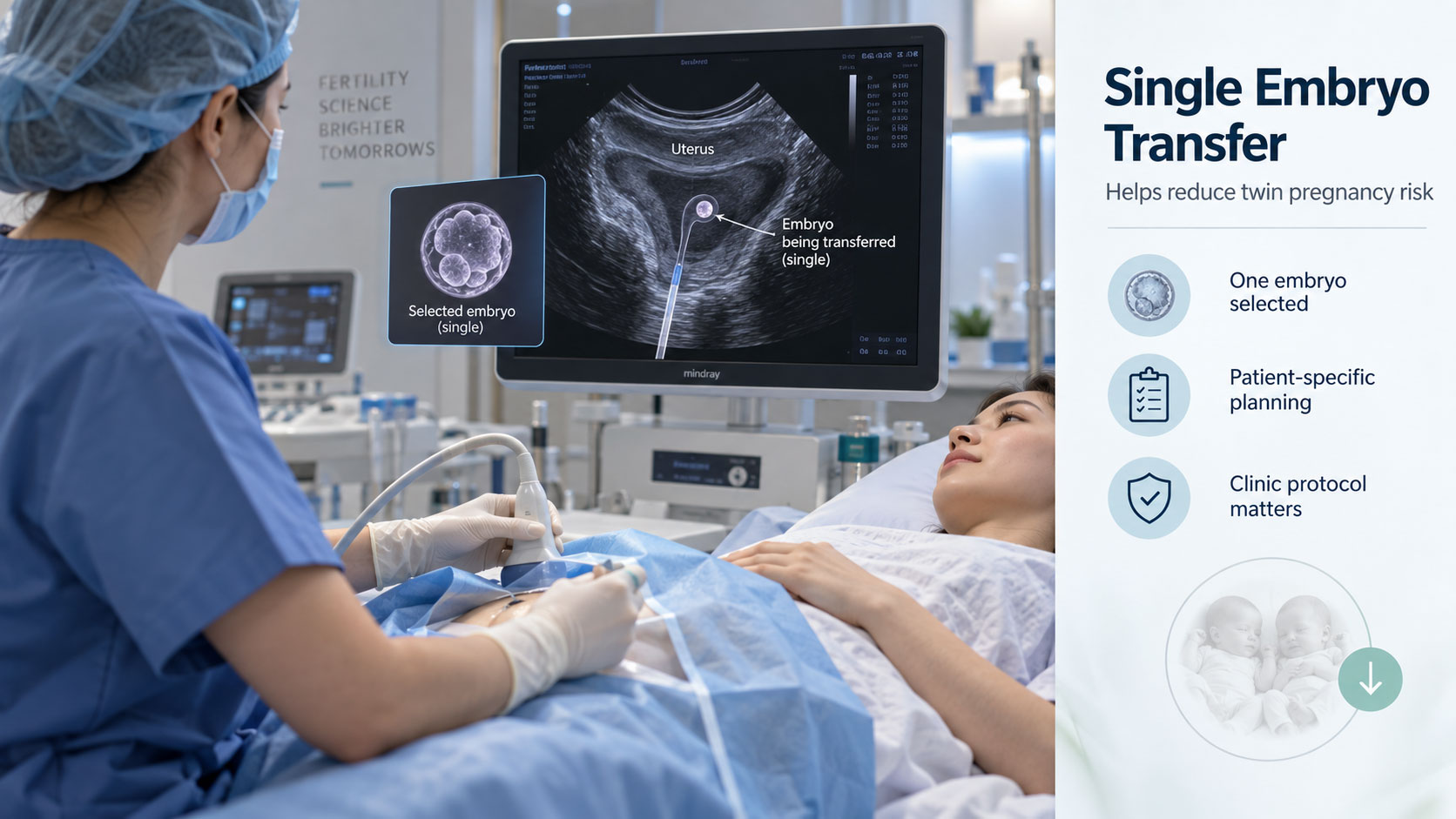
Reducing the Risk of Twin Pregnancy with Single Embryo Transfer
Compared with a singleton pregnancy, a twin pregnancy may require more intensive monitoring during pregnancy, as well as additional care related to premature birth and the postpartum period. For this reason, placing only one embryo in the uterus instead of transferring multiple embryos is one of the main options for reducing the likelihood of a multiple pregnancy during IVF treatment.
In Turkey, the decision to perform a single embryo transfer is not made automatically in the same way for every patient. Your age, previous IVF attempts, the stage of embryo development, assessment of the uterine cavity and current healthcare regulations are evaluated together. Single embryo transfer significantly reduces the risk of twin pregnancy; however, it cannot completely eliminate the possibility of identical twins resulting from the division of a single embryo.
The main purpose of this approach is not only to achieve pregnancy but also to plan a more controlled pregnancy for the mother and baby. The final decision is explained by a reproductive medicine specialist after reviewing ultrasound findings, embryo quality and your individual medical history.
Regulations and Clinical Safety for Embryo Transfer in Turkey
When planning IVF treatment in Turkey as part of medical tourism, it is important to check whether the clinic operates under a Health Tourism Authorization Certificate issued by the Ministry of Health of the Republic of Türkiye. This certificate indicates that the healthcare provider is subject to the relevant administrative and service standards for international applications; it does not, by itself, guarantee a specific pregnancy outcome.
At a reliable center, an obstetrician and gynecologist, an embryology team and, when necessary, a genetic counseling unit work together. For single embryo transfer, it is particularly important that the laboratory can maintain embryo culture through day three or day five, perform blastocyst assessment and keep cryopreservation records systematically.
Key Factors Considered During the Evaluation
- Age and ovarian reserve: AMH levels, antral follicle count and your previous ovarian response are evaluated.
- Embryo development: Cleavage rate, cell organization, blastocyst formation and laboratory quality records are reviewed.
- Uterine conditions: Ultrasound, and when necessary hysteroscopy or monitoring of the uterine lining thickness, may be planned.
- Number of embryos transferred in accordance with regulations: Current rules are considered based on age, the number of previous attempts and your treatment history.
When assessing the experience of Turkish reproductive medicine teams, do not rely only on terms such as “specialist” or “experienced.” Asking in writing about the annual number of IVF cycles, blastocyst transfer rates, frozen embryo transfer practices and clinical protocols for single embryo transfer provides a more meaningful basis for comparison.
What Is Included in a Single Embryo Transfer Package?
An international treatment package may include airport or hotel transfers, accommodation arrangements, a medical interpreter when necessary and initial post-procedure care guidance. The scope and duration should be clearly specified in writing by the clinic.
The length of stay in Turkey for single embryo transfer depends not only on the transfer date but also on the egg retrieval and embryo creation plan. If a fresh transfer is planned, a program of approximately 10–14 days may be required. If the embryos are frozen and transferred later, the initial visit and transfer visit may be separate. Before the transfer, hormone tests, ultrasound examinations, uterine lining thickness measurements and the embryo development report are reviewed.
When traveling from abroad, preparing your previous IVF reports, hormone results, ultrasound images and any genetic testing documents in English or Turkish can speed up the evaluation. The timing of the pregnancy test after transfer, flight plans and the method of communication with your follow-up doctor should be clarified in advance.
Single Embryo Transfer Cost in Turkey and Country Comparison
The approximate average cost of IVF treatment in Turkey that includes single embryo transfer may be estimated at around €3,500, depending on the clinic's package. This amount is generally based on a basic package covering a doctor's assessment, egg retrieval, laboratory procedures and one embryo transfer; medications, genetic testing, embryo freezing and additional transfers may be charged separately.
| Country | Approximate basic IVF cost | Note regarding single embryo transfer |
|---|---|---|
| Turkey | €2,500–€4,500 | Transfer and laboratory coverage vary by package. |
| United Kingdom | £5,000–£8,000 | Medications and additional embryo procedures may be calculated separately. |
| Germany | €4,000–€7,000 | Insurance coverage and the clinic's protocol affect the total cost. |
| United States | $12,000–$20,000 | Medication, anesthesia, laboratory and transfer fees may be listed separately. |
These figures are not quotations but approximate values intended to help explain international market ranges. Confirm in writing whether single embryo transfer is included in the basic package, how a frozen embryo transfer is priced after an unsuccessful attempt and which fees are refunded if a cycle is canceled.
Factors Determining the Cost and Process of Single Embryo Transfer
- Physician expertise and treatment experience: Training in reproductive endocrinology, the number of embryo transfers performed, evaluation of recurrent implantation failure and management of difficult transfers may affect the cost. Ask about procedural details such as controlled, ultrasound-guided placement of the embryo into the uterus.
- Methods used and laboratory technology: Reaching the blastocyst stage during embryo culture, time-lapse embryo monitoring, vitrification and, when indicated, chromosomal screening such as PGT-A can change the total cost. PGT-A is not necessary in every case; its suitability is determined only through specialist evaluation.
- Clinic location: Clinical, accommodation and transfer costs may vary in internationally accessible centers such as Istanbul, Ankara, Izmir and Antalya. Package coverage may differ between private centers in city centers and units operating within hospital campuses.
When single embryo transfer is selected, a decrease or increase in price does not depend solely on the number of embryos. Having ovarian stimulation, egg retrieval, embryo culture, freezing, thawing and transfer listed separately in the quotation helps you assess the total budget accurately.
Three Specific Questions to Ask Before Traveling to Turkey
Asking the following questions in writing before your initial consultation can help you understand how single embryo transfer will be planned for you:
- Based on my age, previous attempts and embryo development results, how will single embryo transfer be performed under the current regulations in Turkey?
- Will the embryo be transferred on day three or at the day-five blastocyst stage, and are time-lapse monitoring or embryo freezing included in the package?
- What follow-up plan is offered after single embryo transfer for pregnancy testing, flight safety and the possible risk of identical twins?
Evaluate the answers together with the doctor's consultation, embryology report and written quotation. No clinic can guarantee pregnancy or guarantee that identical twins will not occur after single embryo transfer; the decision is individualized according to medical suitability and current official regulations.