The Role of Hysteroscopy in IVF Success
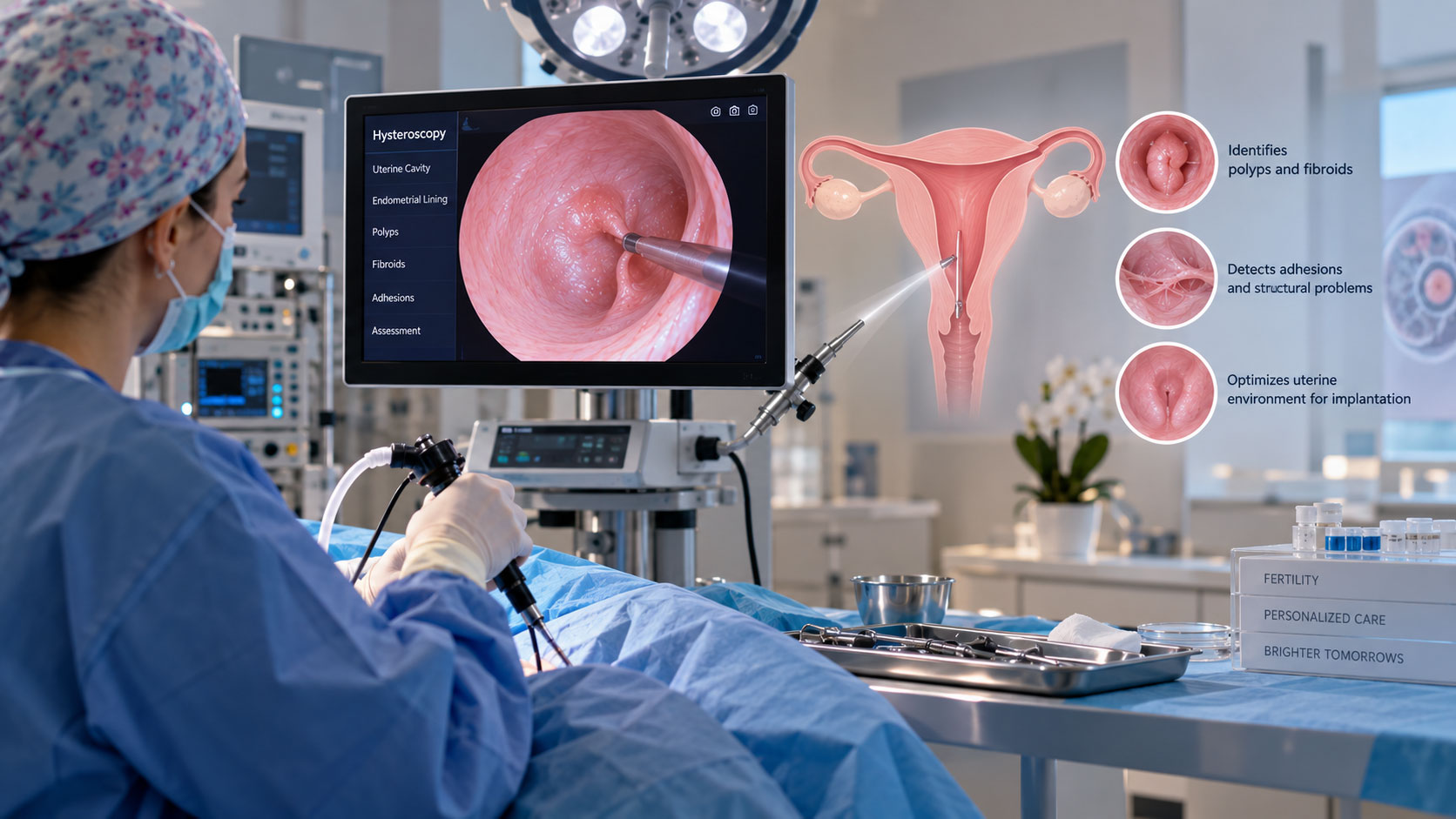
Hysteroscopy is a gynaecological procedure that allows the uterine cavity to be viewed directly using a thin camera inserted through the cervix. Findings such as polyps, submucosal fibroids, adhesions, or a uterine septum suspected on ultrasound or hysterosalpingography can be assessed in greater detail with this method.
Whether the procedure improves IVF success depends on whether a specific problem is present in the uterus that may make embryo implantation more difficult. It cannot be said that hysteroscopy should be performed automatically before every IVF cycle. The decision is made after considering ultrasound findings, the outcomes of previous transfers, any history of miscarriage, and the overall gynaecological assessment.
The Difference Between Diagnostic and Operative Hysteroscopy
The purpose of diagnostic hysteroscopy is to view the uterine cavity and assess normal anatomy and possible abnormalities. During operative hysteroscopy, if considered appropriate, procedures such as removing a polyp, excising a small submucosal fibroid, opening adhesions, or correcting a septum may be performed during the same session.
This distinction affects the length of stay in Turkey, the need for anaesthesia, pathological examination, and when embryo transfer can be performed. Sharing your ultrasound images, hysterosalpingography results, and previous IVF reports during the preliminary assessment can make planning easier.
Safety Standards for Uterine Cavity Assessment in Turkey
If you are travelling to Turkey from abroad, it is important to plan the procedure at a healthcare facility holding a Health Tourism Authorisation Certificate issued by the Ministry of Health of the Republic of Türkiye. This certificate shows that the institution meets certain administrative and organisational requirements for providing international healthcare services; it does not, by itself, guarantee a specific pregnancy outcome.
It is a reasonable step to ask the clinic in writing about the annual procedure volume of its obstetrics and gynaecology specialist, particularly in polypectomy, submucosal fibroid removal, intrauterine adhesion treatment, and uterine septum assessment. In addition to the doctor’s overall gynaecological experience, you should also evaluate the techniques used for uterine surgery before IVF and the approach to managing complications.
Pre-Procedure Checkpoints
- The possibility of pregnancy and the current menstrual cycle are assessed.
- A transvaginal ultrasound is used to obtain preliminary information about the uterine cavity and uterine wall.
- If considered necessary, hysterosalpingography, saline infusion sonography, or reports from previous surgeries are reviewed.
- The anaesthesia plan, risk of bleeding, risk of infection, and date of the post-procedure follow-up are explained.
- If tissue is removed, it is clarified how the pathological examination will be reported.
You should receive a clear explanation of the amount of fluid used during hysteroscopy, the procedure duration, and rare risks such as an opening or perforation of the uterine wall. If you develop a fever, increasing abdominal pain, heavy bleeding, or foul-smelling discharge, the healthcare team to contact after the procedure should be identified in advance.
Pre-IVF Hysteroscopy Packages in Turkey
The planned package may include airport or city VIP transfers, hotel accommodation, interpreter support, and the guidance required during the initial aftercare period. You should check the scope of the package and any additional fees in the written quotation. The initial consultation often begins with a remote review of your images and medical reports.
For hysteroscopy in Turkey, the length of stay may generally be planned as 2–4 days for diagnostic procedures and approximately 4–7 days for operative procedures, depending on follow-up requirements. The exact duration varies according to the nature of the finding removed during the procedure and whether embryo transfer will take place in the same cycle or a subsequent cycle.
During Which Part of the Menstrual Cycle Is the Procedure Scheduled?
Diagnostic hysteroscopy is usually scheduled after menstrual bleeding has ended and before ovulation, during the follicular phase. During this period, the uterine cavity may be seen more clearly and the possibility of an existing pregnancy is excluded.
Operative hysteroscopy is also often scheduled after menstruation. If a procedure such as polyp or fibroid removal has been performed, embryo transfer may not be scheduled immediately afterward to allow the uterine lining to heal. The doctor creates a new transfer plan based on the ultrasound assessment, bleeding status, and healing of the uterine cavity.
Is Embryo Transfer Possible in the Same Cycle?
After a simple and uncomplicated diagnostic procedure, proceeding with embryo transfer in the same cycle may be possible in some treatment plans. However, if tissue removal, adhesion treatment, or repair of the uterine cavity is required, postponing the transfer may be considered more appropriate. This decision depends not only on the type of procedure but also on signs of healing within the uterine cavity.
Hysteroscopy Costs in Turkey and International Comparison
The average cost of pre-IVF hysteroscopy in Turkey may range from approximately €700 to €1,800, depending on whether the procedure is diagnostic or a minor operative intervention. This range varies according to factors such as the operating room, anaesthesia, pathology, additional imaging, the doctor’s experience, and the city. The figures below should be considered an approximate market comparison rather than a current quotation.
| Country | Approximate cost | Notes on what the price may include |
|---|---|---|
| Turkey | €700–€1,800 | May range from a diagnostic procedure to minor operative hysteroscopy |
| United Kingdom | £1,800–£4,500 | Varies according to the private hospital, anaesthesia, and surgical services included |
| Germany | €1,500–€3,500 | Operating room and pathology costs may be priced separately |
| United States | $3,000–$7,000 | Hospital, insurance, and anaesthesia fees can change the total |
When requesting a quotation, ask not only about the procedure fee but also about the initial obstetrics and gynaecology consultation, anaesthesia, ultrasound, pathology report, follow-up examination, and any possible additional night of accommodation. IVF treatment, embryo creation, genetic testing, and medication costs are generally not included in this hysteroscopy comparison.
Factors That Affect Hysteroscopy Costs and IVF Timing
- The doctor’s expertise and procedure experience: For procedures such as polypectomy, submucosal myomectomy, adhesion treatment, and septum resection, the doctor’s relevant case volume may provide more useful information than their general specialist title alone.
- The technique and equipment used: Office hysteroscopy and operating-room hysteroscopy do not require the same preparation or cost. The choice between a small-diameter flexible or rigid hysteroscope, a fluid distension system, a mechanical resectoscope, or an energy-based resectoscope may vary according to the procedure.
- The nature of the uterine finding: An assessment requiring only visualisation cannot be completed in the same time as polyp removal or treatment of extensive adhesions. Sending removed tissue for pathological examination may also add to the total cost.
- The clinic’s location: Hospital infrastructure, operating-room capacity, and international patient coordination may lead to different prices in Istanbul, Ankara, İzmir, and other cities. When choosing a city, consider not only the price but also coordination between the IVF centre and the hysteroscopy unit.
- The IVF protocol: Ovarian stimulation, egg retrieval, and the schedule for frozen embryo transfer may determine which cycle the hysteroscopy is placed in. For this reason, the procedure should not be scheduled independently of the IVF timeline.
Current scientific evidence does not show that routine hysteroscopy definitively increases the live birth rate for every patient without a clear uterine abnormality. If there have been previous failed transfers, suspicious ultrasound or hysterosalpingography findings, recurrent pregnancy loss, or a history of uterine surgery, a medical evaluation may be more relevant.
Next Steps for IVF After Hysteroscopy
Before planning the procedure in Turkey, it may be helpful to request a written explanation of how your reports will be reviewed, which menstrual cycle is recommended, and under what circumstances embryo transfer would be postponed. The following questions may help you develop a specific treatment plan during your next consultation:
- Does a uterine polyp or submucosal fibroid need to be removed before embryo transfer? You can ask how ultrasound findings and, if available, hysterosalpingography results affect the decision to perform hysteroscopy.
- How many menstrual cycles should pass before embryo transfer after adhesion treatment or septum correction? Ask which ultrasound or follow-up findings will be used to confirm healing of the uterine cavity.
- What are the differences between diagnostic office hysteroscopy and operative hysteroscopy under anaesthesia in my case? You can compare the procedure duration, need for pathology, length of stay in Turkey, and possible additional costs.
The final decision should be made based on your medical history, uterine findings, previous IVF outcomes, and the assessment of the obstetrics and gynaecology specialist planning the procedure. The information on this page does not replace a medical examination, diagnosis, or personalised treatment recommendation.