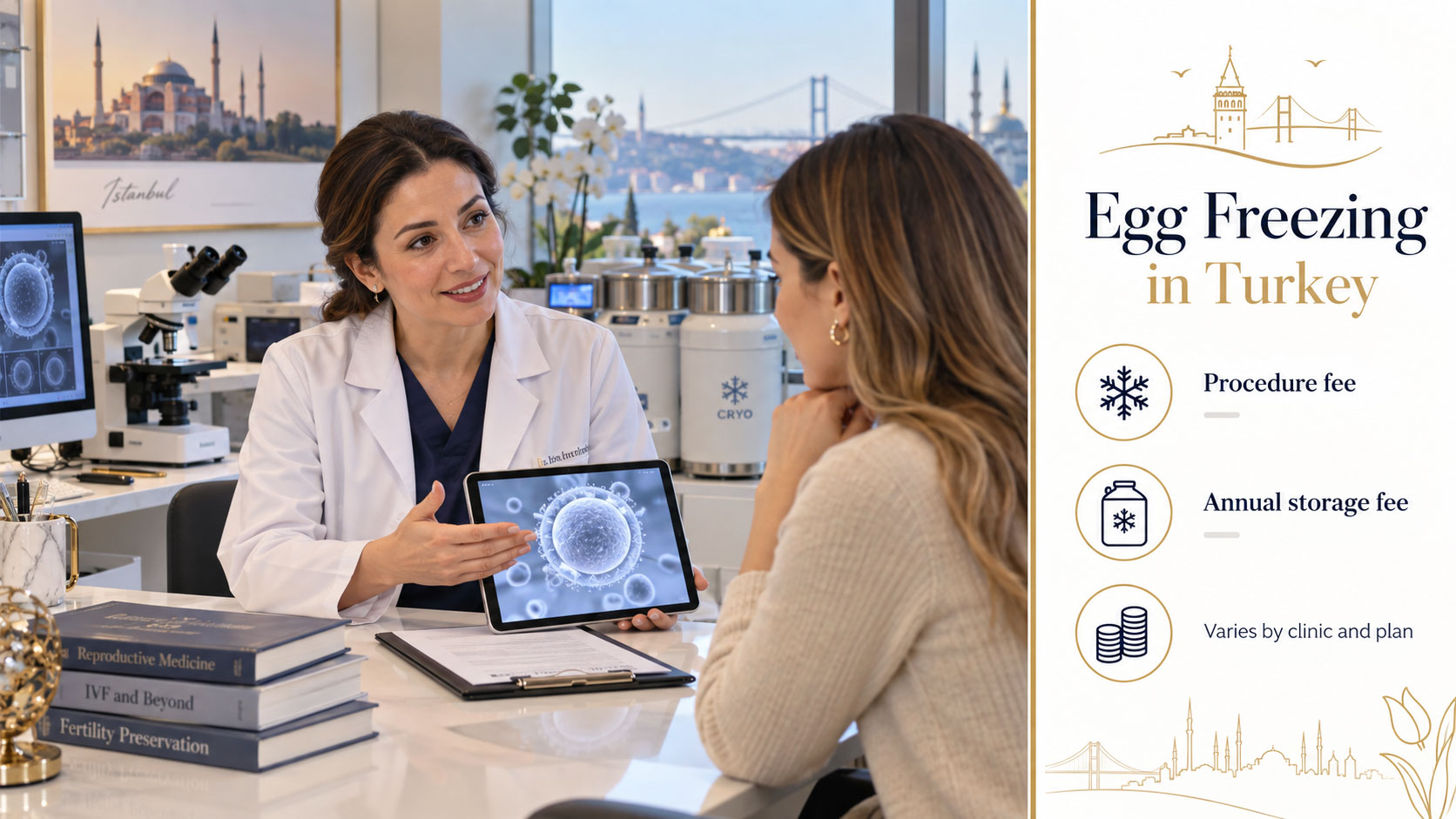
How Can Egg Freezing Support Your Life Plans?
Egg freezing involves collecting mature eggs from the ovaries and preserving them using a rapid freezing method known as vitrification. This approach offers the option of preserving your reproductive cells with the biological characteristics associated with a younger age if you wish to postpone pregnancy plans; however, it does not guarantee a future pregnancy.
The process generally consists of stimulating the ovaries with hormone medications, monitoring them through ultrasound scans and blood tests, collecting the eggs during a brief procedure, and freezing them in the laboratory. Factors such as the number of eggs collected, maturity rate, and age can directly affect future treatment planning and the total cost.
Safety and Authorization Criteria for Egg Freezing in Turkey
When traveling to Turkey from abroad, check whether the clinic provides services under a Health Tourism Authorization Certificate issued by the Ministry of Health of the Republic of Türkiye. Also request written information about the clinic’s IVF center license, the scope of the embryology laboratory’s operations, monitoring of cryogenic tanks, and the procedures used to maintain biological material records.
Turkish reproductive medicine teams work with patients of different ages and ovarian reserve profiles in areas including ovarian reserve assessment, controlled ovarian stimulation, transvaginal ultrasound monitoring, and vitrification protocols. When evaluating a physician’s experience, ask not only about the number of procedures performed but also about measurable data such as the mature oocyte rate, post-thaw survival rate, the laboratory’s quality control system, and the division of responsibilities within the embryology team.
Medical Documents to Review at the Start
- Current results of ovarian reserve tests such as AMH, FSH, and estradiol
- Antral follicle count measured by transvaginal ultrasound
- A history of previous ovarian surgery, endometriosis, or chemotherapy
- A medical suitability assessment regarding the medications, anesthesia, and egg retrieval procedure
Eligibility and storage conditions for egg freezing in Turkey are subject to applicable regulations. Since current regulations may differ between procedures performed for medical reasons and those planned for social reasons, obtain the clinic’s written legal and medical explanation before applying.
Egg Freezing Package: Procedure, Transfers, and Storage Plan
A medical tourism package may include airport or hotel transfers, accommodation at a selected hotel, interpreter support, and initial post-procedure care guidance. Confirm the scope of services, vehicle standards, and arrangements for accompanying persons in writing. For the initial consultation and tests, several days may be sufficient for most trips, while approximately 10–14 days in Turkey may be planned for egg retrieval and follow-up appointments. The exact duration depends on your menstrual cycle and the clinic’s schedule.
Having AMH, hormone profile, infection screening, blood group, complete blood count, and ultrasound reports requested before traveling from abroad may shorten your stay. The medication start date, frequency of ultrasound monitoring, egg retrieval date, anesthesia method, and annual storage agreement for the frozen material should be clarified before the procedure.
Key Stages of the Treatment Schedule
- Initial assessment: Your medical history, ovarian reserve, and ultrasound findings are reviewed.
- Stimulation period: Follicle growth is monitored with ultrasound scans and blood tests throughout hormone treatment.
- Egg retrieval: Once suitable follicle development is observed, the procedure is scheduled under short-term sedation or anesthesia.
- Laboratory stage: Mature eggs are frozen using vitrification and stored in identified cryogenic tanks.
- Follow-up: Post-procedure monitoring, report delivery, and annual storage renewal terms are explained.
Egg Freezing Costs and Annual Storage Fees in Turkey
The approximate total cost of one egg freezing cycle in Turkey may range from €2,500–€5,500, depending on whether medications and laboratory procedures are included in the package. Annual egg storage fees are approximately €200–€500 at most centers; some clinics include first-year storage in the treatment package.
The figures below are approximate ranges for international market comparison. Travel, accommodation, prescription medications, additional cycles, genetic testing, egg thawing, and embryo creation are not always included in the same package.
| Country | Egg freezing procedure | Annual storage | Approximate currency |
|---|---|---|---|
| Turkey | €2,500–€5,500 | €200–€500 | Euro |
| United Kingdom | £3,500–£7,000 | £250–£500 | GBP |
| Germany | €3,000–€6,000 | €250–€600 | Euro |
| United States | $8,000–$15,000 | $500–$1,200 | USD |
Itemized Checklist When Requesting a Quote
- Initial obstetrics and gynecology and reproductive medicine consultation
- AMH, hormone tests, and ultrasound monitoring
- Cost of medications used for ovarian stimulation
- Egg retrieval, anesthesia, and operating room costs
- Oocyte assessment and vitrification in the embryology laboratory
- Cryogenic storage fees for the first year or subsequent years
- Separate future procedures such as thawing, intracytoplasmic sperm injection, and embryo transfer
Rather than accepting a quote presented under a general heading such as “egg freezing package,” request a written price breakdown showing which items are included or excluded. The document should also state the exchange rate, taxes, cancellation terms, additional monitoring fees, and the storage agreement renewal date.
Factors That Affect Egg Freezing Costs and the Treatment Process
- Physician’s expertise and experience: Expertise in reproductive endocrinology and infertility can influence treatment planning, particularly in cases of diminished ovarian reserve, previous ovarian surgery, or a history of low response to treatment. It may be helpful to ask about the physician’s vitrification outcomes and average mature oocyte yield per cycle.
- Methods used and laboratory infrastructure: Compared with slow freezing, vitrification is the technique commonly used in current oocyte cryopreservation. Factors such as closed or open carrier systems, alarm and backup arrangements for cryogenic tanks, egg identification protocols, and post-thaw survival records may affect the price.
- City where the clinic is located: In medical tourism centers such as Istanbul, Ankara, and Izmir, laboratory capacity, operating room use, and international coordination services may affect the total quote. Transfers outside the city, length of accommodation, and follow-up appointments also add to the travel budget.
- Ovarian reserve and expected number of cycles: AMH and antral follicle count influence clinical planning regarding how many eggs may be collected in a single cycle. If the target number of eggs is not reached, a second cycle may be recommended, increasing the total cost.
Three Questions to Answer Before Traveling to Turkey
- Under current regulations in Turkey, which medical or social criteria must I meet for egg freezing? Obtain the clinic’s current eligibility criteria and list of required documents in writing before traveling.
- How many mature eggs might be collected in a single cycle, and how is the post-vitrification survival rate reported? Ask this together with a personalized assessment based on your age, AMH, and ultrasound results.
- How are renewal, transport, thawing, and future embryo creation fees calculated when the annual storage period ends? Check the agreement for the storage period, communication responsibilities, payment date, and conditions for transferring the material to another center.
Do not base your egg freezing decision solely on the initial procedure price. Considering medical suitability, laboratory quality records, legal storage conditions, total travel time, and future thawing and embryo creation costs together can provide a more realistic budget and treatment plan.