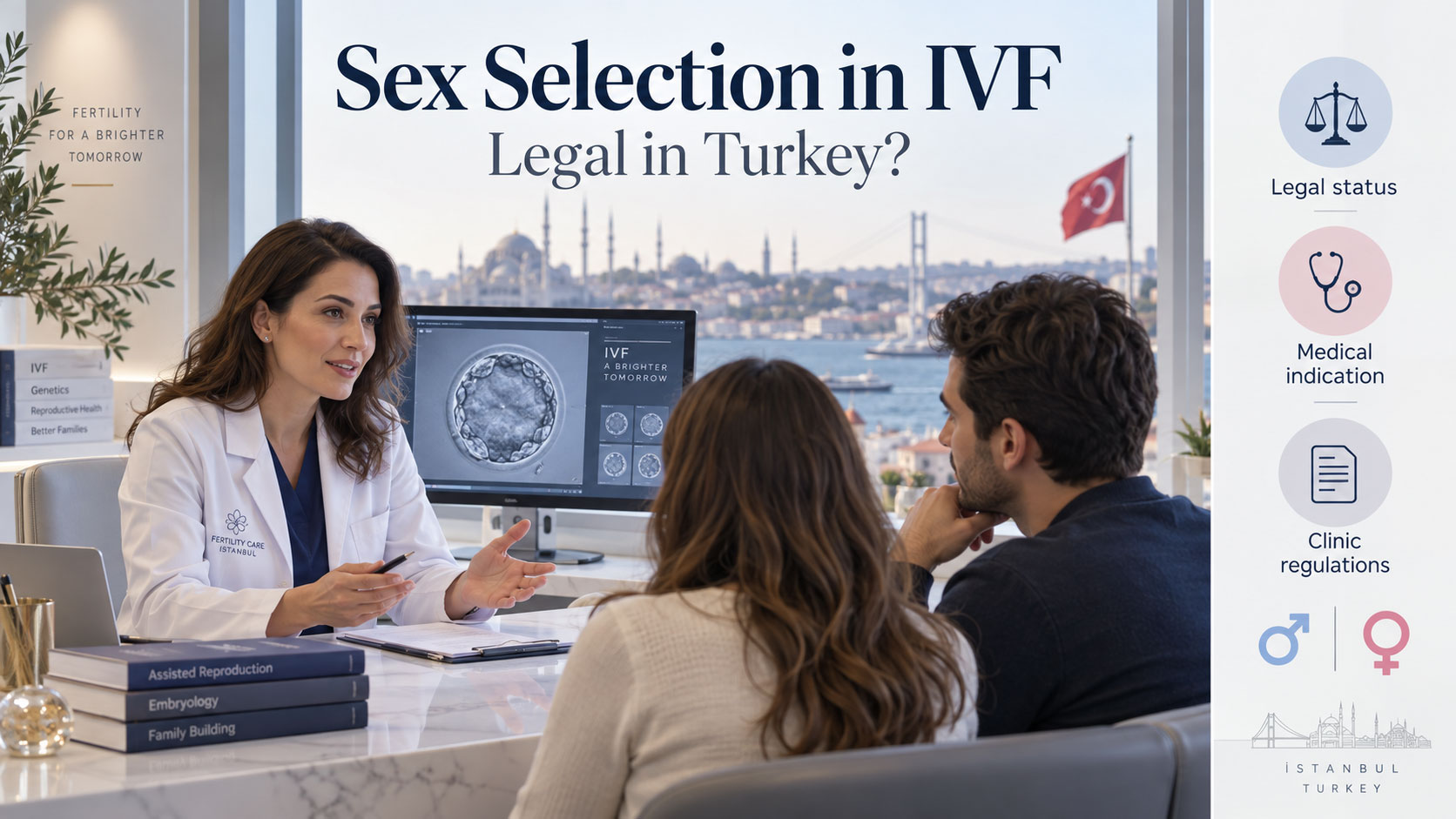
Key Legal Framework for Sex Selection with PGD in Turkey
In Turkey, genetic testing of embryos during IVF treatment is possible under specific medical conditions. However, determining embryo sex and selecting embryos for transfer solely based on a preference for a girl or boy cannot be routinely performed for family balancing purposes.
Preimplantation genetic diagnosis, known as PGD or, in current usage, PGT-M, may be used particularly to assess the risk of passing single-gene disorders to an embryo. When preventing an inherited disorder linked to the sex chromosomes is considered medically necessary, genetic testing may become part of the treatment. This is not assessed within the same legal scope as sex selection based on personal preference.
The Difference Between Family Balancing and Medical Indication
- Family balancing: Selecting the sex of an embryo to balance the number of girls or boys in an existing family. Embryo selection for this purpose is not a legally available treatment option in Turkey.
- Medical indication: Testing embryos to reduce the risk of passing on a specific genetic disorder or a condition linked to the sex chromosomes.
- PGT-A: A test used to assess the number of chromosomes in embryos; by itself, it does not constitute a legally permitted sex-selection method for family balancing.
PGT-M, Embryo Biopsy and Clinical Standards in Turkey
In Turkey, your treatment plan should be carried out through an IVF centre holding a Health Tourism Authorization Certificate issued by the Ministry of Health and operating in accordance with the relevant legislation. This certificate demonstrates that the centre is authorized to provide international healthcare services; by itself, it does not prove a specific outcome or guarantee pregnancy.
The centre should also have licensing compliant with assisted reproductive treatment regulations and established arrangements with an embryology laboratory and a genetics laboratory. If PGT-M is being considered, it is particularly important for the genetic variant in the family to be confirmed molecularly first, for an appropriate testing panel to be prepared, and for embryo samples to be processed through authorized laboratory procedures.
The Role of Turkish Physicians and Embryology Laboratories
IVF teams in Turkey can manage controlled ovarian stimulation, egg retrieval, sperm preparation, blastocyst culture, embryo biopsy and vitrified embryo transfer within the same treatment plan. For procedures such as PGT-M, the experience of the obstetrician and gynaecologist is important, but the clinical embryologist’s experience with blastocyst biopsy and laboratory quality control should also be assessed.
Before applying, ask the centre in writing whether the genetic diagnosis in your family can be accepted, which laboratory will perform the genetic test, how long results will take, and which medical board or specialist assessment will determine the transfer decision. Be cautious about offers that recommend sex selection without a medical necessity or claim they can circumvent the regulations.
What Is Included in a Legal IVF and PGT Package?
When planning medical tourism, the package may include VIP airport or city transfers, selected accommodation, interpreter support during necessary consultations and coordination during the initial aftercare period. The clinic should explain these services separately and specify in writing which days are covered for flights, accommodation, transfers and interpreting services.
For a legal PGT process in Turkey, the initial assessment generally includes a review of reproductive history, hormone tests, ultrasound examinations, semen analysis and any genetic reports considered necessary. In cases requiring PGT-M, confirming the existing genetic report and preparing the test specifically for the case may extend the treatment schedule.
Length of Stay and Treatment Timeline in Turkey
- Initial assessment: Several days may be required for examinations, ultrasound and laboratory planning.
- Ovarian stimulation and monitoring: Serial ultrasounds and blood tests are performed according to follicular development; this phase may last approximately 8–12 days.
- Egg retrieval and embryo culture: After egg retrieval, embryos are generally monitored until the blastocyst stage.
- PGT results and transfer: Preparing genetic results after embryo biopsy usually requires additional time. Transfer may be planned with a frozen embryo in a later cycle rather than as a fresh transfer.
Therefore, the timeline may differ depending on whether the process can be completed in one trip or requires two separate trips. It is safer not to finalize your flight dates until embryo development and the time required for the genetic report have been confirmed.
Cost of Legal IVF and PGT in Turkey
The total cost of IVF and PGT performed for medical reasons in Turkey varies depending on the scope of testing and whether medications are included in the package. The figures below are not prices for sex selection for family balancing; they are approximate international market ranges for IVF compliant with the regulations and PGT performed for a medical indication.
| Country | Approximate total cost | Notes |
|---|---|---|
| Turkey | €3,000–€7,000 | May vary depending on the IVF, embryo culture and PGT services included |
| United Kingdom | £8,000–£15,000 | Varies according to the private centre and testing scope |
| Germany | €6,000–€12,000 | Genetic board assessment and laboratory fees may affect the cost |
| United States | $15,000–$30,000 | Medication, laboratory, anaesthesia and transfer fees may be calculated separately |
Check whether the quotation in Turkey includes ovarian stimulation medication, anaesthesia, embryo freezing, storage, biopsy, genetic analysis, transfer and additional ultrasound monitoring. Comparing only a clinic’s initial fee with the full treatment cost in another country does not provide a realistic cost analysis.
Factors That Affect the Cost and Sex-Selection Process
- Physician expertise and experience: Experience in reproductive endocrinology becomes particularly important in cases involving advanced age, diminished ovarian reserve, repeated unsuccessful IVF or a history of genetic diagnosis. For a PGT-M plan, the coordination between the obstetrician and gynaecologist, geneticist and embryology team should also be assessed.
- Method used and laboratory: Culturing embryos to the blastocyst stage, trophectoderm biopsy, vitrification and tests such as PGT-M or PGT-SR affect the total cost. PGT-A, PGT-M and PGT-SR are not the same test; the quotation should clearly state which type of analysis will be used.
- Clinic location: In cities such as Istanbul, Ankara, Izmir and Antalya, the costs of accommodation, transportation and follow-up visits may vary in addition to clinic fees. Choosing accommodation far from the centre may create additional transfer costs, particularly during the stimulation phase when frequent ultrasounds are required.
These factors affect the overall treatment budget and timeline; however, no method makes sex selection legal in Turkey without a medical reason. The written quotation should also state that the procedure is planned for a medical indication in compliance with Turkish legislation.
Three Critical Questions to Ask Before Applying
- Is sex selection for family balancing possible in Turkey? Confirm that it is not a legal option when there is no medical reason and that the centre operates only for indications compliant with the regulations.
- How is the PGT-M process initiated when a genetic disorder linked to the sex chromosomes is suspected? Ask about the confirmation of the genetic report, identification of the familial mutation, test preparation and the stages involved in deciding whether to transfer an embryo.
- Which items are included in the IVF and PGT quotation? Request separate details for medication, egg retrieval, blastocyst culture, biopsy, genetic analysis, freezing, storage and embryo transfer fees.
When applying from abroad, provide the clinical team with your existing genetic reports, previous IVF results, surgical history and treatment records. Final eligibility is determined through medical assessment and within the framework of legislation applicable in Turkey; when a case involves legal or medical uncertainty, obtaining an independent specialist opinion may be helpful.