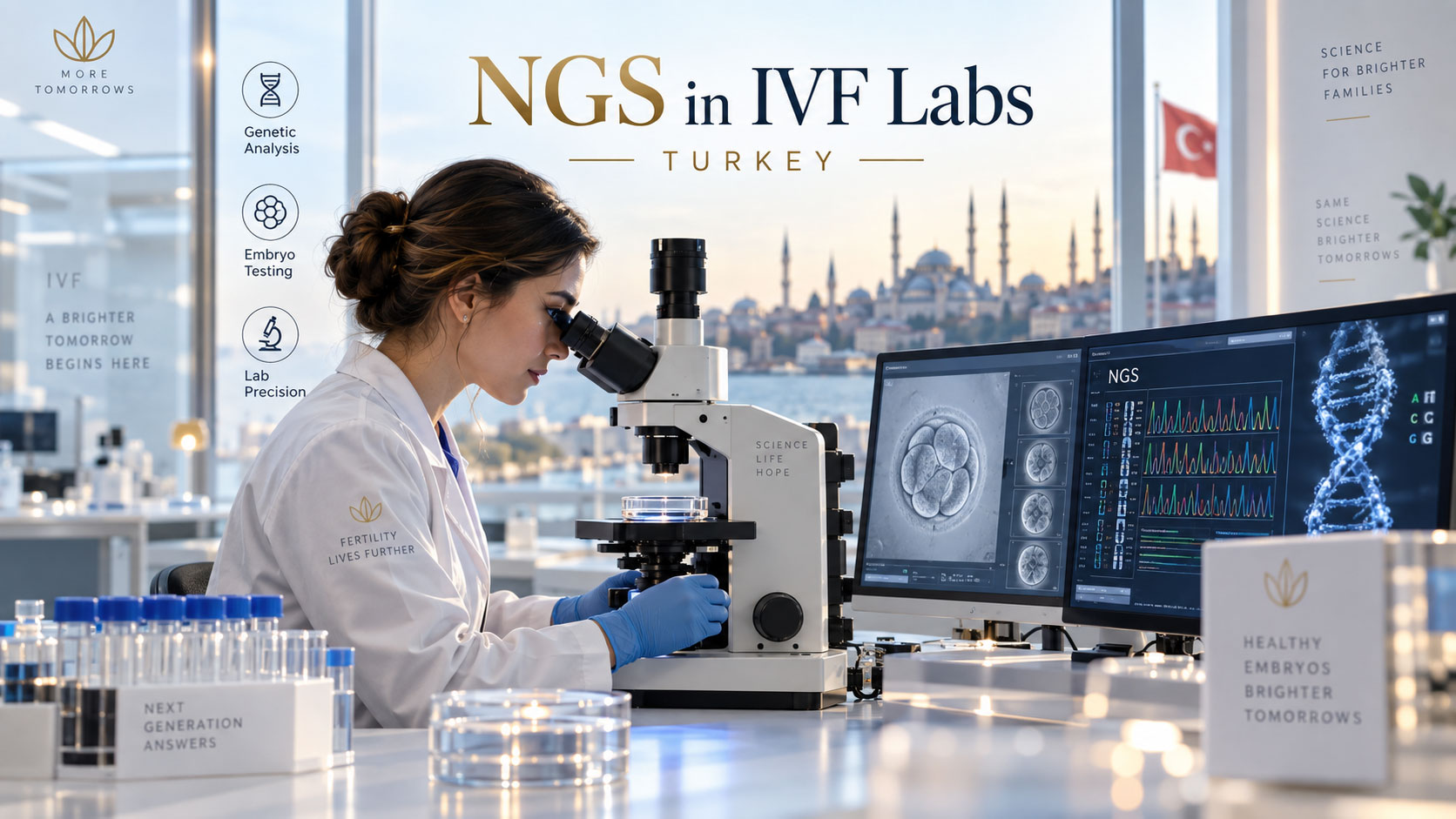
How does NGS support embryo selection during IVF?
Next-generation sequencing (NGS) is a laboratory technology that enables genetic material from a small embryo cell sample to be examined across many regions simultaneously. In IVF, its most common application is PGT-A, a test used to assess differences in chromosome number in embryos.
NGS may also be used in PGT-M, which investigates specific inherited conditions, and PGT-SR, which examines known structural changes in chromosomes. However, an NGS result alone does not guarantee pregnancy, a healthy birth, or that an embryo is definitively suitable for transfer; the result is interpreted together with embryo development, clinical assessment, and genetic counseling.
Key differences between PGT-A, PGT-M, and PGT-SR
- PGT-A: Focuses on screening for abnormalities in the number of chromosomes in embryos.
- PGT-M: Involves targeted testing for a known single-gene disorder in the family.
- PGT-SR: Helps assess specific chromosomal arrangements in situations such as carrying a structural chromosome rearrangement.
The most appropriate test is determined after reviewing the family history, previous genetic results, number of embryos, and evaluations by obstetrics and gynecology and medical genetics specialists.
NGS infrastructure and IVF laboratory standards in Turkey
Turkey has IVF centers that use NGS, as well as genetic laboratories that work with these centers. When choosing a provider for medical tourism, verify in writing that the clinic operates within the scope of the International Health Tourism Authorization Certificate issued by the Ministry of Health of the Republic of Türkiye, holds the relevant IVF license, and clearly identify which authorized laboratory performs the genetic testing.
Embryo biopsy, embryo freezing, sample identification, DNA analysis, and delivery of the report to the clinical team are separate stages. Centers using NGS should have procedures for sample traceability, double-checking, appropriate freezing protocols, and result verification at each stage.
The role of embryology and genetics teams in Turkey
Turkish IVF teams perform procedures such as blastocyst culture, trophectoderm biopsy, vitrification, and frozen embryo transfer. When assessing a center’s practical experience, look not only at its overall procedure volume, but also at how many PGT-A, PGT-M, or PGT-SR cycles it performs annually, embryo survival rates after biopsy, and which genetics specialist interprets the reports.
A center is not required to have an NGS device on site; some clinics send samples to authorized external genetic laboratories. This model may also be used, but sample transport, turnaround time, the laboratory’s quality certifications, and responsibility for the report should be explained in advance.
What is included in an IVF package involving NGS?
A medical tourism package may include airport or hotel transfers, accommodation, interpreter support when needed, and coordination of initial post-procedure care; the scope should be clarified in writing by the clinic. An NGS-related process may also include an initial obstetrics and gynecology assessment, ultrasound, hormone testing, semen analysis, necessary genetic counseling, and embryo biopsy planning.
The length of stay in Turkey depends not only on the NGS test but also on whether ovarian stimulation and egg retrieval will be performed during the same trip. After embryo biopsy, sample analysis may take anywhere from several days to several weeks; patient- and family-specific tests such as PGT-M may require a longer preparation period.
Scheduling for patients traveling from abroad
- Initial assessment and medical record review are usually completed before travel.
- Genetic reports, previous test results, and information about any known familial mutation should be shared, together with translations when necessary.
- Embryos are generally frozen after biopsy; depending on the results, frozen embryo transfer may be planned in a subsequent cycle.
- The transfer date should not be finalized until endometrial preparation and clinical assessment are complete.
NGS costs in Turkey and international price comparison
The ranges below should be considered approximate market indicators for 2026. They generally cover NGS-based PGT-A analysis and laboratory fees per embryo or for a specified number of embryos; egg retrieval, medication, embryo freezing, and embryo transfer are not always included.
| Country | Approximate range for an NGS/PGT laboratory package | Currency | Notes |
|---|---|---|---|
| Turkey | €1,500–€3,500 | EUR | Varies according to the number of embryos and test type |
| United Kingdom | £3,500–£7,000 | GBP | Varies according to PGT-A and laboratory scope |
| Germany | €3,000–€6,000 | EUR | Authorization and test scope are important |
| United States | $4,000–$8,000 | USD | The number of embryos and counseling may often be priced separately |
The average price quoted in Turkey should not be treated as a definitive offer. PGT-M or PGT-SR, customized preliminary test design, additional embryos, a second biopsy, report verification, and additional genetic counseling may increase the total cost.
Criteria affecting NGS selection, cost, and treatment planning
- Expertise of the physician and team: Assess the embryology laboratory’s regular volume of blastocyst culture, trophectoderm biopsy, and vitrification procedures. How the genetics specialist explains the report and its limitations is also an important part of the process.
- Method used and laboratory scope: For PGT-A, ask about the resolution of the NGS platform, the approach to reporting mosaicism, the verification method, and the pricing model per embryo. If PGT-M is required, check whether haplotyping or preliminary test design for the family’s variant is included in the package.
- Clinic location: Major centers such as Istanbul, Ankara, and Izmir may offer broader laboratory access and international coordination. The choice of city can affect the logistics of transfers, accommodation, sample transport, and follow-up visits.
In addition to these three areas, request a written breakdown of which procedures are included in the total quotation. Clarify in particular whether genetic counseling, embryo storage duration, repeat analysis, failed or inconclusive samples, and frozen embryo transfer incur separate fees.
Three rational next steps when planning NGS
- How does a PGT-A result affect the decision to transfer an embryo? Ask what normal, mosaic, or inconclusive reports mean and how the clinical board evaluates these results.
- What preparation is needed for PGT-M if there is a known genetic disorder in the family? Discuss preliminary test design, samples that may be requested from family members, and the preparation time with a genetic counselor.
- What verification options are available if mosaicism or an uncertain result is reported by NGS? Ask about repeat biopsy, embryo storage, reassessment of the report, and alternative genetic evaluations before or during pregnancy.
Sharing previous IVF results, embryo development reports, genetic tests, and family history during the review of your records can facilitate the assessment. The final decision should be based on your personal medical history and a joint evaluation by authorized obstetrics and gynecology, embryology, and medical genetics teams in Turkey.