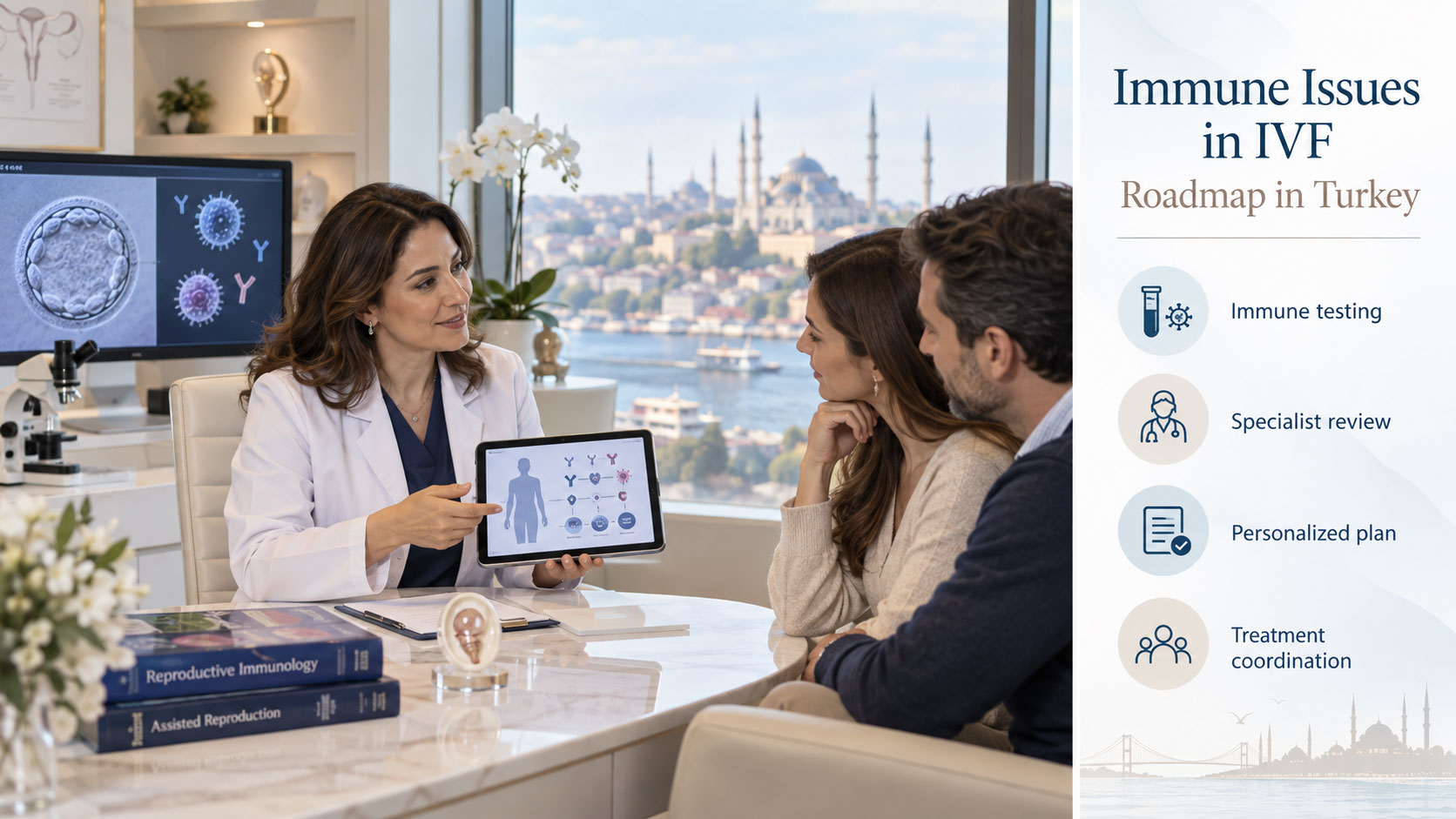
What Treatment Pathway Is Followed for Immune System Disorders in Turkey?
Immune system-related symptoms may appear as frequently recurring infections, unexplained inflammation, autoimmune findings, allergic reactions, or a weakened immune response. In Turkey, evaluation is not based on a single test result; the clinical history, physical examination, blood analyses, and, when necessary, genetic or imaging studies are assessed together.
At the beginning, a clinical immunologist or another relevant specialist reviews your medical file in detail. Bringing previous test results, treatments received, infection history, vaccination records, and information about similar conditions in your family, if applicable, may help speed up the process.
Immune system disorders that may be evaluated
- Congenital or acquired immunodeficiencies
- Immune dysregulation associated with autoimmune diseases
- Recurrent or unusually severe infections
- Abnormal immunoglobulin levels or abnormalities in immune cells
- Inadequate vaccine response and assessment of immune response
- Allergic and inflammatory immune reactions
Safety at Immunology Centers: Authorization and Test Traceability
When choosing an international healthcare provider, check whether the institution has a Health Tourism Authorization Certificate issued by the Ministry of Health of the Republic of Türkiye. This certificate shows that the institution is authorized under the relevant regulations to provide international healthcare services; by itself, it does not guarantee a specific clinical outcome in every specialty.
For a safe process in the evaluation of immune disorders, the laboratory’s quality-control procedures, sample tracking system, test reporting times, and access to other specialties when necessary are important. Ask in advance which laboratory performs investigations such as immunoglobulin measurements, complement levels, lymphocyte subset analysis, autoantibody panels, or genetic testing, and how the results are verified.
Physicians working in clinical immunology in Turkey may collaborate with multidisciplinary teams during the evaluation of recurrent infections, investigation of immunoglobulin deficiencies, differential assessment of autoimmune processes, and analysis of immune cells. In complex cases, regular consultation between immunology, rheumatology, allergy, hematology, and infectious diseases can be an important safety feature.
What to check in reports and laboratory quality control
- Whether the report specifies the reference ranges and measurement methods for the tests
- Whether the sample collection date and result approval date are stated
- Whether genetic or advanced immunological test results are explained by a specialist
- Whether the existing medical file is reviewed in advance to avoid unnecessary repeat testing
What Is Included in an Immune System Treatment Package?
A healthcare package planned as part of medical tourism may include VIP airport-to-clinic transfers, accommodation, interpreter support, and coordination for initial care or any necessary prescription process. Since the package contents vary by provider, confirm in the written quotation which examinations, tests, reports, and follow-up consultations are included.
For an immunological evaluation in Turkey, setting aside 3 to 7 days may generally be appropriate; the stay may be extended if advanced genetic analysis, repeated immune system testing, or intravenous treatments are planned. During the initial consultation, areas such as a complete blood count, immunoglobulin levels, lymphocyte subsets, complement tests, autoimmune markers, and vaccine response are selected according to medical necessity.
When traveling from abroad, prepare previous laboratory results, preferably with English or Turkish translations, imaging reports, pathology documents, vaccination records, and current treatment plans. Before starting a new test or treatment, ask how your existing findings will be incorporated into the evaluation in Turkey.
Possible steps after the evaluation
- Specialist consultation and a detailed medical history
- Selection of the necessary basic and advanced immunological tests
- Interpretation of the results together with the clinical findings
- When appropriate, development of a plan for immune-supportive or immunomodulatory treatment, or referral to another specialty
- Preparation of a communication plan between follow-up care in Turkey and your physician in your home country
Average Costs of Immune System Disorder Treatment in Turkey
There is no single standard price for treatments related to the immune system. The figures below are approximate ranges seen in the international market for an initial specialist evaluation, selected laboratory investigations, and short-term treatment planning. Long-term infusions, biologic treatments, advanced genetic analyses, intensive care, hospitalization, and organ or stem cell transplantation may not be included in these ranges.
| Country | Approximate starting cost | Currency | Scope note |
|---|---|---|---|
| Turkey | 3,000–7,000 | € | Specialist evaluation, selected immunological tests, and short-term planning |
| United Kingdom | 5,000–12,000 | £ | Private clinic consultation and advanced laboratory evaluation |
| Germany | 4,500–11,000 | € | Specialist consultation, laboratory testing, and short-term follow-up |
| United States | 8,000–25,000 | $ | Starting package varying by provider, test scope, and insurance status |
For this scope of care in Turkey, an average starting budget of approximately €3,000–7,000 may be considered; however, a definitive quotation can only be provided after the medical file has been reviewed and the required test list has been prepared. In the price quotation, check in writing whether the tests are listed individually and whether procedure fees, interpretation services, accommodation, and follow-up consultations are included.
Factors That Affect the Cost and Process of Immunological Treatment
For immune system treatments, the price consists of more than the consultation fee alone. The following factors may affect both the total budget and the length of your stay in Turkey:
- Specialist expertise and experience: For primary immunodeficiencies, autoimmune immune disorders, or complex infection histories, an evaluation by a specialist who regularly works in clinical immunology may be more comprehensive. Additional consultation fees may arise if a multidisciplinary board review is required.
- Methods and types of tests used: A standard immunoglobulin measurement does not cover the same scope as lymphocyte subset analysis. Methods such as flow cytometry, complement function testing, vaccine antibody response testing, autoantibody panels, and genetic sequencing vary in cost and turnaround time. If considered necessary, procedures such as intravenous immunoglobulin administration or therapeutic plasma exchange may be priced separately.
- Clinic location: Access to advanced laboratories and hospitals with multiple specialties may be broader in major cities such as Istanbul, Ankara, and Izmir. The city, hospital infrastructure, use of private laboratories, and accommodation conditions can change the total package cost.
Checklist for comparing quotations
- How many specialist consultations are included in the package
- The names of the laboratory tests and their turnaround times
- Whether infusion, hospitalization, or observation requirements are charged separately
- Whether the results are prepared in English
- Whether online follow-up is available after you leave Turkey
Next Steps and Frequently Asked Questions About Immune System Treatment
Before applying, share your medical file and request a preliminary assessment that includes only the necessary tests. This can provide greater clarity about the estimated length of stay, relevant specialties, waiting times for results, and additional fees before you travel to Turkey.
- Which tests are truly necessary for low immunoglobulin levels? In addition to total immunoglobulin levels, under what circumstances are subclasses, vaccine response, and lymphocyte subsets evaluated?
- Can autoimmune findings and immunodeficiency be evaluated at the same time? In which situations is joint interpretation by rheumatology and clinical immunology specialists important?
- How will follow-up for immune system treatment provided in Turkey continue in my home country? How will the report format, sharing of test results, and online physician communication after treatment be arranged?
The answers to these questions vary according to your existing findings and the facilities available at the medical center you choose. Any treatment decision should be made only after a specialist has reviewed your medical file and the necessary clinical evaluation has been completed.