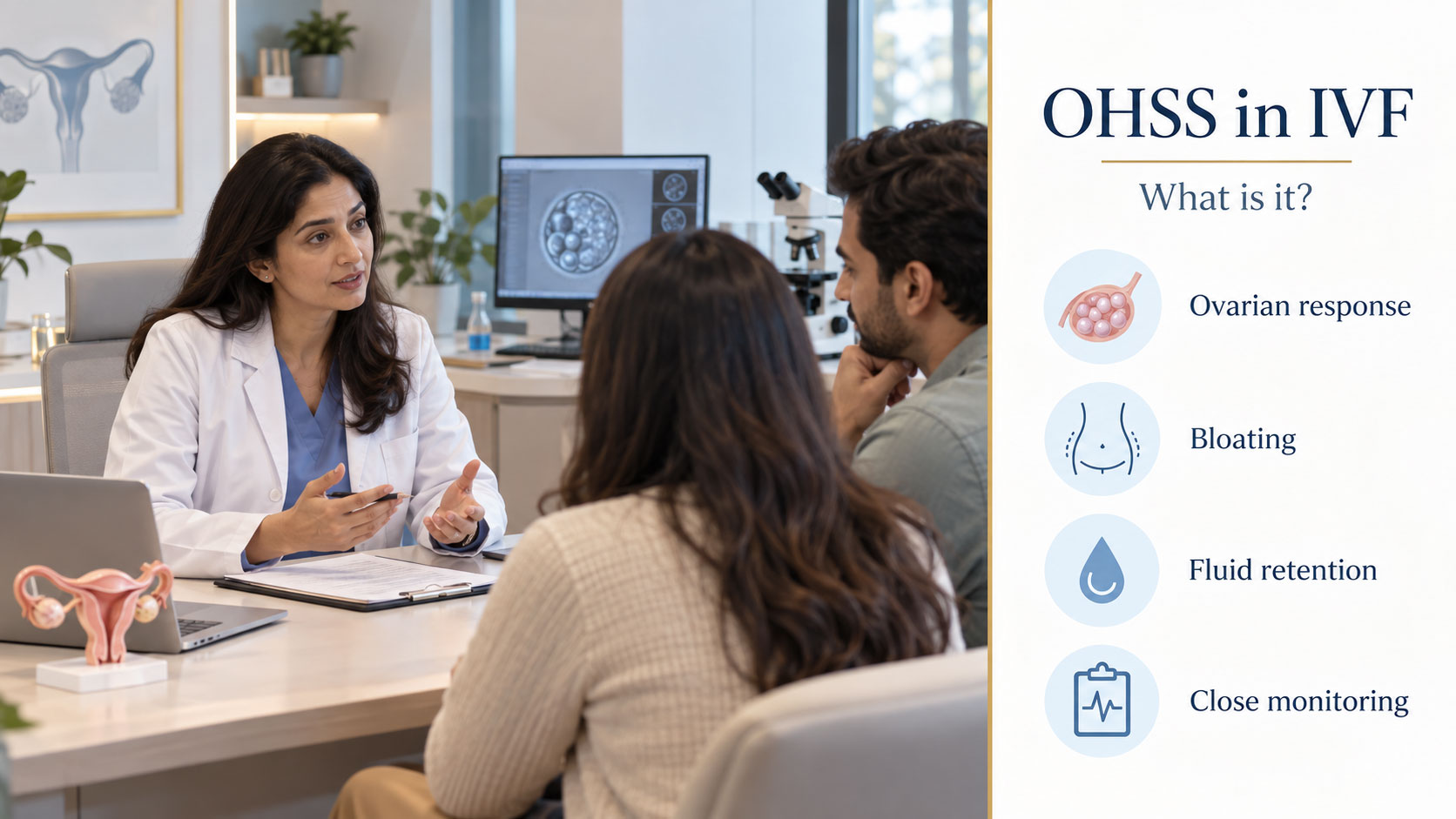
What Is OHSS and How Does It Affect the IVF Process?
OHSS is a condition that may occur when the ovaries respond more strongly than expected to stimulating medications during IVF treatment. The ovaries may enlarge, fluid may accumulate in the abdomen, and fluid balance may require close monitoring.
The risk cannot be reduced to zero before treatment begins; however, it can be significantly lowered through planning based on individual ovarian reserve and previous treatment response. In Turkey, the aim is not only to obtain more eggs, but also to create a safe stimulation and controlled embryo transfer plan.
If you experience severe abdominal pain, rapidly increasing abdominal swelling, shortness of breath, persistent vomiting, a marked decrease in urine output or rapid weight gain, you should contact the planned clinic’s emergency line. These symptoms may require a medical examination rather than remote assessment.
OHSS Safety Planning Based on AMH and Follicle Count
At centers in Turkey that hold a Ministry of Health-approved Health Tourism Authorization Certificate and operate in accordance with relevant standards, the initial assessment is performed by an IVF specialist based on the patient’s individual risk profile. Verifying the clinic’s authorization certificate and the scope of the embryology laboratory’s services in advance is an important part of health tourism planning.
Turkish obstetrics and gynecology specialists may combine different IVF approaches according to individual findings, including controlled ovarian stimulation, antagonist protocols, low-dose stimulation strategies and embryo freezing plans. The specific decision is made after considering AMH levels, antral follicle count, polycystic ovarian appearance, age, body mass index, response during previous egg retrieval and any accompanying health conditions.
Safety does not depend solely on the choice of doctor. The ability to monitor the ovaries by ultrasound, assess hormone results promptly, follow the embryology laboratory’s quality procedures and provide 24-hour medical communication support when necessary are also parts of an OHSS management plan.
Areas assessed during the evaluation
- AMH and other hormone results considered necessary
- Antral follicle count and ovarian appearance on transvaginal ultrasound
- The number of eggs retrieved and response to stimulation during a previous IVF cycle
- The possibility of polycystic ovary syndrome or high ovarian reserve
- Medical history relevant to blood clotting, kidney and liver function, and fluid balance
What Is Included in an IVF and OHSS Prevention Package?
As part of health tourism planning, airport-to-clinic VIP transfers, accommodation, interpreter support and basic guidance for the initial care period may be provided within a single coordination plan; the scope and duration vary according to the written agreement with the clinic.
For OHSS risk management, an initial clinic visit, ultrasound monitoring and blood tests are generally planned in Turkey. Depending on the ovarian response, treatment may take approximately two to three weeks. If embryo transfer is postponed and a frozen embryo transfer is chosen, an additional monitoring period and separate visit may be required.
When traveling from abroad, sharing your previous IVF reports, AMH and hormone results, ultrasound images, stimulation protocol, number of eggs retrieved and any previous history of OHSS can facilitate planning. You may be asked to have the documents translated into English or another language accepted by the clinic.
OHSS risk-reduction approaches that may be used during treatment
- Choosing a more controlled stimulation dose based on ovarian reserve
- Monitoring follicle development through serial ultrasounds and hormone tests
- Modifying the ovulation trigger approach according to OHSS risk
- If necessary, freezing all suitable embryos and postponing fresh transfer
- Explaining monitoring of weight, abdominal circumference, urine output and general condition after egg retrieval
None of these options is automatically used for every patient. The decision is made by the IVF specialist based on ovarian response and overall health.
Cost of Planned OHSS Prevention During IVF in Turkey
OHSS prevention is usually not priced as a standalone procedure. It is generally calculated as part of an IVF package that includes clinical assessment, stimulation monitoring, egg retrieval and embryology services. In a cycle with a high risk of OHSS in Turkey, additional ultrasounds, hormone tests, embryo freezing or longer monitoring may increase the cost.
The figures below are approximate international ranges and do not always include medication, genetic embryo testing, accommodation, travel, emergency consultations or hospital admission due to OHSS.
| Country | Approximate IVF cost including an OHSS prevention plan | Price note |
|---|---|---|
| Turkey | €2,500–€5,000 | Varies according to the scope of basic IVF, monitoring and embryology services |
| United Kingdom | £6,000–£10,000 | Medication and additional embryo services may be charged separately |
| Germany | €4,000–€7,000 | Insurance coverage, age and treatment method may affect the price |
| United States | $12,000–$20,000 | Medication, laboratory and monitoring fees are often calculated separately |
When reviewing a quote from a clinic in Turkey, ask in writing what the phrase “OHSS management included” means. The contract should clearly state whether this covers only the risk-reduction plan, additional monitoring, embryo freezing or emergency care coordination.
Factors That Change the Cost and Treatment Process When OHSS Risk Is Present
- Physician’s expertise and experience: A high AMH level, high antral follicle count or history of an excessive response may require an individualized stimulation plan, more frequent ultrasounds and hormone monitoring. Clinical experience in reproductive endocrinology is important when assessing protocol selection and transfer timing.
- OHSS-specific methods and laboratory services: An antagonist protocol, low-dose stimulation, a risk-appropriate trigger approach, “freeze-all”—freezing all suitable embryos—and embryo storage using vitrification may affect the cost. If embryo biopsy and genetic testing are added, the total fee will increase separately.
- Clinic location: Clinical, accommodation and transfer costs may vary in health tourism centers such as Istanbul, Ankara, Izmir and Antalya. Even within the same city, access to intensive care, laboratory scope and the number of monitoring days may change the quote.
When comparing prices, look beyond the total amount and check how many ultrasound visits are included, whether hormone tests are covered, the fees for egg retrieval and embryo freezing, the storage period and any possible additional visits. Medical decisions should be based not on pursuing the lowest cost, but on creating a safe and traceable plan.
Three OHSS Questions to Ask Before Traveling to Turkey
- How will my stimulation protocol change if my AMH and antral follicle count are high? Ask which findings will determine the antagonist protocol, monitoring frequency and timing of egg retrieval.
- If OHSS risk develops, can an embryo-freezing plan be used instead of fresh embryo transfer? Check the details and fees for vitrification, storage duration, a subsequent frozen embryo transfer and related services in writing.
- Which symptoms should prompt me to contact the clinic or emergency department after egg retrieval? Clarify the transportation arrangements and 24-hour communication plan in advance for symptoms such as abdominal swelling, shortness of breath, reduced urine output, rapid weight gain and persistent vomiting, especially if you are staying outside the city.
During your first online consultation, you can share your medical documents to learn how your OHSS risk will be assessed, which tests will be repeated in Turkey and which services are included in the quote. The final protocol depends on the clinical judgment of the IVF specialist who examines you and evaluates your results.