What Does Microchip Technology Mean for Sperm Quality?
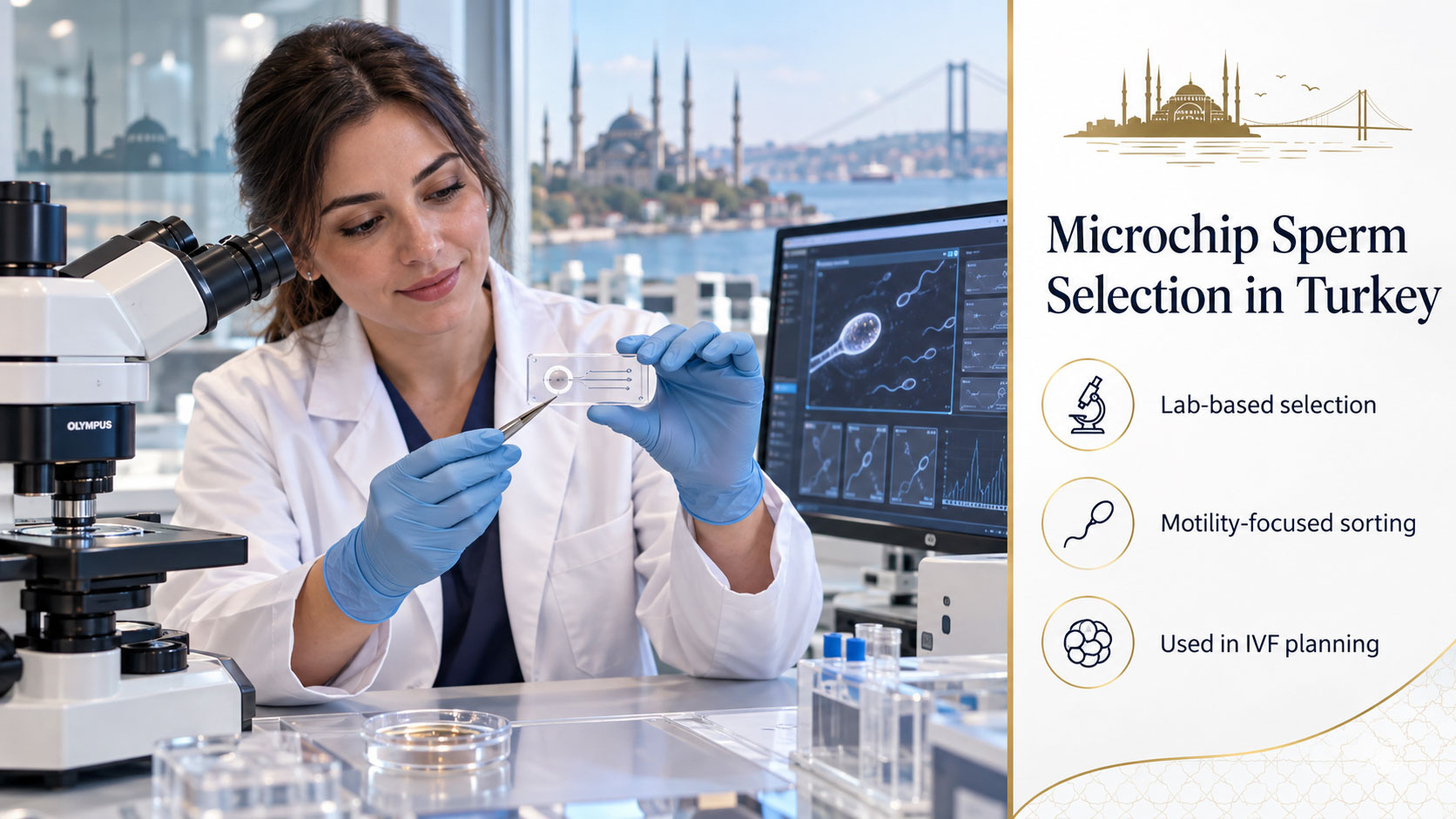
Microchip technology used for sperm selection in Turkey is a microfluidic system that helps separate sperm cells in the laboratory according to certain physical characteristics. Known in English as microfluidic sperm sorting or a sperm selection chip, this approach aims to select sperm cells with better motility and potentially lower levels of DNA damage.
The key distinction is that a microchip is not a treatment that increases sperm production or permanently improves sperm quality. It is a laboratory technique used before IVF or intracytoplasmic sperm injection to select more suitable sperm cells from the available sample. Whether the result is clinically meaningful is determined by considering the semen analysis, sperm DNA damage assessment, ovarian reserve, embryo development, and the couple’s overall reproductive history together.
How does a microfluidic chip work?
The prepared semen sample is transferred into a single-use microchip cartridge. The microchannels inside the chip use physical parameters such as sperm motility and the way the cells move through the fluid. More motile sperm cells may collect in a specific section, and the embryology team can use this fraction in assisted reproductive procedures such as ICSI.
Conventional centrifugation is thought to cause oxidative stress in some samples. Depending on the system, microfluidic methods may reduce the need for centrifugation; however, not every clinic uses the same device, cartridge, or protocol. For this reason, it is important to learn about the technical specifications of the system and the laboratory protocol used by the center, rather than focusing only on the technology’s name.
Safety and Laboratory Standards for Microchip Sperm Selection in Turkey
When traveling to Turkey from abroad, you should verify that the clinic operates within the scope of the Health Tourism Authorization Certificate issued by the Turkish Ministry of Health, as well as confirming the IVF center’s licenses and laboratory records. The availability of microchip technology in a clinical setting does not mean that the procedure is necessary for every patient or that it guarantees success; the decision should be based on the joint assessment of a gynecologist, urologist, and embryology team.
At assisted reproduction centers in Turkey, semen analysis, advanced sperm motility testing, morphology assessment, sperm DNA integrity testing, and ICSI may be performed together. The experience of Turkish reproductive medicine teams in microinjection, surgical sperm retrieval, and the assessment of repeated treatment failures varies between centers. Therefore, remember that the number of “cases” alone is not sufficient; you should also examine the number of cycles using microchip technology, the embryology laboratory’s quality-control system, and how results are reported.
Records to review when assessing reliability
- The center’s Health Tourism Authorization Certificate and IVF center license.
- The protocol used for microfluidic sperm selection, regardless of the chip technology’s brand name.
- The time between receiving and processing the sample and transferring it for ICSI.
- The record-keeping system used in the laboratory for sperm motility, morphology, and sample traceability.
- Whether your existing sperm test results and previous embryo outcomes were reviewed before the procedure.
What Is Included in a Microchip Sperm Selection Package?
A health tourism arrangement may include VIP airport transfers, hotel accommodation meeting the selected standards, interpreter support, and coordination of initial post-procedure care or basic products considered necessary; the scope should be clearly stated in the written quotation. Since microchip use is usually a single laboratory step, the duration of your stay in Turkey is determined by your overall IVF plan, and an extended stay may not be necessary for the chip procedure alone.
During the initial assessment, the current semen analysis, morphology results, sperm DNA integrity testing if needed, and previous ICSI or embryo development reports are reviewed. If a fresh sample will be used, the sample collection date, laboratory appointment, and egg retrieval are scheduled according to the same timetable. If frozen sperm, surgically retrieved sperm, or a very low sperm count is involved, the suitability of the chip system must be assessed separately.
Scheduling when traveling from abroad
A laboratory procedure planned solely for sperm selection can often be coordinated with a short visit; however, the schedule will be longer if an IVF cycle, egg retrieval, and embryo transfer are included in the same trip. Before finalizing your flight plans, confirm in writing the sample collection date, whether a second sample may be required, the cryopreservation option, and the laboratory’s weekend operating schedule.
Cost of Microchip Sperm Selection in Turkey and Country Comparison
In Turkey, the average additional fee for sperm selection using only a microfluidic microchip may range from approximately €250–700; a midpoint of approximately €400 may be used as a reference. This figure may not include IVF, ICSI, sperm freezing, genetic testing, egg retrieval, embryo culture, or accommodation costs.
The figures below are approximate ranges provided for comparison. Exchange rates, the system used by the center, the characteristics of the sample, and the laboratory steps included in the package can change the total price.
| Country | Approximate fee for microchip sperm selection | Currency | Items generally not included |
|---|---|---|---|
| Turkey | 250–700 | € | ICSI, embryo culture, medications, genetic testing |
| United Kingdom | 500–1,200 | £ | IVF cycle and advanced embryology procedures |
| Germany | 400–1,000 | € | Doctor’s consultation, additional sperm tests, and cryopreservation |
| United States | 700–1,800 | $ | Laboratory panel, ICSI, and clinical service fees |
When requesting a quotation, asking for the “microchip fee” and the “assisted reproduction cycle” fee as separate line items makes cost comparisons easier. It should also be explained that success cannot be attributed solely to the sperm-selection device; egg age, embryo development, uterine conditions, and the initial characteristics of the sperm sample can all affect the outcome.
Factors That Affect the Price and Process of Microchip Sperm Selection
- Experience of the doctor and embryology team: The fee may be higher in more complex situations, such as repeated ICSI failure, suspected high sperm DNA damage, or surgical sperm retrieval. The clinical reason for recommending microchip selection and the available alternatives should be explained.
- Method and materials used: The microfluidic sperm-sorting cartridge, chip channel design, whether the sample undergoes centrifugation, and the method used to prepare the selected sperm fraction for ICSI can affect the price. Some macro- or microdroplet-based sperm-selection techniques are not the same as microchip selection; the procedure name should be stated clearly in the quotation.
- Clinic location: In major centers such as Istanbul, Ankara, and Izmir, laboratory infrastructure, physician scheduling, and health tourism coordination may affect the price. Transfers from outside the city, hotel category, and additional accommodation days also add to the overall travel budget.
- Sample characteristics: Low motility, a very low sperm count, previous freezing, or a surgically retrieved sample may change the usability of the chip and the laboratory processing time. Not every semen sample passes through a microchip system with the same efficiency.
Three Specific Questions to Ask Before Making a Decision
- Why is the microchip being recommended based on my current sperm test results? The purpose of the procedure should be explained based on the semen analysis, morphology, and DNA integrity results.
- Which sperm-selection criteria does the microfluidic system use? Ask for clear information about motility, morphology, sample volume, processing time, and the fraction that will be transferred for ICSI.
- Is microchip selection included in the ICSI and embryo culture package? The laboratory surcharge, sperm freezing, repeat sample processing, and possible cancellation conditions should be listed separately in the written quotation.
Microchip technology is an additional sperm-selection option available at certain IVF centers in Turkey; however, it should not be considered a method that directly improves sperm quality or guarantees pregnancy. The most rational approach is to send your current reports to the center, understand why the method is being recommended for your reproductive plan, and compare the total cost in writing, including all laboratory steps.