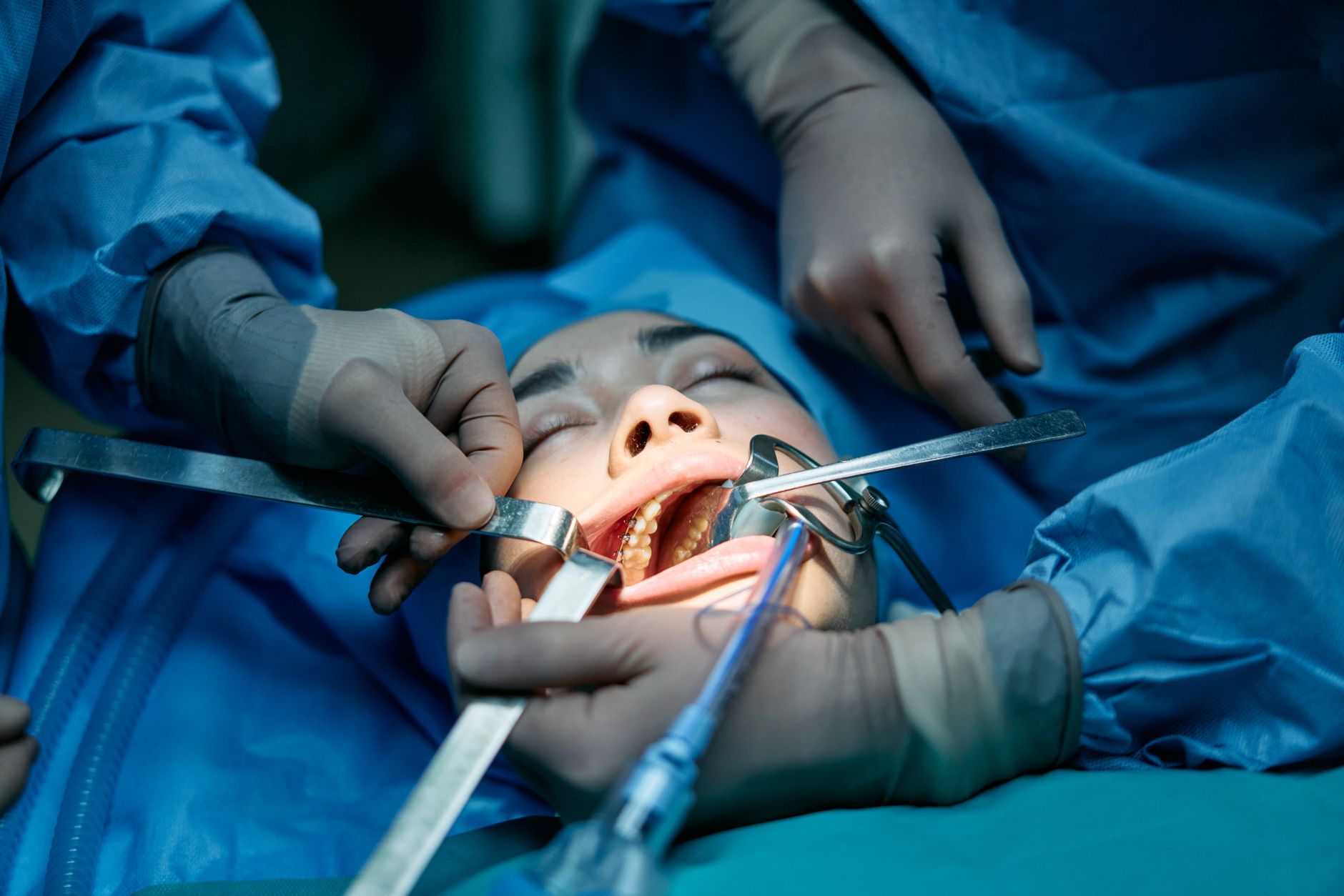
Replanning facial skeletal balance with advanced jaw surgery
Advanced jaw surgery aims to improve bite relationships and facial proportions by repositioning the lower jaw, upper jaw, or both. This process is not only an aesthetic change; daily functions such as chewing, speaking, breathing, and joint comfort are also evaluated.
For an international patient, the most important point is that the surgery does not proceed on its own, but through a detailed planning chain. Tomography, facial analysis, bite records, and orthodontic preparation are considered together.
In which situations is this treatment considered?
- The lower jaw is positioned forward or backward
- The upper jaw is underdeveloped
- Open bite, crossbite, or a pronounced bite disorder
- Skeletal imbalances that disrupt load distribution in the jaw joint
- Facial skeletal imbalances affecting breathing and chewing function
The decision is not made by looking at appearance alone. The surgeon, orthodontist, and, when necessary, the team evaluating the jaw joint need to work together.
Safety of advanced jaw surgery in accredited clinics in Turkey
In Turkey, this treatment progresses more controllably when planned in centers with a Ministry of Health-approved Health Tourism Authorization Certificate and a fully equipped hospital infrastructure. Sterilization protocols, anesthesia assessment, and operating room safety form the foundation of the process.
Turkish physicians working in the field of jaw surgery handle a wide variety of cases in orthognathic surgery, asymmetric jaw corrections, and bimaxillary planning. In particular, 3D tomography-based surgical planning, splint preparation, and preoperative orthodontic coordination are important parts of practical experience in this field.
Hospital-based safety points
- Preoperative assessment for general anesthesia
- Checking surgical suitability with blood tests and imaging
- Operating room sterilization protocols
- Hospital infrastructure suitable for intensive care or observation if needed
- An early post-discharge follow-up plan
This structure is especially important for someone coming from abroad, because follow-up after the surgery day is also part of the safety chain.
What is included in an advanced jaw surgery package?
Packages usually organize airport-hospital-hotel transfers, interpreter support, accommodation, and early-stage care in a single flow. In advanced jaw surgery, preoperative facial photographs, panoramic X-rays, cephalometric analysis, and often 3D tomography planning are also performed; in Turkey, the length of stay is usually planned at around 7 to 10 days, including the initial evaluation and early postoperative check.
Having your companion stay with you at the hospital, choosing a hotel close to the hospital, and having quiet walking areas nearby while you rest can make the process more manageable. During this period, short park walks, quiet café areas, or light wellness options for the companion may help reduce stress.
How does online follow-up work?
- After discharge, wound healing is assessed remotely
- Nutrition, mouth opening, and swelling are monitored
- If needed, additional guidance is provided through images and photos
- If there is an ongoing orthodontic plan, that stage is coordinated separately
This approach helps ensure the process does not break down after you return to your country.
Cost comparison in Turkey, the UK, Germany, and the USA
For advanced jaw surgery, the average cost in Turkey may range from approximately €4,500 to €9,500 depending on the scope of the case. Single-jaw surgery, double-jaw surgery, hospital stay, anesthesia, imaging, and splint planning all affect this range.
| Country | Average Price | Currency |
|---|---|---|
| Turkey | 4,500 - 9,500 | € |
| United Kingdom | 8,000 - 15,000 | GBP |
| Germany | 7,000 - 13,500 | € |
| USA | 18,000 - 35,000 | $ |
This difference is not caused only by surgical fees. The type of hospital, anesthesia time, imaging plan, and whether the surgery is single-jaw or double-jaw determine the total cost.
Key factors affecting price and the process
- Physician expertise and case experience: Surgeons who can evaluate orthognathic surgery, facial asymmetry, and jaw joint relationships within the same plan may offer more comprehensive planning.
- Technical approach and material type: Elements such as 3D virtual surgical planning, custom splints, titanium plate-screw systems, and double-jaw surgery change the cost.
- Clinic location: Operating room, inpatient stay, and logistics costs may differ between fully equipped hospitals in major cities and smaller centers.
What matters here is not only the price, but whether the plan is designed in a way that suits your jaw structure. In particular, double-jaw surgery, single-jaw correction, and orthodontic preparation time create different clinical demands.
Compared surgical approaches
| Methods Compared for You | Main Benefit for You | Your Recovery and Hospital Stay |
|---|---|---|
| Single-jaw surgery | A shorter surgical plan in cases requiring more limited skeletal correction | Usually 1-2 nights in hospital, and initial recovery may be shorter |
| Double-jaw surgery | Allows a more comprehensive correction of jaw relationship and facial balance | Usually 2-3 nights in hospital, with swelling and nutrition monitored more carefully |
The most rational questions after this page
- How long does orthodontic preparation for advanced jaw surgery take, and which tests are needed?
- When deciding between single-jaw and double-jaw surgery, which facial and bite criteria are most important?
- In online follow-up after surgery, which findings are considered normal, and which require reassessment?
These questions are the best starting point for understanding the treatment plan more clearly. In the next step, orthodontic preparation, jaw joint evaluation, or the postoperative recovery process can be reviewed under separate headings.