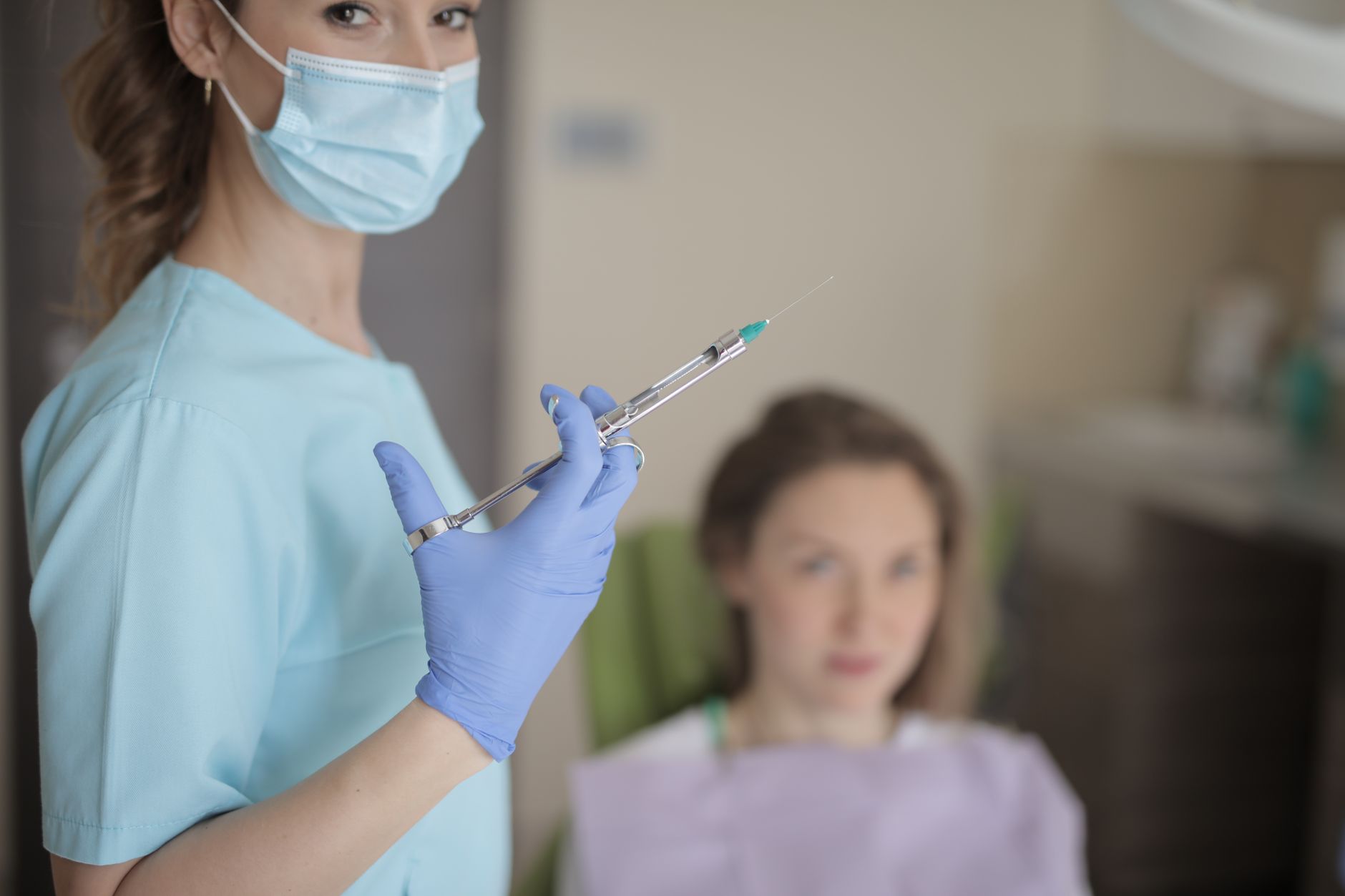
Why is sedation considered in multiple dental implants?
Multiple dental implants refer to placing more than one implant in the same session or in stages. As the procedure becomes longer, the treatment area in the mouth expands, and additional surgical steps such as bone grafting are introduced, sedation may be considered to improve comfort.
The goal is not only to reduce pain; it is also to control anxiety during the procedure, make long surgical sessions more tolerable, and help the clinical team work in a more organized way. Sedation does not always mean general anesthesia; in most cases, relaxation is achieved with a lighter level of consciousness.
The difference between sedation and general anesthesia
During sedation, breathing is usually maintained and the patient can respond to stimuli. In general anesthesia, consciousness is fully lost and closer monitoring by the anesthesia team is required.
- Light sedation: Reduces anxiety while the patient remains able to communicate.
- Deep sedation: Creates a state close to sleep, with a marked reduction in awareness of the procedure.
- General anesthesia: Consciousness is fully lost, and the airway and vital signs are closely monitored by the anesthesia team.
How is safe anesthesia planning done for multiple implants in Turkey?
When treatment is planned within health tourism in Turkey, centers with a Ministry of Health-approved Health Tourism Authorization Certificate are preferred. In these centers, implant surgery and anesthesia are evaluated together, so both the surgical plan and anesthesia safety are organized within a single workflow.
In multiple implant cases, the experience of Turkish physicians is especially notable in full-arch restorations, jaws with advanced bone loss, upper jaw implants planned together with sinus lifting, and cases involving multiple extractions and implants in the same session. In such cases, surgical duration, bone quality, and accompanying systemic conditions are decisive in choosing the type of anesthesia.
Main points considered in the evaluation
- Procedure duration: If several implants will be placed, the need for comfort increases.
- Surgical scope: If extraction, grafting, or sinus lifting is added, the anesthesia choice may change.
- Overall health status: Cardiovascular disease, respiratory problems, and medications used affect the anesthesia plan.
- Level of anxiety: Sedation is more commonly considered for people with dental fear.
What does a multiple dental implant package include?
In health tourism packages, VIP transfer, hotel accommodation, interpreter support, and the initial care process are often organized together. For multiple implants, pre-procedure panoramic X-rays, dental tomography when needed, and jawbone measurements are also planned; in some cases, an additional pre-anesthesia evaluation is requested.
This preparation varies depending on the number of implants and the jaw structure. Especially when multiple implants in the same session, a temporary prosthesis plan, or bone grafting is being considered, the stay in Turkey may range from a few days to one week.
What is requested before the procedure?
- Imaging: Bone volume is assessed with a panoramic X-ray or CBCT.
- Medical history: Chronic conditions and regularly used medications are reviewed.
- Anesthesia consultation: It is clarified whether sedation or general anesthesia is needed.
- Prosthetic plan: The timing of temporary or permanent restoration is determined.
Cost comparison in Turkey, the UK, Germany, and the USA
The need for sedation or general anesthesia in multiple dental implants can increase the total cost; however, in Turkey, this procedure is often planned with a more accessible budget compared with Europe and the United States. The average cost in Turkey is estimated at around €2,500–€6,500, depending on the scope of the case.
| Country | Average Price | Currency | Note |
|---|---|---|---|
| Turkey | €2,500–€6,500 | EUR | Varies depending on sedation, imaging, and the multiple implant plan |
| United Kingdom | £4,500–£10,000 | GBP | Costs may increase with private clinics and anesthesia team fees |
| Germany | €4,000–€9,000 | EUR | Higher costs may be seen in grafting and full-arch plans |
| USA | $6,000–$15,000 | USD | General anesthesia and laboratory expenses can raise the total |
Main factors affecting price and treatment process
The physician’s expertise and case experience
Multiple implants require a more planned surgical approach than a single implant. Especially if there are additional steps such as bone grafting, sinus lifting, or full-arch restoration, working with a physician experienced in implantology and oral surgery may affect the price.
The method used and the type of anesthesia
One of the most important technical factors in pricing is the choice between sedation and general anesthesia. In addition, the number of implants, the area where the implant will be placed, bone quality, and methods such as CBCT-guided planning, if needed, also change the total cost.
The clinic location
In cities with high health tourism traffic such as Istanbul, Antalya, and Izmir, pricing may vary depending on the clinic infrastructure, access to an anesthesia team, and laboratory workflow. The center’s hospital affiliation, operating room standards, and postoperative follow-up structure are also reflected in the overall budget.
What questions should be clarified next?
After reading this page, the three most rational questions are usually the following:
- In my case, is sedation enough, or is general anesthesia needed? How is this decision made based on the number of implants and the procedure time?
- Can bone grafting or sinus lifting be planned in the same session as multiple implants? How does this combination affect recovery time?
- How many days do I need to stay in Turkey, and when is the temporary prosthesis placed? How should the flight plan be organized accordingly?
These questions are the most critical for clarifying the treatment plan. A pre-evaluation performed at a suitable center makes the need for sedation and the surgical workflow more predictable.