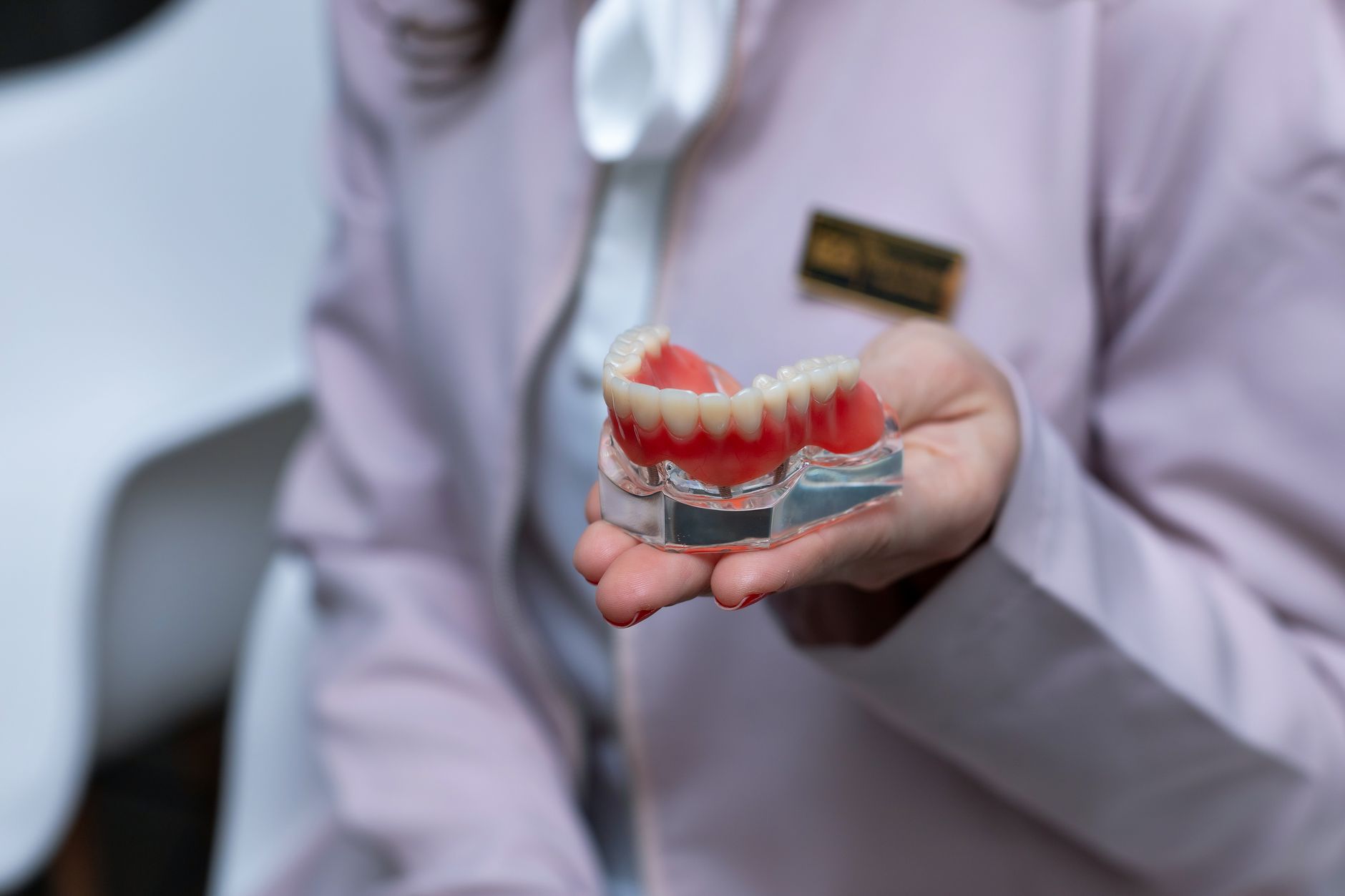
Why does allergy come up in denture treatment?
Because a denture is a restoration that remains in the mouth for a long time, the biocompatibility of the material used is important. In particular, metal alloys, acrylic resins, adhesives, and some auxiliary materials may cause problems in people with sensitivities.
This does not always mean a true allergy. Sometimes mechanical irritation, poor edge fit, dry mouth, or contact irritation can cause similar complaints.
- Metal alloys: May contain nickel, cobalt, chromium, or palladium.
- Acrylic materials: Sensitivity may develop, especially to polymer residues.
- Adhesives and auxiliary materials: Rarely, they may cause contact reactions.
Which symptoms are important?
Burning in the mouth, redness, taste changes, irritation around the lips, tongue sensitivity, and a recurring feeling of discomfort in the area where the denture touches may be observed. Symptoms usually begin after the denture is placed and continue as long as contact with a specific material persists.
Symptoms alone should not be considered proof of allergy. Clinical examination and, if needed, additional tests are evaluated together.
How is safety handled when planning a denture in Turkey?
In centers in Turkey that hold a Health Tourism Authorization Certificate approved by the Ministry of Health, material selection, the laboratory process, and the patient's medical history are considered together. Before denture treatment, any previous reactions to metal jewelry, watches, implants, orthopedic materials, or cosmetic products are specifically asked about.
Turkish doctors have extensive experience with the alloys used in fixed dentures, partial dentures, full dentures, and implant-supported restorations. This experience allows for more cautious and personalized planning when deciding which material may be most suitable.
Key points assessed during evaluation
- Medical history: Whether there has been any previous sensitivity to metal, latex, acrylic, or adhesives
- Examination: Intraoral redness, ulceration, denture fit, and contact points
- Imaging and measurement: Jaw structure and supporting tissues that affect denture fit
- Material selection: Metal alloy, ceramic, zirconia, or metal-free options
What does the package content include in the denture process?
VIP transfer, hotel accommodation, interpreter support, and initial care/medications are usually organized in a single package. In addition, impression taking for the denture, try-in stages, and laboratory adjustments are also an important part of the plan.
For this treatment, the stay in Turkey often ranges from a few days to one week; for fixed dentures, the number of try-in sessions, and for implant-supported restorations, additional appointments may be needed depending on the condition of the bone and gums.
Preparation steps specific to dentures
- Initial examination: Evaluation of oral tissues and existing restorations
- Impression taking: Precise records that determine denture fit
- Material decision: Whether a metal alloy or a metal-free option will be used
- Try-in: Checking bite, aesthetics, and function
Denture costs in Turkey, the UK, Germany, and the USA
In Turkey, the average cost of denture treatment varies depending on the material type and whether the denture is fixed or removable, but it is approximately in the range of €450–€1,500. Metal content, laboratory standards, and the need for additional try-ins affect this range.
| Country | Average Price | Currency |
|---|---|---|
| Turkey | €450–€1,500 | EUR |
| United Kingdom | £800–£2,500 | GBP |
| Germany | €900–€2,800 | EUR |
| USA | $1,200–$4,000 | USD |
Prices may vary depending on the clinic standard and the type of denture used. The exact plan becomes clear after examination and measurements.
Factors affecting the price and process
Doctor's expertise and case experience
A doctor who can interpret jaw closure, aesthetic expectations, and allergy history together can offer a more personalized solution in denture planning. This experience is especially important in cases with previous unsuccessful denture experiences.
Material and technique selection
Metal-supported porcelain, full ceramic, zirconia, or metal-free hybrid options change the price. A structure made with a nickel-cobalt alloy will not cost the same as a completely metal-free denture.
Clinic location
In major cities such as Istanbul, Ankara, and Izmir, laboratory infrastructure, rental costs, and team organization may affect the price. Multi-stage denture plans in central locations may require a higher budget.
Next steps and frequently asked questions
- If metal allergy is suspected, which tests are requested? How are patch testing, history evaluation, and, if needed, material changes planned?
- Is a metal-free denture always safer? In which situations are zirconia, full ceramic, and hybrid options preferred?
- Does the allergy risk differ between an implant-supported denture and a conventional denture? How do the support structure and the connecting parts make a difference?