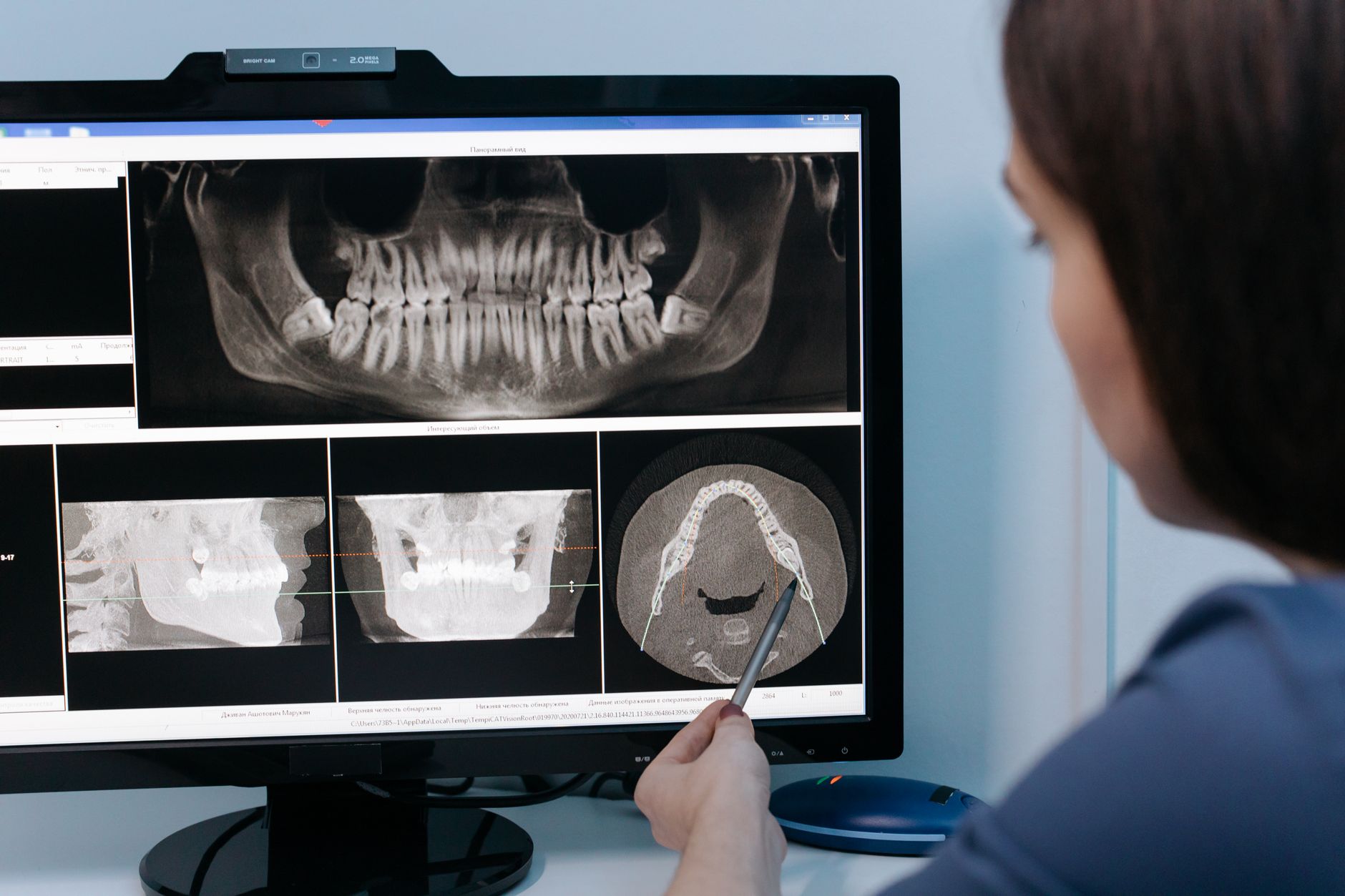
Why is CBCT-based implant planning a critical first step?
Success in implant treatment begins not only with placing the screw, but with accurately reading the jawbone in three dimensions. 3D Cone Beam Computed Tomography (CBCT) provides detailed information about bone height and width, the sinus floor, the lower jaw nerve canal, and nearby anatomical structures, making planning more predictable.
This approach makes a major difference, especially in cases involving multiple implants, narrow bone structure, the sinus area, or treatment close to the aesthetic zone. Because a clear map is created before treatment, the surgical stage can proceed in a more controlled way, and the prosthetic design is shaped accordingly.
Safety and clinical standards in CBCT-based implant planning in Turkey
Clinics in Turkey that provide services within health tourism and hold a Ministry of Health-approved Health Tourism Authorization Certificate can organize the imaging and surgical process under one roof. This structure reduces time loss for international patients between different centers and strengthens coordination between planning and treatment.
The experience of Turkish physicians in implantology is especially important in technically sensitive cases such as full-arch restorations, areas with limited bone volume, and placements near the sinus. Measurements made through CBCT support more rational decisions regarding implant angle, diameter, length, and placement depth.
Key points reviewed during assessment
- Bone volume: Sufficient height and width are checked for safe implant placement.
- Nerve and sinus relationship: Planning is done to protect the lower jaw nerve and the upper jaw sinus cavity.
- Adjacent teeth and roots: The placement area is analyzed so it does not overlap with surrounding tooth structures.
- Angular planning: The most suitable implant direction is determined to support the prosthetic load.
What is included in a CBCT-supported implant planning package?
Packages usually include VIP transfer, hotel accommodation, interpreter support, and initial care/guidance services. In this way, imaging, consultation, and treatment steps can be combined into a single travel plan.
For this procedure, a short clinical evaluation is often performed first, followed by an examination of the existing teeth and jaw structure, then CBCT imaging and digital planning. If there is insufficient bone, a sinus relationship, or a need for multiple implants, the treatment schedule is adjusted accordingly.
After your screening process, light walks along the Antalya coast with your companion, quiet seaside routes in Bodrum, or short wellness breaks focused on rest in thermal regions can be planned. These activities can increase travel comfort without disrupting the treatment pace and add a calmer rhythm to recovery.
How is the length of stay in Turkey planned?
- Single imaging session: The CBCT scan is completed in a short time.
- Planning consultation: Digital measurements and the treatment strategy can be reviewed on the same day.
- Need for advanced surgery: If bone grafting, sinus lifting, or multiple implants are required, the stay may be longer.
Cost comparison in Turkey, the UK, Germany, and the USA
The average cost of CBCT implant planning packages in Turkey ranges from approximately €250–€700, depending on the scope. This range varies according to the level of imaging, specialist evaluation, and digital planning.
| Country | Average Price | Note |
|---|---|---|
| Turkey | €250–€700 | Varies depending on CBCT, planning, and consultation content |
| United Kingdom | £400–£900 | Digital planning may be charged separately in private clinics |
| Germany | €350–€850 | The center and imaging scope affect the price |
| USA | $500–$1,200 | Costs may increase, especially in advanced digital surgical planning |
Screening options for you
| Screening options for you | When should you choose it? | Early diagnostic value it provides |
|---|---|---|
| Standard panoramic evaluation | When a simple single-tooth implant or a general preliminary check is needed | Provides a basic anatomical view, but three-dimensional detail is limited |
| Advanced CBCT-based planning | When the sinus is nearby, bone is narrow, multiple implants are needed, or the aesthetic zone is involved | Shows the nerve, sinus, and bone volume in three dimensions, helping identify risks earlier |
Main factors affecting price and process
The fee may vary as physician expertise and case experience increase; planning becomes more detailed especially in technically challenging cases such as full-arch treatment, graft needs, or the sinus area. The resolution of the CBCT device, the use of digital surgical guides, and the complexity of the implant site are also among the factors affecting the total cost.
- Physician expertise and experience: Experience in implantology, oral surgery, and digital planning may affect the price.
- Technology and method: CBCT resolution, guided surgery, 3D planning software, and the implant system are determining factors.
- Clinic location: Price differences may exist between clinics in major city centers and those in quieter areas.
Which questions should be clarified after this package?
After reviewing the content, the most rational next step is to clarify which surgical stage the planning will lead to. The questions below help speed up the decision-making process before moving on to the next treatment pages.
- How is the need for sinus lifting understood on CBCT? This evaluation clarifies whether additional bone support is needed for implant placement in the upper jaw.
- Is a digital surgical guide necessary in every case? Its role may vary, especially in multiple implant cases and aesthetic zone planning.
- When is bone grafting considered before implants? If bone volume is insufficient, planning may guide grafting or alternative placement options.
This page shows that implant treatment is not just a surgical procedure, but a process that begins with the right imaging and the right mapping. CBCT-based planning is one of the most critical steps in supporting both safety and long-term prosthetic success.