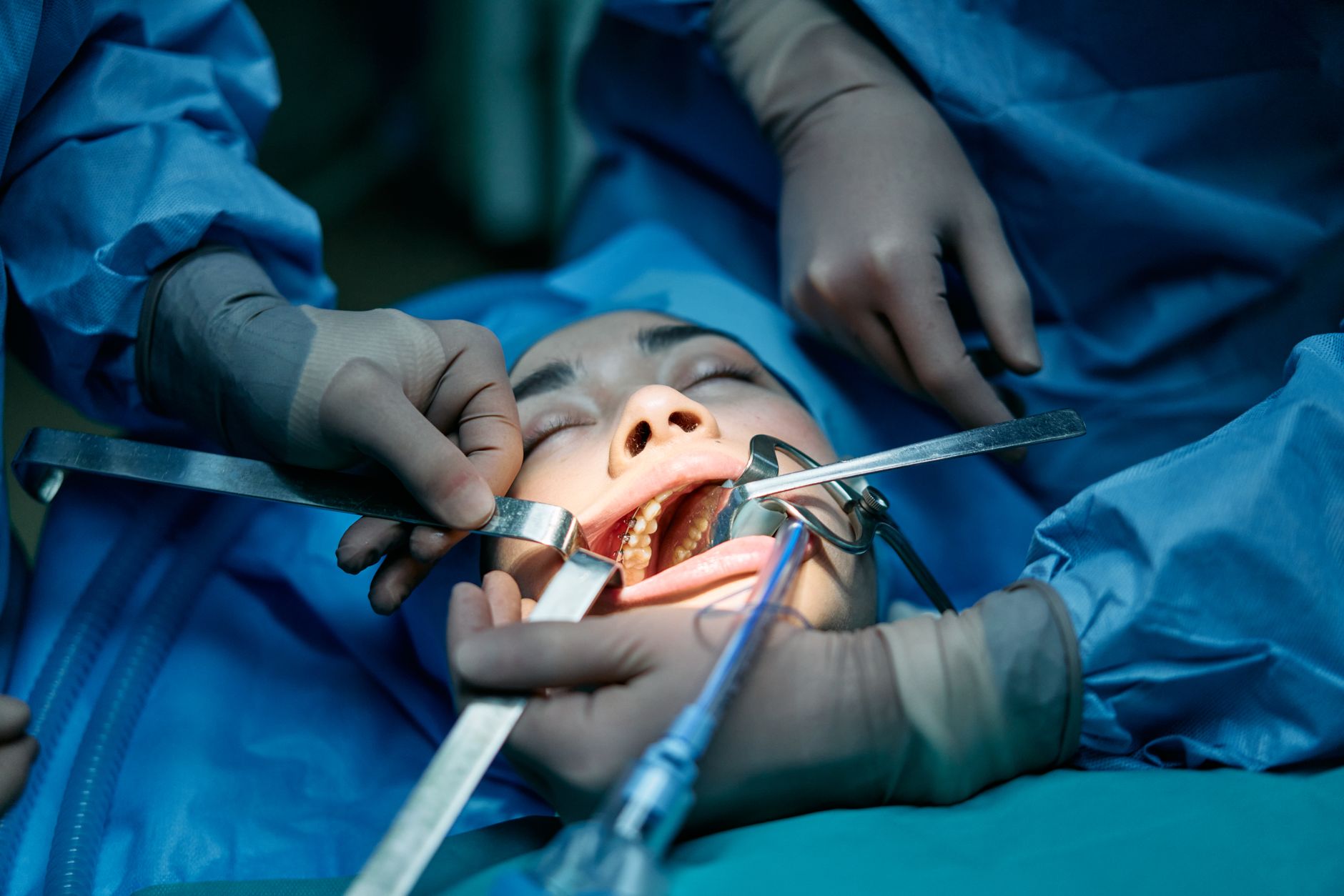
What Does Jaw Cyst and Tumor Surgery Change?
Cysts and tumors that develop in the jawbone are often noticed through symptoms that affect daily life, such as pain, swelling, difficulty chewing, tooth displacement, or facial asymmetry. Surgical planning aims to remove the lesion while preserving jaw integrity; in some cases, reconstructive repair is added to the same procedure.
This procedure does more than remove the lesion; it also takes functional areas such as speech, chewing, and facial aesthetics into account. In particular, larger defects may require bone grafting, plate-screw systems, or soft tissue support.
Safety and Clinical Standards in Jaw Surgery in Turkey
In Turkey, when these surgeries are planned in centers with a Health Tourism Authorization Certificate approved by the Ministry of Health, sterile operating rooms, imaging infrastructure, and multidisciplinary evaluation are organized under one roof. Jaw surgery teams work together with oral, dental and maxillofacial surgery, radiology, pathology, and, when needed, plastic and reconstructive surgery.
Experience with cases in this field is especially important in surgical planning based on panoramic X-rays, dental CT/CBCT, and biopsy results. In large cysts, different approaches such as marsupialization, enucleation, segmental resection, and reconstruction may be evaluated within the same center.
Dynamic Surgical Approaches
| Methods Compared for You | Most Important Benefit for You | Your Recovery and Hospital Stay |
|---|---|---|
| Enucleation + bone-preserving approach | Preserves jaw integrity as much as possible in small, localized lesions | Usually a shorter hospital stay and a faster return to daily life |
| Segmental resection + reconstruction | Provides safe removal and functional repair in large or aggressive lesions | Longer surgery, a few days of hospital monitoring, and gradual recovery |
What Is Planned in a Jaw Cyst and Tumor Surgery Package?
The package usually includes VIP transfer, hotel accommodation, interpreter support, and initial care/medication arrangements in a short and organized process. In this treatment, preoperative CBCT, blood tests, oral examination, and, if needed, a biopsy plan are also clarified; the length of stay in Turkey varies depending on the size of the lesion and the need for reconstruction.
Some centers can arrange for a companion to stay with you in the hospital; choosing a hotel close to the hospital reduces transportation stress. While you rest, nearby quiet walking areas, short city outings, or wellness options may be considered for your companion.
Cost Comparison in Turkey, the UK, Germany, and the USA
The average cost of jaw cyst and tumor surgery in Turkey may range from approximately €2,500–€6,500, depending on the scope of the procedure. Reconstruction, length of stay, and pathology examination can increase this range.
| Country | Average Price |
|---|---|
| Turkey | €2,500–€6,500 |
| United Kingdom | £4,000–£10,000 |
| Germany | €4,500–€11,000 |
| USA | $8,000–$20,000 |
Key Factors That Determine the Price and Process
- Physician expertise and case experience: The surgical plan changes depending on whether the lesion is a cyst, a benign tumor, or an aggressive lesion; reconstructive experience is especially important in large defects.
- Technique and material selection: Options such as enucleation, marsupialization, segmental resection, titanium plates, bone grafts, or graft-supported reconstruction directly affect the price and process.
- Clinic location: Fully equipped centers in major cities may have different cost levels due to access to advanced imaging and multidisciplinary teams.
The variables in this section determine not only the scope of surgery but also the recovery plan. In cases requiring reconstruction, surgery time, hospital stay, and follow-up frequency may increase.
What Questions Should Be Clarified Next?
- Does the size and location of the lesion require enucleation or resection?
- Will bone grafting or plate support be planned for the defect in the jawbone?
- When will online follow-up, suture checks, and imaging be done after surgery?
These questions help define the pathology, reconstruction, and recovery process more clearly at the next evaluation. In particular, imaging and biopsy results are among the key data that determine the treatment path.