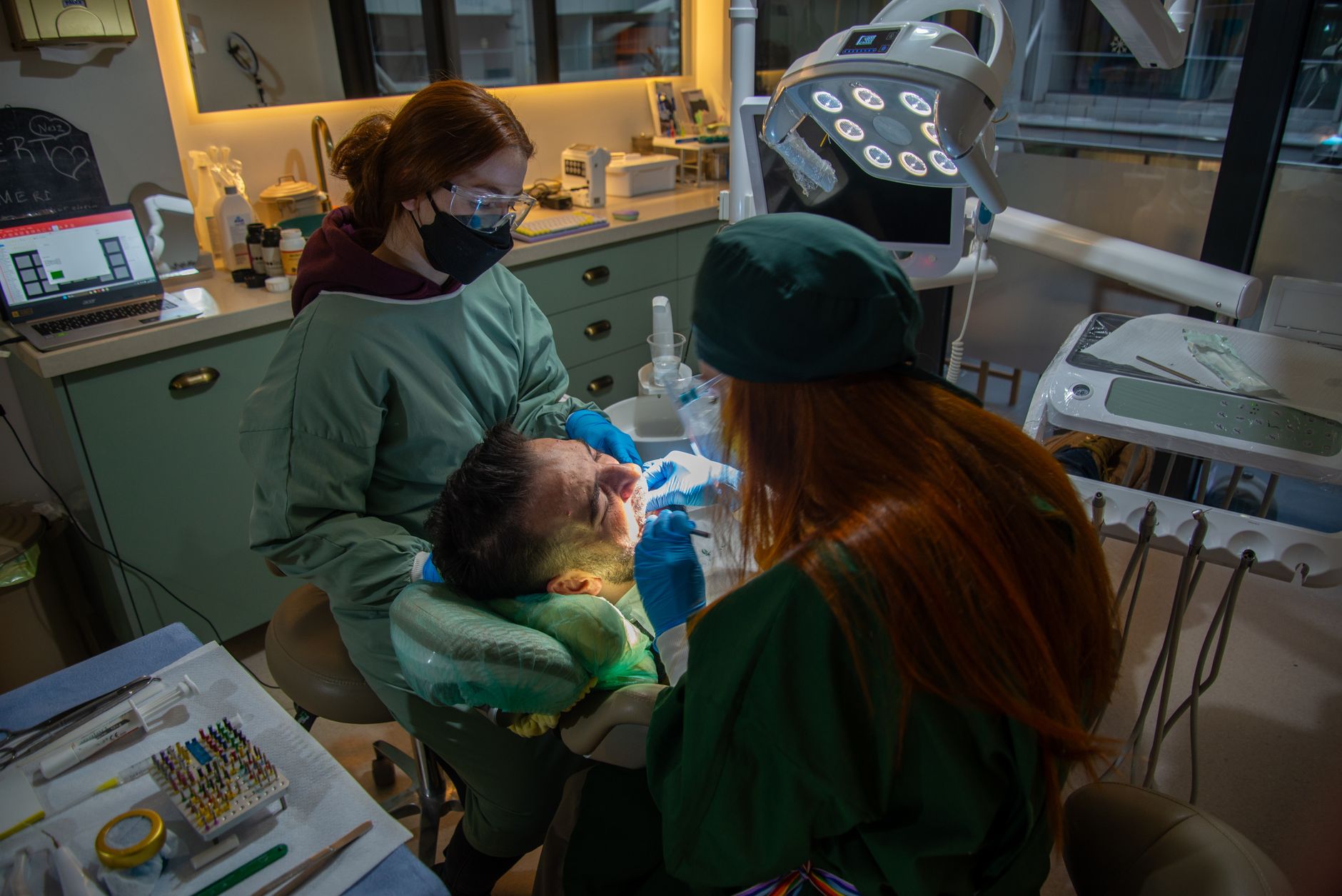
What do flap surgery and bone defect repair aim to achieve?
Advanced periodontal surgery aims to clean deep pockets and help supporting tissues become healthier by providing controlled access to infected areas beneath the gums. Bone defect repair is planned according to the type of bone loss caused by periodontitis, with the goal of reshaping the area and making it stable.
This page is prepared especially for people living abroad who are considering treatment planning in Turkey. It clearly explains how the process works, which methods stand out, and which factors affect the cost.
Safety and clinical standards in periodontal surgery in Turkey
In Turkey, this treatment is planned in centers with a Ministry of Health-approved health tourism authorization certificate, using sterile surgical protocols and a controlled follow-up process. Dentists working in periodontology evaluate steps such as flap debridement, bone contouring, regenerative approaches, and soft tissue management separately according to the case type.
Especially in areas with advanced bone defects, root surfaces are cleaned carefully during surgical access, the defect morphology is examined, and if needed, regenerative materials are selected with care. Rather than a single standard procedure, this is a planned surgical decision-making process shaped by clinical findings.
Key points considered during evaluation
- Periodontal pocket depth: Determines the need for surgery and access.
- Type of bone defect: Vertical or horizontal loss changes the treatment approach.
- Radiographic findings: Bone support is assessed with panoramic X-rays and, when necessary, CBCT.
- Overall oral hygiene: One of the main factors affecting post-surgical healing success.
What does the flap surgery and bone repair package include?
The package usually includes VIP transfer, hotel accommodation, interpreter support, and initial care/medication planning. In addition, the length of stay in Turkey for this treatment is often planned to cover the first surgery and short follow-up appointments; before the procedure, periodontal charting, radiographic examination, and, if needed, blood tests are evaluated.
Having your companion stay with you in the hospital or in accommodation close to the clinic can help you go through the process more calmly. Choosing a hotel near the hospital and allowing your companion to spend time nearby with low-intensity activities such as short walks, the coastline, or quiet wellness areas can make the waiting period more comfortable.
Pre-procedure preparation flow
- Clinical registration and periodontal measurements: Pocket depth, bleeding, and mobility are assessed.
- Imaging: X-rays or, if needed, a three-dimensional examination is performed.
- Surgical planning: Flap access, debridement, and defect repair options are clarified.
- Follow-up plan: Suture check, hygiene instructions, and the online follow-up date are set.
Cost comparison between Turkey, the UK, Germany, and the USA
The average cost of advanced periodontal surgery and bone defect repair in Turkey is often assessed in the range of €900-€2,500, depending on the scope of the case. The use of regenerative materials, the number of surgical sites, and the need for additional imaging can affect the total price.
| Country | Average Price | Currency |
|---|---|---|
| Turkey | €900-€2,500 | EUR |
| United Kingdom | £1,500-£4,000 | GBP |
| Germany | €1,400-€3,800 | EUR |
| USA | $2,500-$7,000 | USD |
These ranges can differ significantly between a single tooth area and multi-site surgery. In addition, when bone grafts, membranes, or advanced regenerative materials are used, the planning changes accordingly.
Practical factors affecting the comparison
- Number of sessions: There is a cost difference between single-site and multi-site surgery.
- Regenerative approach: The type of bone defect determines the need for additional materials.
- Follow-up frequency: The number of post-surgical check-ups can affect the overall plan.
Clinical factors that change the price and process
The dentist’s specialization and case experience
The periodontist’s experience with advanced bone defects, furcation involvement, and multi-pocket surgery directly affects the scope of the plan. In more complex defects, the surgical decision is based not only on cleaning, but also on tissue stability and the risk of long-term support loss.
The technique and material type used
In flap surgery, options may include conventional open access, regenerative surgery, bone grafting, membrane-supported approaches, or soft tissue adjustment. These techniques, selected according to the defect structure, determine both the healing time and the total cost.
The clinic’s location
Clinics in major city centers may have different pricing due to imaging infrastructure, surgical room standards, and coordination capacity. In hospital-affiliated centers, the process is more integrated, while logistics may differ in clinics outside the city center.
What questions come up during post-procedure follow-up?
- When are the stitches removed after flap surgery and how is the first check-up planned? This is important for the healing timeline and online follow-up process.
- How does using a graft or membrane for a bone defect change healing? This is critical for understanding regenerative treatment options.
- Is treatment in Turkey planned in a single session or in stages? This distinction helps when deciding on multi-site treatment needs.
If you wish, I can also rewrite this page in a more corporate tone as an SEO-friendly landing page. I can also prepare a separate version focused on pricing or the patient journey for the same topic.