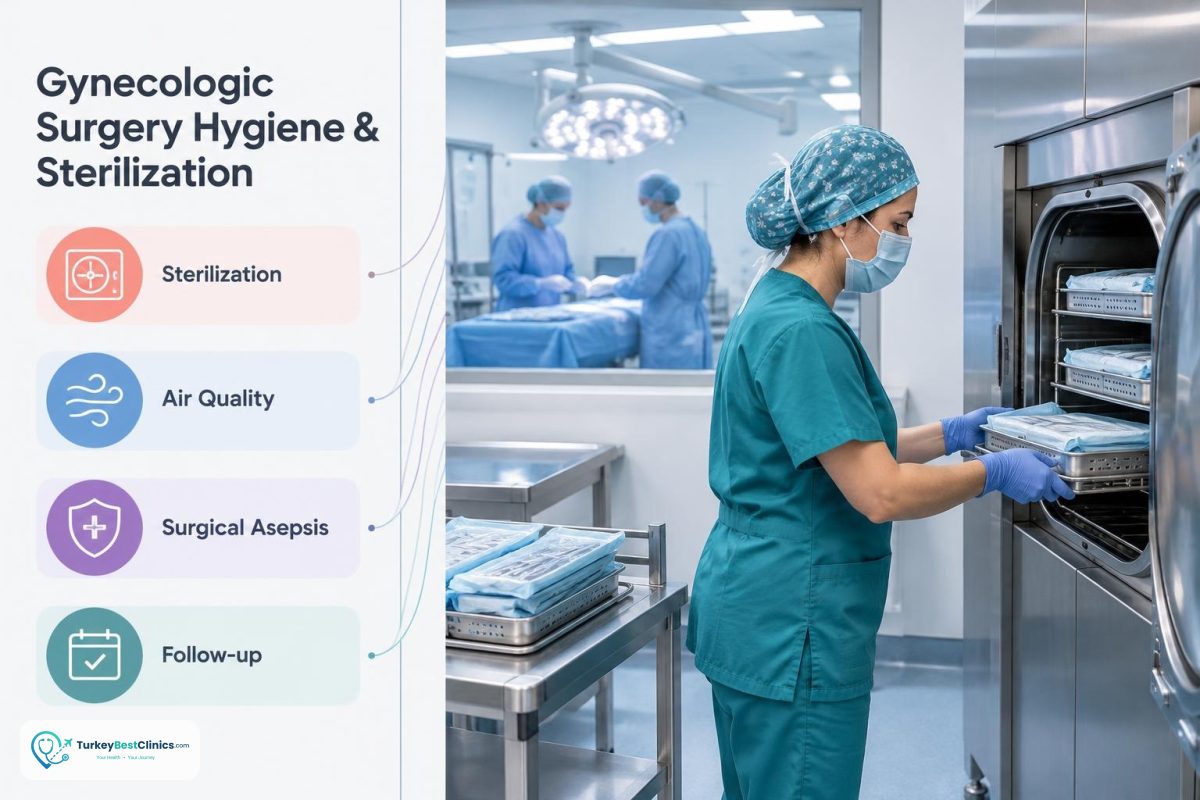
A System for Reducing Infection Risk in Gynecological Surgery
In gynecological surgery, infection risk varies according to the type of procedure, vaginal or abdominal access route, operation duration, devices used, and your general health. Therefore, it is not medically accurate to refer to a system that eliminates infection risk entirely; the aim is to reduce preventable risks to the lowest level possible through internationally accepted practices.
When choosing a reliable center in Turkey, you should consider more than the appearance of the operating room. The traceability of the sterilization unit, equipment maintenance records, preoperative assessment, and online follow-up after you return home should all be evaluated together.
How Is Gynecological Operating Room Safety Verified in Turkey?
The organization providing services within the scope of health tourism should hold a Health Tourism Authorization Certificate issued by the Republic of Türkiye Ministry of Health. This certificate indicates that healthcare services are provided under certain administrative and operational conditions; by itself, it does not mean that a specific operation will be free of complications or that infection will not occur.
It is important for the operation to be planned in a fully equipped hospital with a central sterilization unit. Turkish obstetrics and gynecology specialists use surgical asepsis, tissue-sparing techniques, and postoperative monitoring protocols together in procedures such as laparoscopic hysterectomy, myomectomy, endometriosis surgery, pelvic floor repair, and open gynecological operations.
Specific indicators to look for in the sterilization chain
- A central sterilization unit in which the flow of contaminated, clean, and sterile materials is separated.
- Recording pressure, temperature, and cycle duration in autoclaves, while taking into account technical frameworks such as EN 285 for steam sterilization or EN 13060 for small sterilizers.
- Use of chemical indicators in sterilization packs and a biological indicator program for process verification.
- Traceability of single-use materials by their expiration dates, packaging integrity, and lot numbers.
- Cleaning, disinfection, and sterilization of endoscopic and laparoscopic instruments according to the manufacturer’s instructions.
- Records of operating room surface cleaning, hand hygiene, personal protective equipment, and postoperative cleaning.
EN ISO 17665 for moist heat steam sterilization, EN ISO 11140-1 for chemical indicators, and EN ISO 11135 and EN ISO 11137 for certain low-temperature sterilization methods are among the technical references used in this field. The applicable standard is determined by the structure of the device and the sterilization method; not every standard is expected to be used for every instrument.
Hygiene and Companion Support in Your Gynecological Surgery Package
When the package is planned, airport-to-hospital transfers, accommodation, interpreter support, and basic arrangements during the initial care period are explained in a single coordination plan. Depending on the type of gynecological surgery, preoperative blood count, biochemistry, urinalysis, anesthesia assessment, pregnancy testing when necessary, vaginal or cervical evaluation, and imaging results are reviewed.
For laparoscopic procedures, the hospital stay is often approximately 1–2 nights, while open abdominal surgery may require approximately 2–4 nights; the exact duration varies according to the extent of the surgery and your recovery rate. Flight plans should not be finalized before bleeding control, mobilization, wound assessment, and the surgeon’s approval have been confirmed.
Whether your companion can stay with you in the hospital is clarified in advance according to the hospital’s companion policy; accommodation is selected, whenever possible, within a short travel distance of the hospital. While you rest, your companion may take a short walk in a nearby park or use wellness facilities at the hotel, provided this is consistent with the quiet environment and limited-mobility requirements of gynecological recovery and any medical restrictions.
After you return home, online follow-up assesses the appearance of the wound, fever, discharge, pain, urinary symptoms, bowel movements, and mobility. If unusual symptoms develop, you will be advised to contact a healthcare provider in your country; an online consultation does not replace an emergency examination.
The relationship between minimally invasive and open approaches and infection
Infection risk does not depend solely on the surgical technique. The access route, operation duration, bleeding, foreign materials used, coexisting conditions, and postoperative wound care should all be assessed together.
| Methods compared for you | Most important potential advantage | Recovery and hospital stay |
|---|---|---|
| Laparoscopic or robotic gynecological surgery | Smaller incisions and a lower wound burden in some procedures; earlier return to daily activities in suitable cases | Approximately 1–2 nights for most procedures; return to work and travel varies according to the extent of the surgery |
| Open abdominal gynecological surgery | Wider access to the surgical area in cases such as large masses, extensive adhesions, or complex reconstruction | Approximately 2–4 nights or longer; incision care and movement restrictions may be more pronounced |
Cost Framework in Turkey, the United Kingdom, Germany, and the United States
Operating room hygiene and sterilization protocols are generally not priced as a separate service; they are included in the surgical package, hospital services, and anesthesia. The ranges below are not quotations for a specific operation and should be regarded as general market indicators for moderately extensive gynecological procedures such as laparoscopic hysterectomy or myomectomy.
| Country | Approximate surgical package range | What to consider when interpreting the price |
|---|---|---|
| Turkey | €3,000–€8,000 | Hospital, surgeon, surgical method, accommodation, and follow-up coverage may vary |
| United Kingdom | £7,000–£15,000 | Private hospital, city, and surgeon fees affect the total |
| Germany | €6,000–€14,000 | Length of stay, surgical scope, and additional pathology services are important |
| United States | $12,000–$30,000 | Hospital, surgeon, anesthesia, and follow-up fees may be billed separately |
When requesting a quotation, look beyond the total amount and check whether operating room and central sterilization services are clearly included in the hospital package. Pathology, additional imaging, blood products, extended hospitalization due to complications, revision surgery, and follow-up expenses in your country should be stated separately.
Gynecological Surgery Criteria That Determine the Price and Process
- Specialist expertise and surgical experience: Skills such as laparoscopic suturing, endometriosis dissection, pelvic floor repair, or advanced adhesiolysis may affect the scope and planning of the procedure.
- Technology, technique, and materials: Laparoscopic energy devices, robotic surgical systems, bipolar or ultrasonic energy instruments, absorbable sutures, mesh use, and single-use trocars may change the cost. Not every technology is necessary for every operation.
- Clinic and hospital location: Hospital capacity, access to intensive care, accommodation costs, and transfer times may differ between Istanbul, Ankara, Izmir, and other cities.
- Scope of the operation: A single procedure, combined surgery, lymph node assessment, advanced endometriosis treatment, and reconstructive repair do not have the same price or hospitalization plan.
Questions About Gynecological Sterilization Before Making a Decision
- How are the autoclave cycles, biological indicator results, and instrument traceability records used in the central sterilization unit verified?
- If a laparoscopic approach is possible for my surgical plan, how would wound infection risk, hospital stay, and flight planning differ compared with open surgery?
- If I develop symptoms such as fever, foul-smelling discharge, increasing pain, or wound opening after returning home, how will online follow-up and coordination with a local healthcare provider be managed?
The quotation and surgical plan should be personalized by an obstetrics and gynecology specialist after reviewing your medical records. Ask for the sterilization protocol to be explained in writing, verify the Health Tourism Authorization Certificate, and request that the name of the hospital where the operation will take place be clearly stated in the contract.