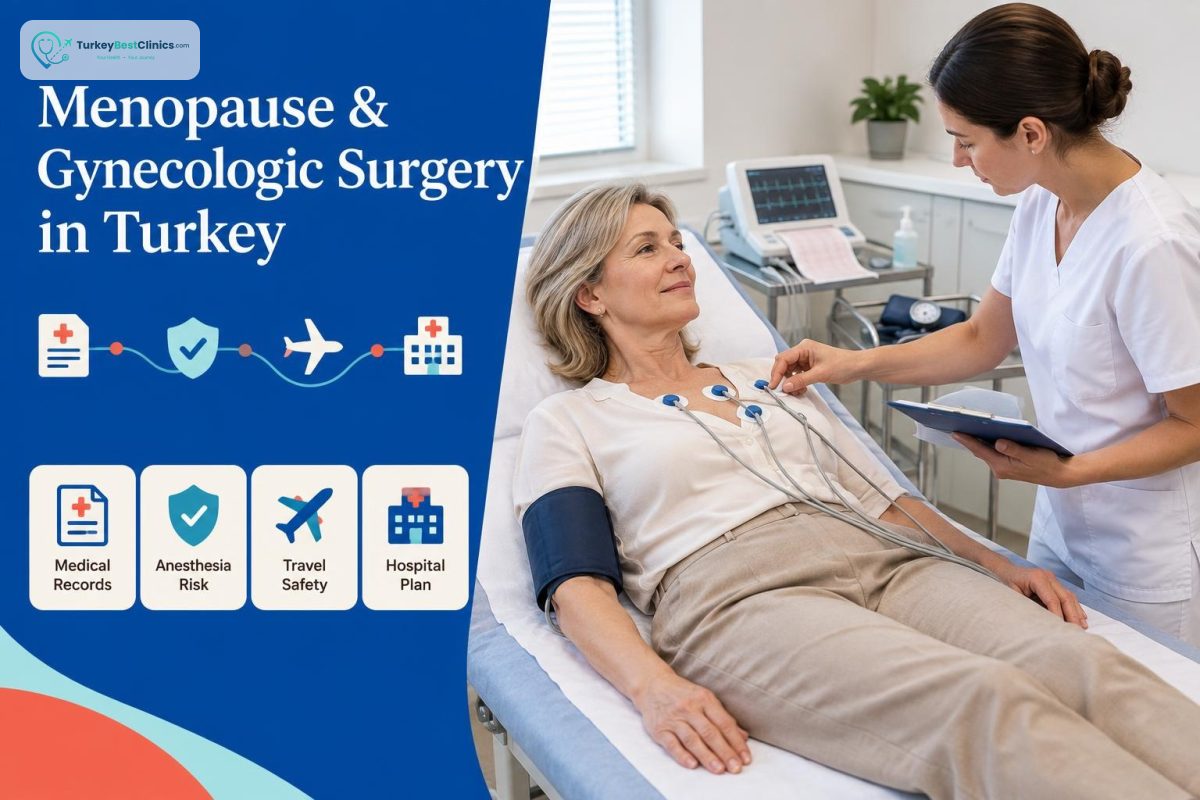
How Is Gynecological Surgery During Menopause Evaluated?
When gynecological surgery is planned during menopause, the assessment considers more than the surgery itself. Bone health, cardiovascular risks, current treatments, bleeding tendency, and healing capacity are evaluated together. If you have a chronic condition, your existing diagnoses, previous surgeries, and regular treatments are reviewed in detail before you travel to Turkey.
A remote pre-assessment does not constitute final approval for surgery. The surgeon, anesthesiologist, and, when necessary, cardiology, endocrinology, or pulmonology specialists make the final eligibility decision after an in-person examination, up-to-date tests, and hospital assessment.
What information is collected during the pre-assessment?
- The reason for surgery, current symptoms, and previous imaging results
- Age at menopause, hormone therapy use, and history of postmenopausal bleeding
- Heart disease, hypertension, diabetes, thyroid disease, lung disease, or kidney problems
- Previous anesthesia experiences, drug reactions, and history related to blood clotting
- Height, weight, mobility, and the risk of clotting during a long flight
Hospital Safety for Menopause and Chronic Conditions
The surgery should be performed in a fully equipped hospital by an institution holding a Health Tourism Authorization Certificate issued by the Ministry of Health of the Republic of Türkiye. A healthcare provider with this certificate must meet certain administrative and clinical requirements for international healthcare services; however, the certificate alone does not indicate that every surgery is suitable for you.
In cases such as postmenopausal bleeding, thickening of the uterine lining, fibroids, ovarian cysts, uterine prolapse, or suspected gynecological cancer, a Turkish obstetrics and gynecology specialist evaluates ultrasound, endometrial sampling, MRI, or pathology results together with the surgical plan. The choice between laparoscopic surgery, vaginal surgery, and an open abdominal approach varies according to the nature of the condition, previous abdominal surgeries, the possibility of adhesions, and overall health.
Before surgery, the hospital should confirm its operating-room sterilization protocols, intensive care access, blood bank, imaging department, and postoperative monitoring facilities. If menopause is accompanied by cardiovascular disease, loss of bone density, or diabetes, anesthesia assessment and a postoperative mobilization plan become particularly important.
Key components of your remote eligibility file
- Doctors’ reports and discharge documents from the last 6–12 months
- Pelvic ultrasound, MRI, mammography, or relevant imaging reports
- Pathology and smear results, and any report relating to biopsy material
- Recent laboratory results, including complete blood count, kidney and liver function tests, and glucose or HbA1c
- Electrocardiogram and specialist opinions regarding chronic heart or lung conditions
- A list of the active ingredients in all prescription and non-prescription treatments
Sending documents in Turkish or English, together with their dates and reference ranges, can speed up the assessment. Do not change blood thinners, hormone treatments, or diabetes treatments without a coordinated plan agreed upon by your own doctor and the surgical team.
Your Gynecological Surgery Package and Pre-Travel Preparation
The organization package may include airport-to-hospital transfers, accommodation, interpreter support, and coordination of the initial care period. The first postoperative check-up and any necessary care supplies are determined according to the type of procedure planned and the discharge decision.
The possibility of your companion staying with you in the hospital and the selection of a hotel near the hospital are arranged in advance. While you rest, your companion may choose low-effort options nearby, such as quiet park walks or hotel wellness areas. However, if open surgery, restricted mobility, or a risk of blood clots is involved, the distance between the hotel and hospital should be kept particularly short to support your companion with daily transportation and care.
Before you come to Turkey, most assessments require up-to-date blood tests, an electrocardiogram, and pelvic imaging. Depending on the scope of the surgery, chest imaging, a cardiology consultation, an anesthesia consultation, endometrial sampling for postmenopausal bleeding, or pathology review may also be required.
Process protocol and estimated length of stay
- Document review: Your medical records, imaging, and chronic conditions are included in the preliminary assessment.
- Online surgical consultation: The surgical option, alternatives, possible risks, and any additional tests required in Turkey are explained.
- In-person assessment in Turkey: The examination, anesthesia consultation, and necessary tests are completed.
- Surgery and hospital monitoring: The length of stay is determined by the scope of the procedure and your recovery. Laparoscopic or vaginal procedures may generally require shorter monitoring, while open surgery may require longer observation.
- Return home and online follow-up: The discharge report, pathology plan, follow-up date, and contact channels for emergencies are provided. After your return, online follow-up appointments monitor wound condition, mobility, and report results.
Comparison of two surgical approaches for you
| Methods Compared for You | Most Important Potential Advantage for You | Your Recovery and Hospital Stay |
|---|---|---|
| Laparoscopic or robot-assisted surgery | Smaller incisions, less abdominal wall trauma in some cases, and the possibility of moving earlier | Eligibility depends on the condition and anesthesia risk. Compared with open surgery, a shorter hospital stay may generally be planned. |
| Open abdominal surgery | May give the surgeon a wider field of view in cases involving a large mass, extensive adhesions, or complex anatomy. | Because of the abdominal incision, longer pain management, wound monitoring, and mobility restrictions may be required; the length of stay is determined according to individual health status. |
This table provides a general framework. A laparoscopic method is not automatically safer for every person who is menopausal or has a chronic condition. Anesthesia risk, previous surgeries, the possibility of bleeding, and the chance of converting to an open procedure should be discussed in advance.
Comparing Gynecological Surgery Costs in Turkey
In Turkey, the price varies depending on whether it includes more than the surgery fee, such as surgeon and anesthesia assessments, hospital services, pathology, accommodation, and the follow-up plan. The figures below are not a definitive quote for a specific surgery; they help illustrate the approximate international range that may be seen for procedures such as postmenopausal uterine, ovarian, or prolapse surgery.
| Country | Approximate gynecological surgery cost | Main factors that may affect the price |
|---|---|---|
| Turkey | €4,000–€9,000 | Procedure type, hospital stay, pathology, surgeon, and additional cardiology or anesthesia assessments |
| United Kingdom | £8,000–£18,000 | Private hospital, surgeon, anesthesia, and follow-up fees |
| Germany | €9,000–€18,000 | Surgical scope, hospital category, and additional diagnostic procedures |
| United States | $15,000–$35,000+ | Hospital, physician, anesthesia, pathology, and insurance coverage |
Before accepting a definitive quote, ask in writing whether the package includes preoperative tests, possible intensive care, additional nights of accommodation, the pathology report, interpreter services, and potential costs in the event of complications. Chronic conditions that require additional consultations may increase the total cost and the length of your stay in Turkey.
Clinical Criteria That Affect Eligibility and Cost
The following factors are considered together when assessing eligibility and planning costs:
- Physician expertise and experience: Experience in gynecologic oncology, minimally invasive surgery, urogynecology, or surgical risks during menopause becomes important depending on the complexity of the procedure. You should clearly ask about the specialist’s experience with the relevant procedure and the hospital’s authorizations.
- Technology, technique, and materials: Laparoscopic camera systems, robot-assisted surgery, energy devices, materials used in prolapse procedures requiring mesh, and the scope of pathology assessment may affect the price. The availability of a robotic system does not mean that a robotic approach is suitable in every case.
- Clinic location: Hospital, hotel, and transportation costs may vary in centers such as Istanbul, Ankara, Izmir, or Antalya. In addition to proximity to the airport, access to intensive care, a pathology laboratory, and follow-up appointments should also be considered.
- Control of chronic conditions: If blood pressure, blood glucose, heart rhythm, or lung capacity is not sufficiently controlled, an additional specialist opinion, longer observation, or postponement of surgery may be considered.
Your flight should not be scheduled immediately after surgery. The surgeon and anesthesia team should determine the return date by considering prolonged sitting, limited mobility, and your individual risk of blood clots together.
Next Steps Before Traveling to Turkey and Three Important Questions
When submitting your file, provide the current dates of your reports, your treatments, your mobility, and details of previous anesthesia experiences. Create a flexible travel plan while acknowledging that the final decision will be made after the examination and anesthesia assessment in Turkey.
- If you have postmenopausal bleeding or thickening of the uterine lining, is an endometrial biopsy and pathology report required before traveling to Turkey?
- In a person with diabetes, hypertension, or heart disease, which tests are used to determine whether a laparoscopic approach is suitable?
- Which clinical criteria are required before flying after surgery, and how does the online follow-up plan cover the pathology result and wound check?
The answers to these questions vary according to the findings in your medical file and the scope of the planned gynecological procedure. Without reviewing your medical records, it is not possible to make a reliable decision about definitive eligibility, an exact surgery date, or your individual risk level.