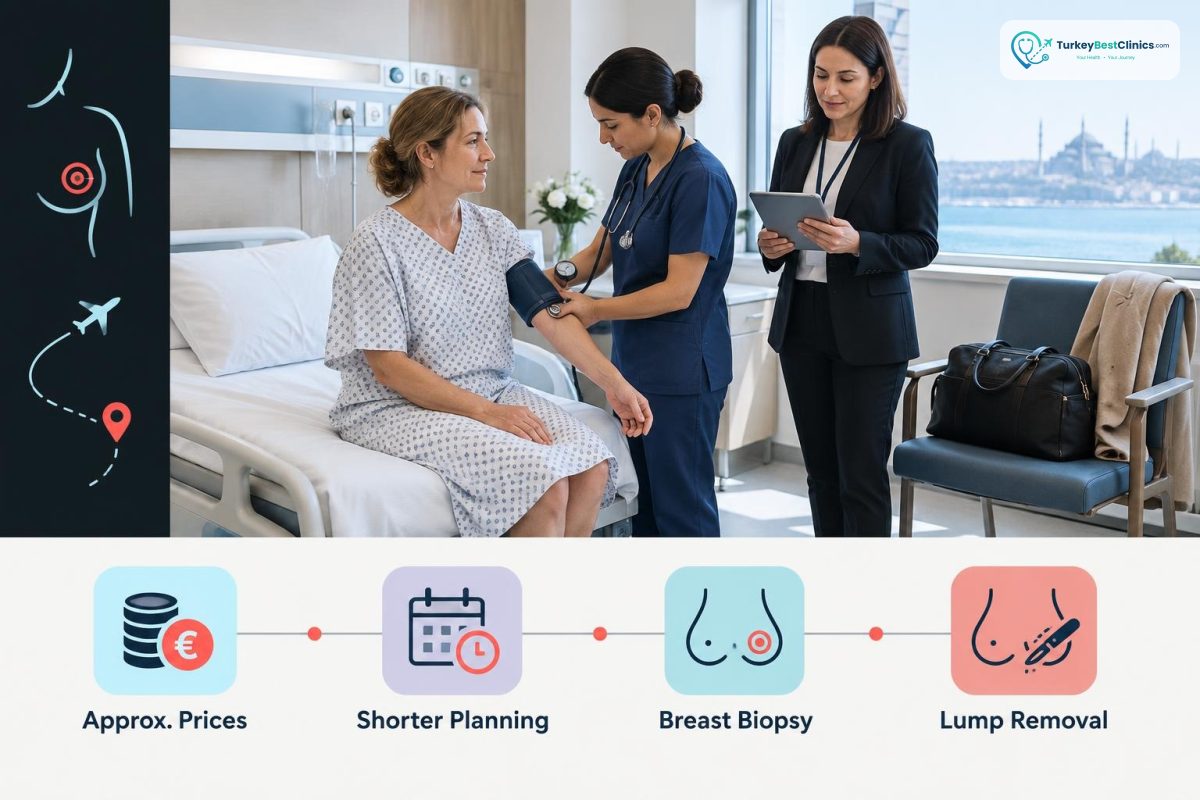
What Does the Breast Biopsy and Suspicious Lump Removal Process Involve?
When suspicious findings such as BI-RADS 4 or BI-RADS 5 are identified on breast imaging, a tissue sample may be required for definitive assessment. This sample is most commonly obtained through an ultrasound-guided tru-cut core needle biopsy; for some lumps, vacuum-assisted biopsy or surgical removal of the entire lump may be preferred.
The appropriate method is determined according to the lump’s size, location, imaging characteristics, previous biopsy results, and the need for surgery. Before travelling to Turkey, asking breast surgery and radiology specialists to review your mammograms, ultrasound and MRI images, and any existing pathology reports may help prevent unnecessary extensions to your travel plans.
Safety and Hospital Standards for Breast Surgery in Turkey
You should plan your procedure at a facility that holds a Health Tourism Authorisation Certificate issued by the Turkish Ministry of Health. This certificate indicates that the institution is authorised to provide international healthcare services; however, it is not, by itself, a guarantee of a specific doctor or surgical outcome.
For the removal of a suspicious breast lump, a fully equipped hospital should have an operating theatre, anaesthesia assessment, sterilisation traceability, emergency care infrastructure, and access to a pathology laboratory. You can assess the team’s practical experience in breast surgery by asking about procedures such as ultrasound-guided core needle biopsy, removal of non-palpable lumps using wire or seed localisation, assessment of surgical margins, and rapid communication with the pathology department.
Areas to Review When Assessing Safety
- Adding pathology reports to your file in English or with a Turkish medical translation
- Pre-procedure assessment by breast radiology, breast surgery and anaesthesia specialists
- Sending the removed tissue for histopathological examination
- Clarifying whether immunohistochemistry or additional pathology tests, when required, are charged separately
- Receiving a written plan for a post-discharge complications helpline and online follow-up after returning to your country
What Is Included in a Breast Biopsy and Lump Removal Package?
Depending on the selected provider, the planned package may include airport-to-hospital transfers, a hotel near the hospital, a medical interpreter, and initial post-procedure care support. Core needle biopsy is usually arranged as a day procedure, whereas surgical excision under general anaesthesia may involve preoperative blood tests, an anaesthesia consultation, mammography or ultrasound review, and wire localisation when necessary. In most cases, the planned stay in Turkey is 2–3 days for a biopsy and approximately 4–7 days for surgical removal.
You should clarify in advance whether your companion can stay with you in the same hospital room or in an accompanying-person area permitted by the hospital. When a hotel near the hospital is selected, low-intensity wellness services, quiet park walks, or short local relaxation activities can be planned for your companion while you rest; any restrictions on arm movement and fatigue after surgery should be taken into account.
After returning to your country, stitches, the appearance of the wound, pathology results, and the need for additional treatment may be assessed through online follow-up consultations. This follow-up does not replace an in-person examination by a local doctor. In particular, if you develop a fever, rapidly increasing swelling, heavy bleeding, shortness of breath, or uncontrolled pain, you should seek emergency medical assistance where you are.
Private Hospital Prices in Turkey and NHS Waiting Times
The figures below are approximate ranges that may be seen in international private healthcare services in 2026. They vary according to the city, hospital, type of anaesthesia, pathology coverage, and technique used to remove the lump. The NHS is the United Kingdom’s public healthcare system, and eligible patients are generally not charged for most diagnostic procedures in the same way as they would be charged by a private hospital. Therefore, Turkish prices should be compared with NHS waiting times and private healthcare costs rather than with an NHS fee.
| Country or system | Procedure | Approximate price or time | Important note |
|---|---|---|---|
| Private hospital in Turkey | Ultrasound-guided core needle biopsy | €500–€1,500 | Varies according to imaging, local anaesthesia and basic pathology coverage |
| Private hospital in Turkey | Surgical lump removal | €2,000–€5,500 | General anaesthesia, localisation, operating theatre and pathology coverage affect the price |
| UK private sector | Breast biopsy | £1,500–£4,000 | Varies according to the private clinic and pathology package; this is not an NHS price |
| UK NHS | Assessment of a suspicious finding | No standard direct charge | Waiting times vary according to referral and clinical priority |
| Private sector in Germany | Core needle biopsy or surgical excision | €1,500–€6,000 | The hospital, anaesthesia and pathology coverage are determining factors |
| Private sector in the United States | Core needle biopsy or surgical excision | $3,000–$12,000+ | Insurance, state, hospital and surgeon fees can change the total |
The NHS has rapid referral targets for suspected breast cancer. These commonly include a target for specialist assessment within two weeks, along with separate targets for confirming the diagnosis and starting treatment within specified timeframes. These targets are not guaranteed appointment dates, and actual timings may be extended by the referral area, imaging capacity, the need for biopsy, pathology workload, and the surgical decision. Private hospitals in Turkey may organise initial imaging and biopsy planning within a few days once the international patient file is complete; a definite date should be provided only after a clinical suitability assessment.
Factors That Affect the Price and Surgical Plan
- The doctor’s expertise and experience: In addition to the breast surgeon’s general surgical experience, their volume of practice involving non-palpable lumps, oncoplastic excision, and image-guided localisation should also be assessed.
- Technology, technique and materials: Methods such as ultrasound-guided tru-cut core needle biopsy, vacuum-assisted biopsy, wire localisation, or radioactive seed localisation require different costs and logistics. If the entire lump must be removed, preserving the surgical margins and orienting the excised tissue before sending it to pathology should also form part of the plan.
- Clinic location: Hospital, hotel, transfer and interpreter costs may vary between Istanbul, Ankara, Izmir and other cities. Proximity to the airport, the hospital’s international patient department, and whether the pathology laboratory is located within the institution can affect the overall travel plan.
Next Steps Before Travelling to Turkey
Before requesting a quotation, share your imaging files, previous biopsy or pathology reports, current treatments, and any known allergies. Ask for the quotation to list the surgeon, anaesthesia, operating theatre, imaging, pathology, possible additional stains, hospital stay, transfers, and online follow-up as separate items.
- If the core biopsy shows atypia or suspicion of cancer, can surgical excision in Turkey be planned during the same trip? Review the type of pathology, the need for surgical margin assessment, and the time required for a second opinion before making this decision.
- In which situations is wire localisation preferred over vacuum-assisted removal for a non-palpable breast lump? Ask for an individual assessment comparing lump size, imaging method, and expectations regarding the cosmetic result.
- How will the pathology result be shared with your breast team in your country, and which documents will online follow-up include? Clarify the report language, sharing of digital images, and responsibility for in-person follow-up before travelling.