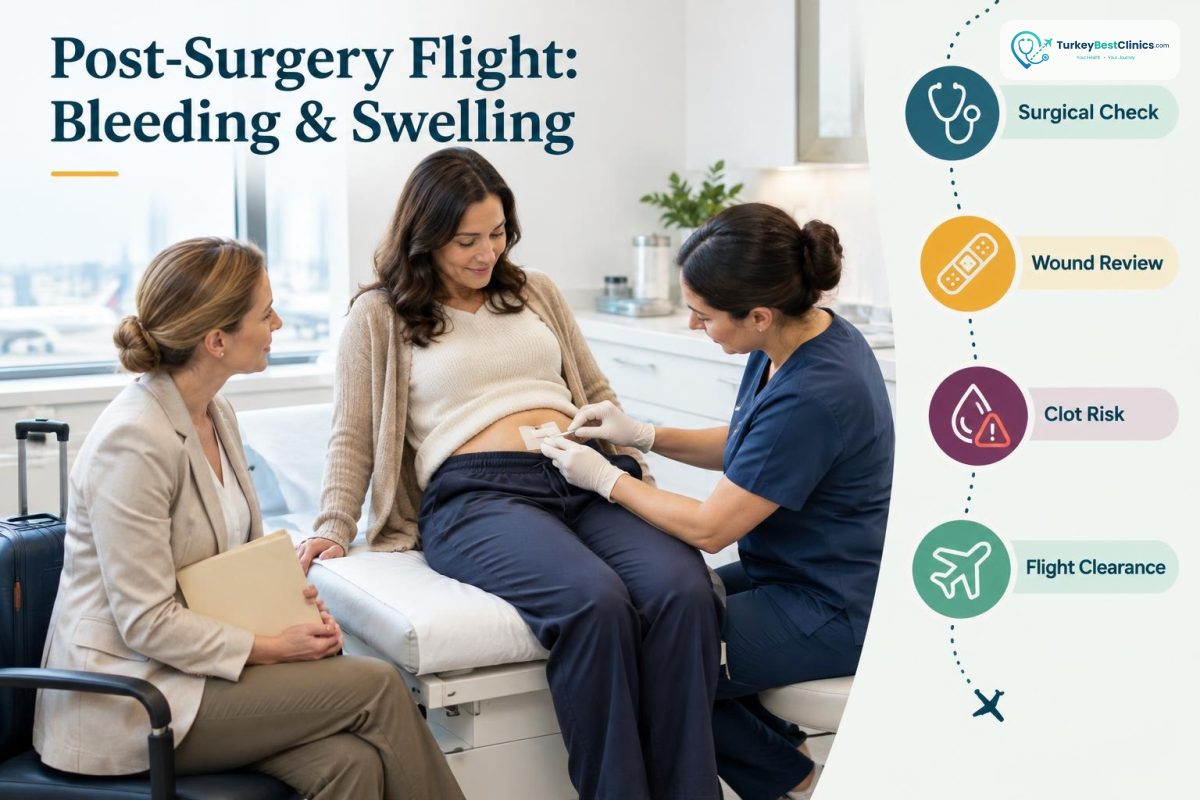
Why Is a Surgical Check Before Flying Important?
Flying after surgery should not be planned based solely on the ticket date. Cabin pressure, prolonged sitting, limited movement, lifting luggage, and the physical pace of the airport may increase the risk of tension at the incision, swelling, pain, or bleeding.
When assessing whether you are fit to fly in Turkey, the surgeon who performed your procedure evaluates the condition of wound closure, signs of active bleeding or fluid accumulation, the type of sutures, whether a drain is present, your mobility, and the duration of the flight. The flight date is determined based not only on a general number of days but also on examination findings and the extent of the surgery.
Waiting Times Vary by Type of Surgery
The decision to fly after a minor, superficial procedure is not the same as the decision after major abdominal, breast, joint, or extensive plastic surgery. Longer observation and mobility planning may be required after major operations, particularly before long-haul flights.
- A final wound check and assessment of vital signs are performed before the flight.
- Any separation of the incision, active leakage, rapidly increasing swelling, or unusual bruising is investigated.
- If a drain, catheter, or dressing is required, a care plan is prepared for the flight.
- The airline’s requirements for medical reports and waiting periods after surgery are checked.
Surgical Safety and Fitness-to-Fly Standards in Turkey
When choosing a provider for medical tourism, it is important to work with an organization that holds a Health Tourism Authorization Certificate issued by the Ministry of Health of the Republic of Türkiye and performs surgery in a fully equipped hospital. This structure facilitates the coordinated management of surgical records, anesthesia information, discharge summaries, wound checks, and fitness-to-fly assessments within the same clinical communication process.
International sterilization protocols, operating-room infection control, postoperative observation areas, and access to laboratory and imaging services when needed form the safety framework for pre-flight assessment. Turkish surgeons have practical experience evaluating incision lines, drain management, seromas, hematomas, and restricted mobility after abdominal surgery, orthopedic procedures, breast surgery, and body-contouring operations.
Medical Records Reviewed for Flight Clearance
- Surgical report and summary of the procedure performed
- Anesthesia and discharge records
- Findings from the most recent bleeding, infection, and wound checks
- When considered necessary, blood count, coagulation tests, or ultrasound results
- Instructions for drain, suture, and dressing care
- Flight duration, number of connections, cabin baggage, and airport transfer plan
This assessment does not mean that the flight is completely risk-free. The aim is to identify existing risks, reduce preventable problems, and create a clear plan for situations that may arise during the flight.
What Is Included in Your Postoperative Flight Package?
Depending on the planned medical tourism service, airport-hospital-hotel transfers, accommodation near the hospital, a professional interpreter when needed, and essential support during the initial care period can be arranged. The possibility of your companion staying in the same hospital room or in an area designated for companions by the hospital is confirmed in advance. Choosing a hotel close to the hospital may also help reduce your companion’s waiting stress through short wellness breaks or quiet walks in a nearby park while you rest under observation.
Depending on the type of surgery, the length of stay in Turkey is planned not only until the wound check is complete but also according to your ability to move safely and meet your basic needs during the flight. Before departure, the incision, swelling, drain, dressing, temperature, pulse, and general mobility are reassessed.
Medical Precautions That May Be Taken Before Travel
- Wound and suture check: Separation of the incision, active leakage, increasing redness, foul-smelling discharge, or rapidly developing swelling is investigated. Written instructions are provided on protecting and changing the dressing during the flight if necessary.
- Assessment of bleeding risk: A history of bleeding, the extent of the surgery, the latest examination findings, and laboratory tests are reviewed. If any medication or supplement could increase bleeding risk, changes are made only on the surgeon’s advice.
- Swelling control: Positioning appropriate for the surgical area, loose clothing, controlled walking, and the compression approach recommended by the surgeon are planned. Compression garments are not suitable in the same way for every procedure; the wound, circulation, and treatment area are taken into account.
- Reducing the risk of blood clots: Avoiding prolonged immobility, walking safely at appropriate intervals in the cabin, and performing ankle movements may be considered. Starting, stopping, or changing treatments that affect blood clotting requires an individual medical assessment.
- Pain and mobility plan: Your ability to sit in the seat, stand up, use the toilet, and carry luggage is assessed. You are not expected to lift heavy luggage or perform movements that strain the surgical area.
- Pressure and respiratory assessment: After chest or abdominal surgery, tolerance of deep breathing, coughing, and sitting is assessed. If you have breathing difficulties, a feeling of faintness, or unusual chest pain, the flight plan is reconsidered.
Comparison of Two Travel Plans
| Approaches Compared for You | Most Important Advantage for You | Your Recovery and Hospital Stay |
|---|---|---|
| Intensified surgical monitoring for an early flight | The wound, sutures, drain, and mobility are assessed at short intervals to determine suitability; however, this is considered only when medically appropriate. | Depends on recovery findings; additional observation or follow-up may be required instead of early discharge. |
| Flight planned after recovery is complete | Provides a wider safety margin for reducing swelling, strengthening the incision, and moving more comfortably. | Depending on the extent of the surgery, several days or longer of clinical and hotel observation may be planned. |
When choosing between these two approaches, flight duration, connections, the body area treated, additional health conditions, the condition of any drain or sutures, and airline rules are assessed together. A plan considered suitable for a short flight may not be sufficient for a long-haul or connecting flight.
Cost of Pre-Flight Assessment in Turkey
The figures below do not represent the cost of surgery. They show the approximate range for postoperative review, medical record assessment, a fitness-to-fly report, and basic tests when required. The exact fee is determined after a written quotation, based on the type of surgery, the tests required, the duration of hospital observation, and the scope of the report.
| Country | Approximate pre-flight assessment | Currency | Notes on scope |
|---|---|---|---|
| Turkey | 150–500 | € | Surgical review, record assessment, and basic fitness-to-fly evaluation; additional tests may be charged separately. |
| United Kingdom | 400–1,200 | £ | Private surgical review and reporting fees may vary according to the clinical scope. |
| Germany | 300–900 | € | Examination, reporting, and any required laboratory or imaging services may be calculated separately. |
| United States | 500–1,500 | $ | Specialist assessment, preparation of medical documents, and additional tests may affect the total cost. |
When comparing prices, look beyond the report fee. Also consider whether the final wound check is performed at the same hospital, access to imaging and laboratory services when needed, whether the airport transfer is suitable for your medical needs, and whether online follow-up is available after you return to your country.
Factors Affecting the Risks of Bleeding, Incision Strain, and Swelling
Surgeon’s Expertise and Postoperative Experience
The surgeon’s area of expertise and practical experience with the recovery process after similar procedures influence the quality of the pre-flight decision. The movements that may strain the incision, when a drain or dressing can be safely removed, and which findings should be used to monitor swelling are explained according to the surgical technique.
Surgical Method and Medical Materials Used
Whether the procedure involves open surgery, a laparoscopic approach, robotic surgery, an arthroscopic procedure, or a tension-reducing plastic surgery technique may change the flight plan. The suture material, surgical drain, mesh, implant, staples, or compression product used are assessed separately in terms of wound control and mobility restrictions.
Location of the Clinic and Hospital
In major centers such as Istanbul, a fully equipped hospital, laboratory, imaging services, and access to an international airport may be incorporated into the same plan. The distance to the airport, transfer time, traffic, proximity of the hotel to the hospital, and the time required to reach the clinic again in an emergency are particularly important before a long flight.
Steps on the Day of the Flight and After Returning Home
On the day of the flight, wear comfortable clothing, avoid belts or tight garments that compress the surgical area, and do not lift heavy suitcases. During long flights, safe ankle movements while seated, brief walks at permitted intervals, and adequate fluid intake may be planned according to your surgeon’s recommendations.
Before the flight, you will receive a surgical summary, the latest examination findings, dressing instructions, an emergency contact number, and, when applicable, a fitness-to-fly report. After you return to your country, online follow-up may include assessment of wound photographs, monitoring of swelling and pain, a suture or drain plan, and discussion of whether you need to visit a local healthcare provider.
Three Questions to Clarify After Reviewing This Page
- Based on the type of my surgery and the duration of my flight, what final findings are expected regarding my incision, drain, or dressing?
- How should my compression, movement, and seating plan be arranged to reduce swelling and blood clot risk during a long flight?
- If wound opening, increasing swelling, or unexpected bleeding occurs after I return home, how will online follow-up and coordination with a local healthcare provider be managed?
If active bleeding, rapidly increasing swelling, separation of the wound, shortness of breath, a feeling of faintness, or worsening chest pain occurs, urgent medical assessment is required instead of continuing with the flight plan. This content is for general information only; the flight date and medical precautions should be determined based on an examination by the surgeon who performed your surgery and the airline’s current rules.