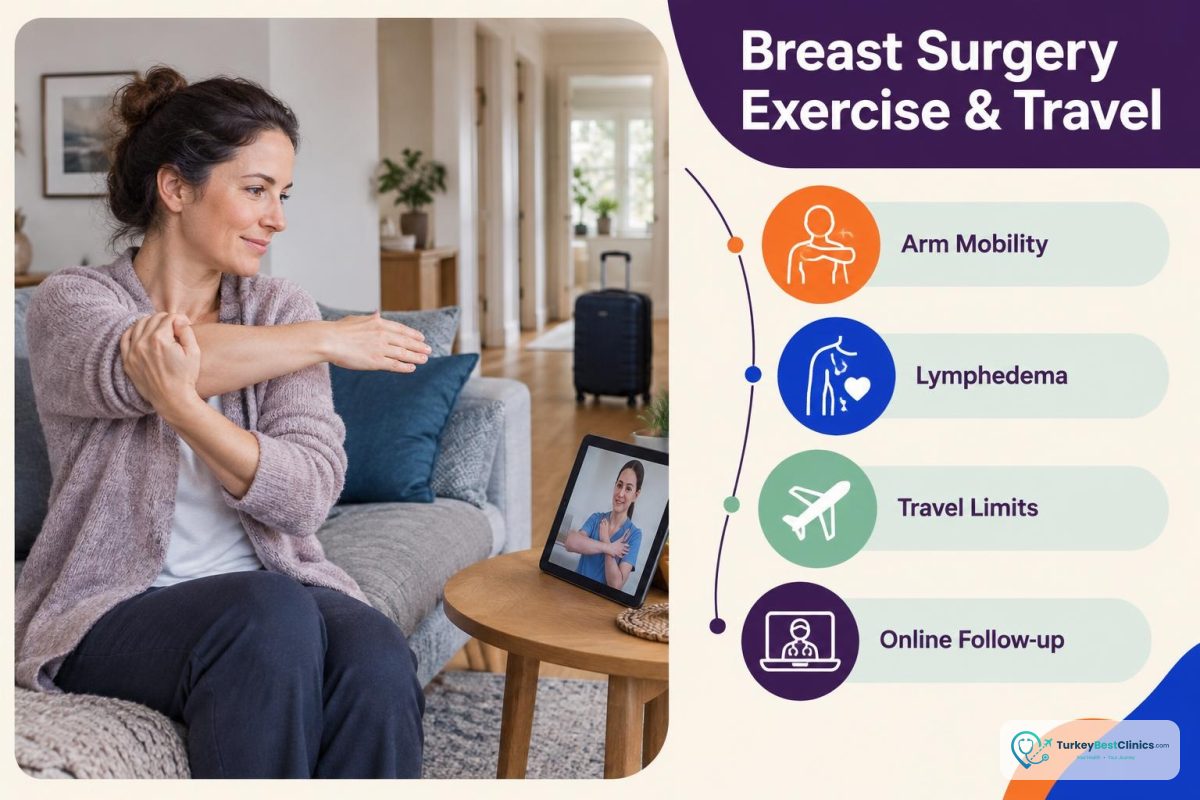
Planning Arm Movements Safely After Breast Surgery
Temporary stiffness in the arm, tightness around the shoulder, tenderness in the armpit, or a pulling sensation in the chest wall may occur after breast surgery. The movement program is adjusted according to the type of surgery performed, whether a drain is in place, whether a sentinel lymph node biopsy or axillary dissection was performed, and any additional treatments.
The initial goal is to maintain daily movements without increasing pain and to prevent unnecessary stiffness in the shoulder joint. Weightlifting, intensive stretching, swimming, fitness activities, or repetitive arm movements should not be started without approval from your surgical team.
Protective Movement in the Early Days
- Hand, wrist, and elbow movements are generally low-load exercises that can be started earlier; however, they may need to be limited depending on the drain, intravenous access, and wound condition.
- Shoulder movements are progressed slowly and in a controlled manner within the pain-free range. Exercise should be stopped if sharp pain, significant pulling around the wound, or swelling develops.
- Keeping the arm completely still for long periods may increase stiffness; however, strenuous and repetitive use can also place stress on healing tissues.
- Using a pillow to support the arm while sleeping, dressing, and performing personal care may improve comfort.
Providing Movement Restrictions in Writing
When you have travelled from another country, verbal explanations alone may not be sufficient. You should receive a clearly written plan explaining the name of the surgery, permitted range of motion, weight limits, drain care, bathing instructions, conditions for driving, and the date of your follow-up appointment.
The international healthcare tourism team explains medical terms in everyday language and uses a professional interpreter when necessary. The teach-back method may be used by asking you to repeat the information in your own words, helping to reduce the risk of misunderstanding.
Arm and Shoulder Rehabilitation for Lymphedema Risk
Lymphedema is a condition that may cause swelling, heaviness, and tightness in the arm, hand, chest wall, or armpit due to changes in the circulation of lymph fluid. Risk depends on many factors, including the extent of treatment to the axillary lymph nodes, radiotherapy, infection, body structure, and the healing process; no single exercise eliminates the entire risk.
Exercise guidance includes controlled movements that support circulation, exercises to maintain shoulder-joint range of motion, and the gradual increase of daily activities. If you notice increased swelling, rings or a watch becoming tight, skin tightness, a feeling of heaviness, or signs of recurrent infection, you should consult your surgical team or a physiotherapist trained in lymphedema care.
Key Points Considered During Assessment
- Whether the surgical report records a sentinel lymph node biopsy, axillary dissection, or another axillary procedure.
- Whether baseline measurements of arm circumference or volume were taken and the difference between the two arms.
- Wound healing, drain status, skin integrity, and signs of infection.
- Whether radiotherapy or another oncology treatment plan affects the movement program.
- Flight duration, the need to carry luggage, access to physiotherapy in the destination country, and daily living conditions.
Daily Plan to Help Prevent Lymphedema
Rather than completely protecting the arm, gradually increasing the load is the foundation of most rehabilitation plans. The time frame and weight limits provided by the surgical team should be followed for carrying heavy bags, prolonged cleaning movements, or repetitive overhead activities.
Early care is important if the skin develops a cut, burn, or irritation. If you develop a fever, rapidly increasing redness, warmth, discharge, or sudden swelling, you should contact a healthcare provider without waiting for an online consultation.
Safety and Companion Support After Breast Surgery in Turkey
When choosing a provider for medical tourism in Turkey, make sure the procedure is planned at an institution holding a Health Tourism Authorization Certificate issued by the Ministry of Health and that the surgery is scheduled in a fully equipped hospital. Sterilization, operating-room safety, emergency-response infrastructure, and postoperative nursing care should be assessed through the institution’s official authorization and quality documents, not only through the clinic’s promotional statements.
The experience of Turkish surgeons working in breast surgery should be assessed by asking about their actual procedure volume in mastectomy, breast reduction, breast lift, oncoplastic surgery, sentinel lymph node biopsy, or axillary dissection. Particularly regarding arm movement and lymphedema risk, it is preferable to choose a center where the surgeon shares the operative report with the physiotherapy team and provides a measurable follow-up plan after discharge.
The conditions under which your companion can stay with you in the hospital should be explained in advance. The hotel’s proximity to the hospital, as well as its stairs and transportation arrangements, should also be assessed. While you rest, access for your companion to a quiet walk in a nearby park, a wellness area, or a calm rest program may help reduce everyday stress during the extended postoperative period; however, crowded and tiring activities should be avoided.
What the Post-Breast-Surgery Guidance Package Includes
The package may include VIP transfer, accommodation, professional interpreter support, and initial care or essential basic products. The length of stay in Turkey after breast surgery may range from a few days to a longer period, depending mainly on drain use, wound checks, and the surgeon’s approval for flying.
During the initial assessment, the surgical report, pathology or imaging results, drain system used, range of arm movement, and travel date are reviewed. Before discharge, you receive an exercise demonstration, and a written checklist is prepared for wound review and fitness to fly.
After returning to your country, the Online Follow-up process assesses wound appearance, swelling, range of motion, pain progression, and daily activities. Video consultations, photo sharing, and coordination with your local doctor do not replace an in-person examination, but they support continuity of the care plan.
Cost of Post-Breast-Surgery Guidance and Country Comparison
Postoperative exercise, lymphedema education, and travel clearance may be included in some surgical packages; independent physiotherapy assessment does not have a fixed international price. The figures below are approximate private-sector ranges for 2026. They refer to an initial assessment, a written exercise plan, and limited online follow-up, not to the cost of surgery.
| Country | Approximate guidance cost | What is generally included |
|---|---|---|
| Turkey | €150–€500 | Initial assessment, exercise plan, interpreter, and brief online follow-up; varies by package |
| United Kingdom | GBP 300–900 | Physiotherapy assessment and several follow-up consultations |
| Germany | EUR 350–1,000 | Rehabilitation assessment and individual sessions |
| United States | USD 500–1,500 | Lymphedema assessment, education, and follow-up sessions |
When requesting a final quote, ensure that the number of included consultations, the scope of interpreter support, drain checks, whether flight clearance is provided by the surgeon, and communication channels after returning to your country are clearly stated in writing.
Surgical Details That Affect Cost and Recovery
- The surgeon’s expertise and experience: Experience in different procedures, such as oncoplastic surgery, reconstruction, sentinel lymph node biopsy, or axillary dissection, may affect the scope of assessment and the need for follow-up.
- The surgical method used: Follow-up requirements for arm movement and lymphedema are not the same after a sentinel lymph node biopsy and a more extensive axillary dissection. Implant, tissue expander, or autologous tissue reconstruction after mastectomy may also change the movement and recovery plan.
- Choice of technique and materials: The drain system, use of a silicone implant or tissue expander, oncoplastic suture plan, and, when necessary, the type of compression product may affect the total cost.
- Clinic location: Hospital, hotel, and local transportation costs may vary in Istanbul, Ankara, Izmir, and other centers. The distance from the airport to the hospital and the number of follow-up visits also affect the overall plan.
The choice of method should not be based on cost alone. A definitive schedule for arm movements or the flight date cannot be provided without assessing the surgical report, medical history, imaging results, and travel plan together.
Pre-Travel Restrictions and Next Steps
Basic Limits for Flying and Daily Activities
The flight date is determined according to wound condition, drain removal, bleeding risk, pain control, and the surgeon’s examination. During long flights, short walks in the aisle, leg movements, and adequate fluid intake may generally be discussed; however, these do not replace medical instructions specific to your surgery.
Separate approval may be required for lifting luggage, placing a bag in the overhead compartment, carrying a child, driving, and reaching overhead. Your companion should handle luggage and transfer arrangements, and movements that strain the arm should be limited until the wound has been fully assessed.
Three Specific Questions to Ask After Reading This Page
- How are arm movement and lymphedema monitoring planned differently after a sentinel lymph node biopsy compared with an axillary dissection?
- Can I fly before the drain is removed, and what physical restrictions apply during a long flight after breast surgery?
- How can safe shoulder exercises and an online follow-up plan be prepared until I can see a physiotherapist in my country?
The answers to these questions are clarified after reviewing your surgical report and individual recovery findings. If you develop sudden shortness of breath, chest pain, uncontrolled bleeding, a high fever, or rapidly increasing arm swelling, seek urgent medical assessment instead of continuing with your travel plans.