How Is Technology Safety Evaluated in Hysteroscopic and Laparoscopic Surgery?
Hysteroscopy enables the inside of the uterus to be examined or treated through the vagina, usually without the need for an incision. In laparoscopy, a camera and surgical instruments are inserted through small incisions in the abdominal wall to evaluate the uterus, ovaries, fallopian tubes and surrounding tissues.
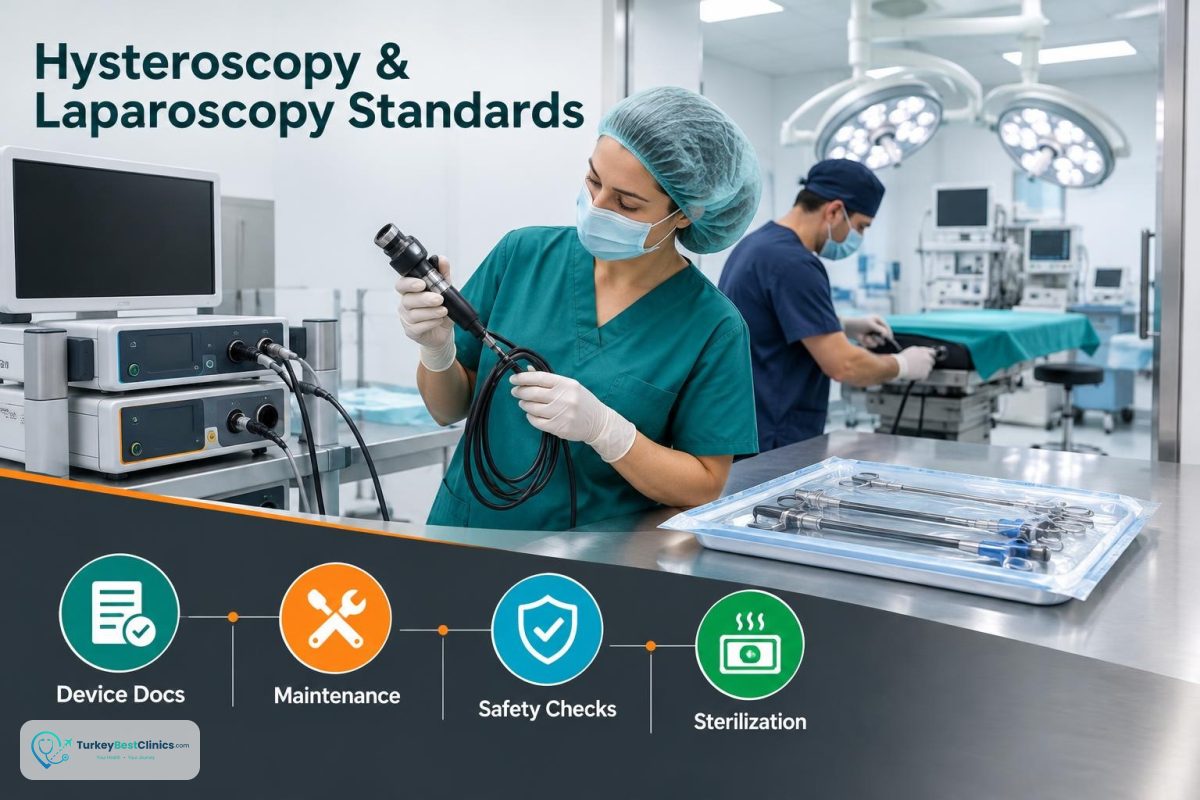
High-resolution camera systems, cold light sources, image processors, energy generators and specialized electrodes used in these procedures are not considered safe merely because they are “new.” Compliance with global standards is assessed by verifying the device’s regulatory compliance, correct installation, regular calibration, sterilization, the surgical team’s practical experience and the availability of emergency infrastructure as a whole.
The aim is not to automatically present a particular brand or device as superior, but to document that the technology used for the planned hysteroscopic or laparoscopic procedure is safe, traceable and fit for purpose.
Global Standards for Hysteroscopy Cameras and Laparoscopic Systems
Technical compliance and the documentation trail
The center where the procedure is performed in Turkey should hold a Health Tourism Authorization Certificate issued by the Ministry of Health. Planning surgery in a fully equipped hospital with operating-room sterilization, anesthesia, laboratory, imaging and, when necessary, intensive care support is fundamental to the safety assessment.
For the medical devices used, you can review the manufacturer’s conformity documents, product registrations in Turkey and whether the device is suitable for its intended use. For products intended for the European market, the CE mark and documentation under the Medical Devices Regulation (EU MDR 2017/745) are important; however, a CE mark alone does not guarantee the outcome of surgery. The procedure for which the device was designed, accessory compatibility and local maintenance records should also be checked.
- IEC 60601 series: The core family of standards for electrical safety and electromagnetic compatibility in medical electrical equipment.
- ISO 14971: A reference for medical device risk management, including the identification and control of potential hazards.
- ISO 13485: An international framework for evaluating a medical device manufacturer’s quality management system.
- EN ISO 17664: Requires manufacturers to define cleaning, disinfection and sterilization instructions for reusable devices.
- ISO 17665: A standard used to validate and monitor steam sterilization processes.
These documents generally demonstrate compliance at the manufacturer and device levels. Before surgery, you can request written information from the clinic about the device’s brand and model, whether its accessories are single-use or reusable, the date of its most recent maintenance and how the sterilization process is recorded.
Practical experience in Turkish gynecologic surgery
Gynecologic endoscopy teams working in this field in Turkey may plan procedures requiring different techniques, including diagnostic hysteroscopy, removal of polyps or submucosal fibroids, treatment of intrauterine adhesions, laparoscopic cyst surgery, endometriosis surgery and fallopian tube surgery. When assessing experience, it is more meaningful to look beyond the term “specialist” and consider the type of procedures the physician actively performs and the energy system used.
For example, procedures using bipolar, ultrasonic or monopolar energy require different technical planning in terms of tissue effects, fluid management and protection of surrounding organs. A surgeon’s ability to explain which method they prefer for a particular anatomical situation, as well as their protocols for bleeding control and complication management, is a more concrete indication of technical competence.
What Is Included in a Hysteroscopy and Laparoscopy Package?
The package may include VIP transfers between the airport, hospital and hotel, accommodation at a hotel near the hospital, an interpreter for necessary communication support, and coordination of initial care or prescriptions after the procedure; you should confirm the scope in a written quotation. For hysteroscopic procedures, a gynecological examination, ultrasonography and, when necessary, an evaluation of the uterine cavity are generally planned. For laparoscopic surgery, blood tests, an anesthesia assessment, electrocardiography and imaging according to the scope of the procedure may be requested.
Whether your companion can stay with you in the hospital and whether your hotel is within walking distance or a short transfer from the hospital should be planned in advance. While you rest, your companion may take a walk in a nearby quiet park, use the hotel’s wellness facilities or choose short city activities that allow them to return to the hospital easily.
Step-by-step surgical process protocol
- Remote preliminary assessment: Previous reports, ultrasound images, surgical history and current symptoms are reviewed. This assessment helps prepare the examination and testing plan in Turkey rather than providing a definitive diagnosis.
- In-person assessment in Turkey: A gynecological examination, transvaginal ultrasonography, blood tests and an anesthesia consultation are completed according to the type of procedure.
- Day of surgery: The camera system, energy generator, optical equipment, fluid management and sterile accessories are checked according to operating-room protocol.
- Hospital monitoring: For straightforward hysteroscopic procedures, same-day discharge or one night of observation may be planned. Laparoscopic procedures generally involve one to three nights of observation. The duration varies according to the scope of the procedure, response to anesthesia and clinical findings.
- Return home and online follow-up: A discharge summary, a plan for the pathology report when required, wound or bleeding warnings and the follow-up schedule are provided. Online follow-up continues through video consultations and secure digital communication; in case of emergency symptoms, you should contact emergency medical services in the country where you are located.
Comparison of minimally invasive and hysteroscopic approaches
| Methods Compared for You | Most Important Potential Benefit for You | Your Recovery and Hospital Stay |
|---|---|---|
| Hysteroscopic surgery | Problems inside the uterus, such as polyps, submucosal fibroids or adhesions, can be accessed directly without an abdominal incision. | For suitable procedures, same-day discharge or one night of observation; return to daily activities may generally be quicker. |
| Laparoscopic surgery | The abdomen and pelvis are examined through small incisions; comprehensive treatment can be performed for cysts, endometriosis or fallopian tube-related problems. | Depending on the scope of the procedure, approximately one to three nights of hospital observation and gradual recovery over several weeks. |
Costs in Turkey and International Price Comparison
The average total cost of hysteroscopic or laparoscopic gynecologic surgery in Turkey may be approximately €2,500–€6,000, depending on the scope of the procedure. The figures below are for market comparison only; the written quotation should specify separately whether the surgeon, hospital, anesthesia, pathology, accommodation and additional tests are included.
| Country | Approximate procedure cost | Price details |
|---|---|---|
| Turkey | €2,500–€6,000 | Varies according to the type of procedure and package scope. |
| United Kingdom | £3,500–£8,000 | Private hospital, surgeon and anesthesia fees may be priced separately. |
| Germany | €4,000–€9,000 | Hospital stay, operating room and pathology coverage vary according to the quotation. |
| United States | $8,000–$18,000 | Insurance coverage, location and hospital fees can significantly affect the total cost. |
Rather than choosing the lowest price, compare which camera system, energy technology, consumables, anesthesia time, hospital nights, pathology and follow-up services are included in the quotation. Single-use hysteroscope sheaths, bipolar electrodes, morcellators or advanced imaging accessories may affect the total cost.
Technical Factors That Affect the Price and Process
- The physician’s specialization and experience: Diagnostic hysteroscopy and complex hysteroscopic fibroid surgery do not present the same technical challenges. Similarly, superficial laparoscopy and surgery for deep endometriosis or extensive adhesions require different levels of experience.
- Camera and imaging method: The HD or 4K laparoscopic camera, image processor, optical diameter, light source and three-dimensional imaging option are selected according to the nature of the surgery.
- Energy technology: Bipolar electrosurgery, monopolar systems, ultrasonic energy devices and procedure-specific electrodes differ in their tissue effects and safety protocols. The generator used must be compatible with the accessories and undergo a functional check before surgery.
- Clinic location: In major centers such as Istanbul, access to advanced endoscopy teams and backup technical services may be broader; however, location alone is not an indicator of quality. The hospital’s emergency surgical support, sterilization unit and device maintenance organization should also be assessed.
Before requesting a quotation, you may ask for the following documents: the Health Tourism Authorization Certificate, the hospital’s licensing information, the brand and model of the planned device, its most recent maintenance or calibration record, sterilization traceability, the energy system’s safety check and the postoperative communication plan. If the clinic cannot clearly share this information, do not consider the phrase “global standards guarantee” sufficient on its own.
Three Specific Points to Know Before Making a Decision
- What are the brand and model of the camera and energy system to be used, and when were the most recent maintenance and electrical safety checks performed? This question turns general technology claims into verifiable device information.
- Why is bipolar, monopolar or ultrasonic energy being preferred for the planned hysteroscopic or laparoscopic procedure? The answer should provide a technical rationale relating to the anatomical target of the procedure, fluid management and protection of surrounding tissues.
- How will postoperative pathology, complication assessment and online follow-up after you return home be managed? A written discharge summary, communication channel and follow-up times should be integral parts of the treatment plan.
After receiving written answers to these questions, you can evaluate the physician’s recommendation, the scope of surgery and the device technology together. No camera or energy system eliminates surgical risk; a safe approach depends on the combination of appropriate patient selection, a competent team, verifiable device maintenance, sterilization and hospital infrastructure capable of providing rapid intervention when necessary.