Uterine preservation and pregnancy planning after laparoscopic myomectomy
Laparoscopic myomectomy is a minimally invasive surgical approach intended to remove fibroids without removing the uterus. Preserving the uterus may allow the possibility of pregnancy in the future to remain; however, it does not provide a definite guarantee regarding fertility or the mode of delivery after surgery.
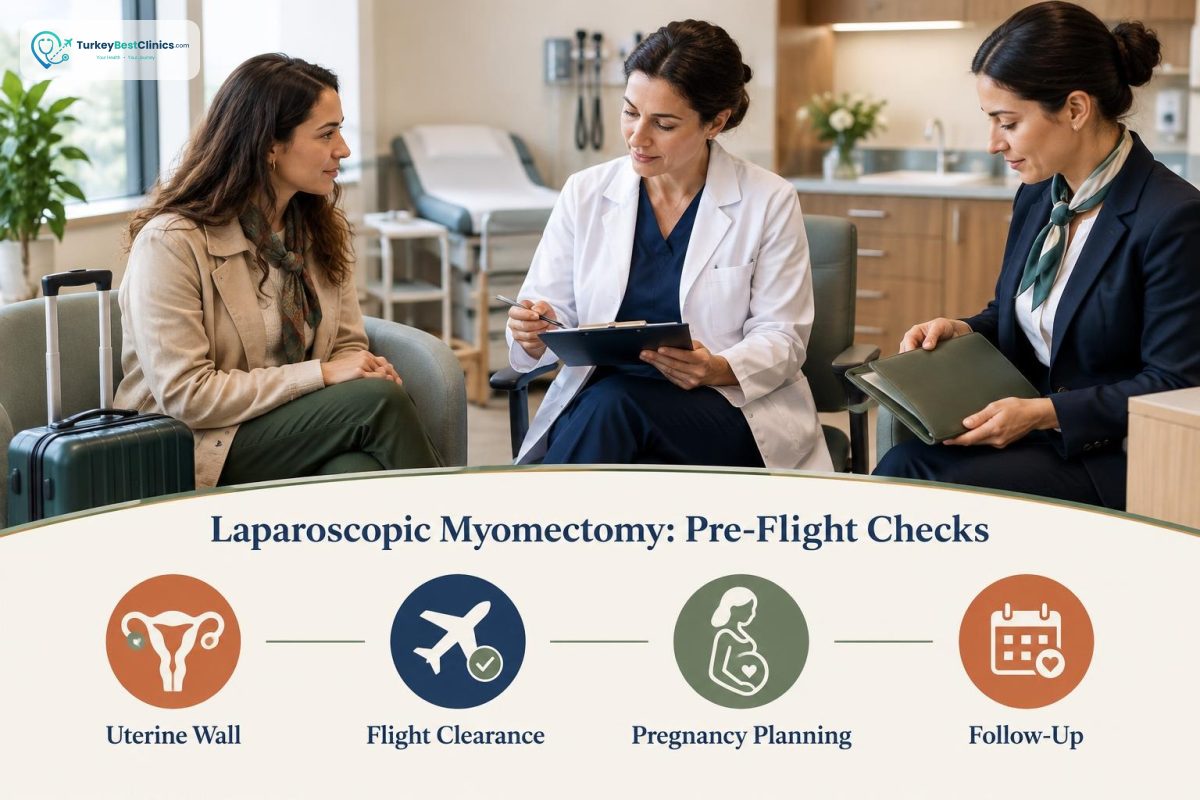
Feeling well alone is not sufficient for a pre-flight assessment. The surgical report, pathology results of the removed fibroids, extent of the uterine-wall repair, bleeding status, ultrasound findings and flight duration are evaluated together.
Surgical details that determine the possibility of pregnancy
- The location of the fibroid inside the uterus or within the uterine wall
- The number and size of the fibroids removed
- How deeply the uterine muscle was incised
- Whether the uterine cavity was entered
- How many layers of the uterine wall were repaired and which technique was used
- Whether infection, bleeding or fluid collection developed after surgery
This information helps the obstetrician and gynecologist determine how long it may be appropriate to wait before attempting pregnancy and how a future delivery should be planned. In some cases, additional tests such as a preconception uterine ultrasound or sonohysterography may be requested.
Standards in Turkey for uterine repair and flight safety
Planning surgery at a facility holding a Health Tourism Authorization Certificate issued under the regulations of the Ministry of Health of the Republic of Türkiye, and in a fully equipped hospital, helps ensure that operating-room, anesthesia, sterilization and emergency-care processes are carried out within an established institutional framework. It is important to verify the healthcare provider’s authorization certificate and the official details of the hospital where the surgery will take place in advance.
When evaluating laparoscopic myomectomy, it is important to consider not only the surgeon’s overall experience but also their experience with uterus-preserving surgery, removal of deep intramural fibroids, uterine-wall repair and post-operative pregnancy planning. The surgical report should clearly state the location of the fibroids, whether the uterine cavity was entered and which repair technique was used.
Pre-flight medical checklist
- General examination and assessment of vital signs
- Examination of the abdominal incisions for closure, redness, discharge or opening
- Assessment of vaginal bleeding and pain severity
- Hemoglobin testing or, if considered necessary, a complete blood count
- Pelvic ultrasound to assess the uterus, surgical site and any possible fluid collection
- Exclusion of urgent warning signs such as fever, shortness of breath, one-sided leg swelling or calf pain
- Assessment of flight duration, number of connections, mobility restrictions and access to healthcare in your country
- Obtaining the surgeon’s written opinion on fitness to fly
Fitness-to-fly approval is not granted automatically based on the number of days since surgery. The risk assessment for a short flight is not the same as that for a long, connecting flight requiring prolonged immobility.
What is included in your laparoscopic myomectomy package?
Your planned medical tourism package may include VIP airport-hospital-hotel transfers, accommodation at a hotel close to the hospital, interpreter support for necessary communications and initial post-discharge care guidance; you should verify the exact scope in the written quotation. If post-operative prescriptions or care products are required, their contents, procurement method and inclusion in the price should be explained separately.
The length of your stay in Turkey for this procedure varies depending on the number of fibroids, uterine-wall repair, bleeding, ultrasound findings and flight duration. A surgical check-up, blood test and, when necessary, pelvic ultrasound are usually planned before the flight; the exact return date should be determined after signs of recovery are observed, not during the initial assessment.
Whether your companion can stay with you in the hospital is determined by the hospital’s visitor and companion policies. Choosing a hotel close to the hospital may help reduce your companion’s stress while waiting, without requiring long journeys, allowing for low-intensity activities such as a quiet park walk, use of a wellness area or time in a quiet café while you rest; your movement and rest restrictions remain the priority.
Step-by-step post-operative follow-up protocol
- Initial assessment: The surgical report, pathology results, bleeding status and overall recovery are reviewed.
- Hospital period: Pain control, mobilization, urinary and bowel function, and incision sites are monitored. Although the hospital stay is usually short, it varies according to the clinical situation.
- Before the flight: An examination, blood test if necessary and pelvic ultrasound are performed; the flight duration and medical risks are assessed together.
- After returning home: The surgical report, imaging records and follow-up plan are shared. Communication about bleeding, pain, incision healing and pregnancy planning can continue through online follow-up consultations.
Cost of laparoscopic myomectomy in Turkey and country comparison
The approximate total cost of laparoscopic myomectomy in Turkey may commonly range from €3,500 to €7,500 in international quotation formats. This range varies according to the number and size of the fibroids, the surgeon’s expertise, hospital stay, examinations, pathology, anesthesia and whether transfer services are included in the package.
| Country | Approximate surgical cost | What to check in the quotation |
|---|---|---|
| Turkey | €3,500–€7,500 | Hospital, surgeon, anesthesia, pathology, follow-up and logistics coverage |
| United Kingdom | £7,000–£12,000 | Private hospital fee, imaging and follow-up appointments |
| Germany | €6,000–€10,000 | Surgical scope, hospital stay, anesthesia and additional tests |
| United States | $15,000–$30,000 | Hospital, surgeon, anesthesia, pathology and insurance coverage |
These are approximate international private healthcare price ranges and may vary according to the city, date, exchange rate and clinic policy. In the written quotation, also ask separately about possible additional nights, blood products, complication management, advanced imaging and online follow-up fees after returning to your country.
Factors affecting the cost and recovery of the laparoscopic approach
The surgeon’s expertise
One of the main factors affecting cost and planning is the surgeon’s experience with uterus-preserving surgery, removal of fibroids from the uterine wall and multilayer repair. The surgeon’s laparoscopic approach in similar cases, follow-up protocol when the uterine cavity is entered and approach to preconception counseling should be evaluated.
Method, equipment and surgical scope
In laparoscopic myomectomy, high-resolution laparoscopic camera systems, energy devices, suture materials and tissue-extraction techniques such as morcellation may affect the cost and process. Morcellation is not suitable for every case; the characteristics of the fibroid and the surgeon’s safety assessment must be taken into account.
| Methods compared for you | Potentially important advantage for you | Recovery and hospital stay |
|---|---|---|
| Laparoscopic myomectomy | Smaller incisions, less abdominal-wall trauma and the potential for a faster return to daily activities | Usually a short hospital stay; return to work and travel are planned according to examination findings |
| Open abdominal myomectomy | May facilitate surgical access for very large, numerous or deeply located fibroids | A longer recovery period and longer hospital stay may be required |
Clinic location and logistics
In hubs such as Istanbul, where transport options are extensive, the distance between the hospital, hotel and airport may affect logistical costs. Choosing a quieter city may change the hotel price; however, access to advanced imaging, intensive care and emergency obstetric and gynecological support should also be assessed.
Three critical questions to ask before your flight
- How does the uterine-wall repair affect my pregnancy plan? You may be directed to the relevant pregnancy-planning assessment to learn how to interpret whether the uterine cavity was entered, the depth of the incision and the recommended waiting period in the surgical report.
- Which results should I carry with me to confirm that I am fit to fly? You can clarify how to prepare digital and printed copies of the surgical report, pathology result, latest examination note, ultrasound images, blood test results and written fitness-to-fly opinion.
- How will my uterus be assessed before pregnancy after I return home? In the relevant follow-up section, you can review when pelvic ultrasound, sonohysterography or other imaging may be necessary and at what intervals online follow-up appointments should be scheduled.
If you develop worsening abdominal pain, heavy bleeding, fever, foul-smelling discharge, shortness of breath, chest pain or one-sided leg swelling, seek urgent medical assessment without proceeding with your flight plans. Although preserving the uterus is an important surgical objective, pregnancy planning should be shaped safely by considering the surgical details and recovery assessments together.