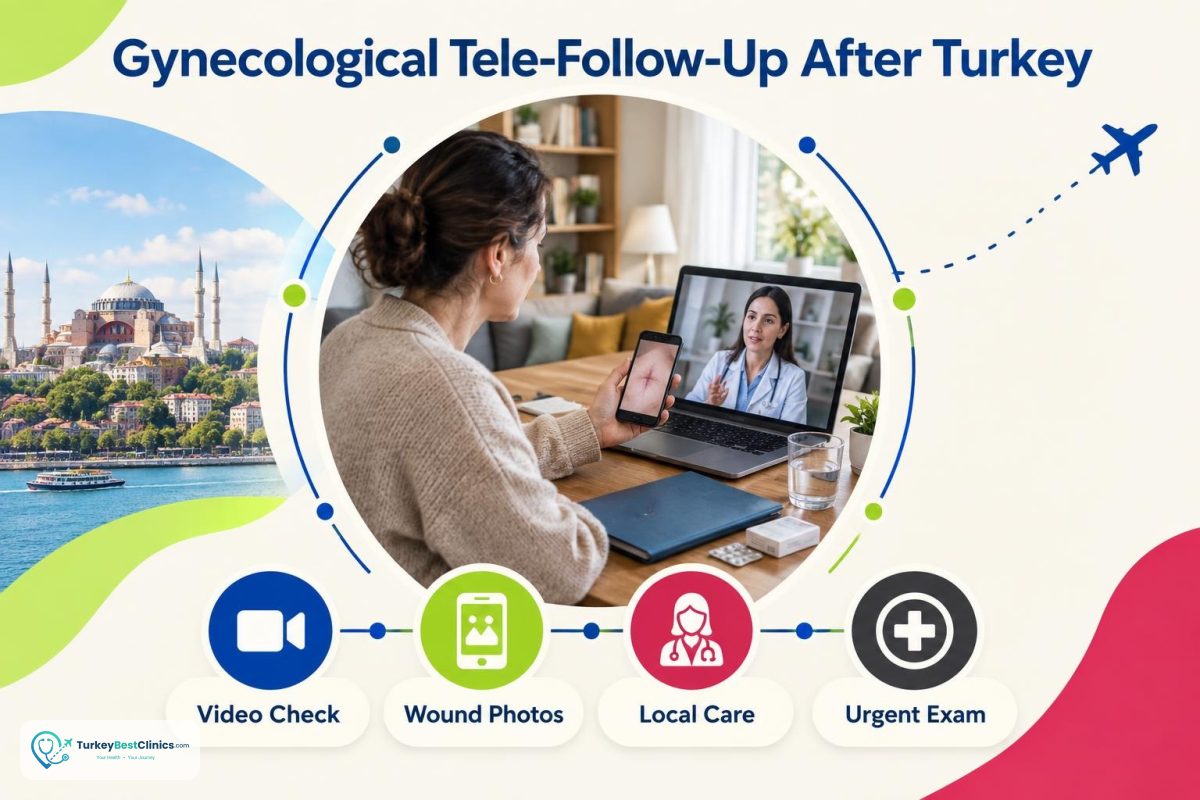
Short answer: Yes. After you return home, your gynecologist in Turkey can monitor the suture area and healing process through video consultations, secure photo sharing, a symptom diary, and, when necessary, reports from local doctors. However, telemedicine does not replace a physical examination or emergency assessment. If you experience bleeding, fever, rapidly worsening pain, foul-smelling discharge, or wound opening, seek in-person medical care without delay in the country where you are located.
Scope of Digital Follow-Up After a Gynecological Procedure
Before leaving Turkey, creating a written follow-up plan with your gynecologist is the safest starting point. The plan should clearly state the date of the first online consultation, which symptoms you should monitor, how to send photos, communication hours, which local healthcare facility to contact in an emergency, and under what circumstances the team in Turkey will provide further guidance.
During a video consultation, the appearance of external sutures, whether redness is spreading, swelling, discharge, bruising, the integrity of the wound edges, and pain caused by movement can be assessed. Depending on the type of gynecological procedure, vaginal discharge, burning during urination, pelvic pressure, the amount of bleeding, and the return to daily activities may also be included in the follow-up.
Internal sutures, deeper tissues, or healing inside the abdomen cannot be assessed definitively through a camera alone. Therefore, if an ultrasound, laboratory test, speculum examination, or another evaluation is needed, you may need to be referred to an obstetrician-gynecologist in the country where you are located.
Digital Assessment Steps for Suture and Wound Healing
What Is Examined During a Video Consultation
- Whether redness around the wound is limited or appears to be spreading
- Whether there is swelling, bruising, increased warmth, or marked tenderness to touch
- Whether the suture line remains closed and whether separation of the wound edges is visible
- The color, amount, and smell of any discharge
- The intensity of the pain, when it began, and whether it has increased compared with previous days
- Body temperature, chills, fatigue, or changes in general condition
- Symptoms occurring during urination, bowel movements, walking, or sitting
Before the consultation, prepare a well-lit environment and use only the secure communication channel approved by the clinical team. If photos are required, share them along with the time they were taken, the area shown, and any symptoms that occurred on the same day. Privacy, informed consent, and data security are especially important for images of intimate areas; ask in writing beforehand whether using personal messaging applications is appropriate.
Symptom Diary and Follow-Up Records
Keeping a brief daily record may provide a more meaningful picture of healing than an image from a single consultation. Pain level, temperature readings, changes in discharge or bleeding, walking capacity, and newly developed symptoms can be recorded at approximately the same time each day.
- The date of the procedure and the name of the gynecological procedure performed
- The recommendations provided at discharge and the scheduled follow-up dates
- Whether the sutures, if any, need to be removed
- Daily temperature readings and newly developed symptoms
- Results of examinations, ultrasounds, or tests performed at a local healthcare facility
Documents sent to your gynecologist in Turkey should clearly include your name, date of birth, procedure date, and the date on which the report was prepared. If documents are prepared in another country, confirm in advance whether a translation into an understandable language is required and whether the clinic accepts that translation.
Limitations of Online Gynecological Follow-Up
A telemedicine consultation can help remotely observe the wound area and understand how symptoms are progressing. However, an in-person examination may be necessary for assessment by touch, a vaginal examination, physical checking of suture material, and confirmation of certain signs of infection. The image may not always be adequate because of camera quality, lighting, viewing angle, and privacy considerations.
Your gynecologist in Turkey may not always be authorized to issue prescriptions, prepare medical reports, or make referrals directly within the healthcare system of the country where you are located. This may vary depending on the doctor’s professional authority, the service agreement, the regulations of your country, and the digital health platform being used. Before returning home, obtain written information about the medical scope of the online consultation and how coordination with local healthcare services will be handled.
Symptoms Requiring Prompt Local Medical Care
If any of the following symptoms occur, do not wait only for an online consultation with your team in Turkey. Contact an emergency department, gynecology unit, or appropriate local healthcare facility in your country on the same day.
- Heavy, clot-filled, or progressively increasing bleeding that soaks through a pad
- A fever of 38°C or higher, chills, or a marked deterioration in general condition
- Rapidly worsening pelvic or abdominal pain
- Foul-smelling, yellow-green, or clearly increasing discharge
- Opening of the wound line, active bleeding, darkening, or rapidly increasing swelling
- Shortness of breath, chest pain, a feeling of faintness, or sudden swelling in one leg
- Inability to urinate, severe vomiting, or inability to keep fluids down
During an emergency assessment, bring the discharge summary for the procedure performed in Turkey, discharge documents, available images, and your relevant medical records. Also inform your gynecologist in Turkey which healthcare facility you visited and what assessment or outcome you were given.
Putting the Follow-Up Plan and Patient Rights in Writing
Before the procedure or at discharge, request written information about the following: the number and timing of follow-up consultations, which communication channel will be used, the security conditions for sending photos or documents, the expected response time, the steps to take in an emergency, information sharing with a local doctor, and the fees for additional consultations.
Read the consent form carefully regarding the processing of your confidential health information and access to it from abroad. Request clear explanations about how long records will be stored, who will have access to them, whether video consultations will be recorded, and how you can withdraw your consent if necessary.
Do not assume a definite outcome regarding payment, additional follow-up, revision procedures, travel changes, or support provided in the event of complications. These matters may vary according to the clinic’s policy, the contract you signed, the scope of the procedure, and the specific medical circumstances, so obtain written confirmation in advance.
Related Questions and Subsequent Follow-Up
- Which discharge documents and images should I request before returning home after a gynecological procedure?
- If my sutures need to be removed, who can do this in the country where I live, and how can it be coordinated with my gynecologist in Turkey?
- If wound healing is slower than expected, when is an ultrasound or an in-person gynecological examination necessary?
This information is provided for general informational purposes and does not replace personal diagnosis, treatment, or legal advice. Based on the type of procedure, your healing findings, and the healthcare system in your country, seek a personalized assessment from both your gynecologist in Turkey and, when necessary, a local obstetrician-gynecologist.