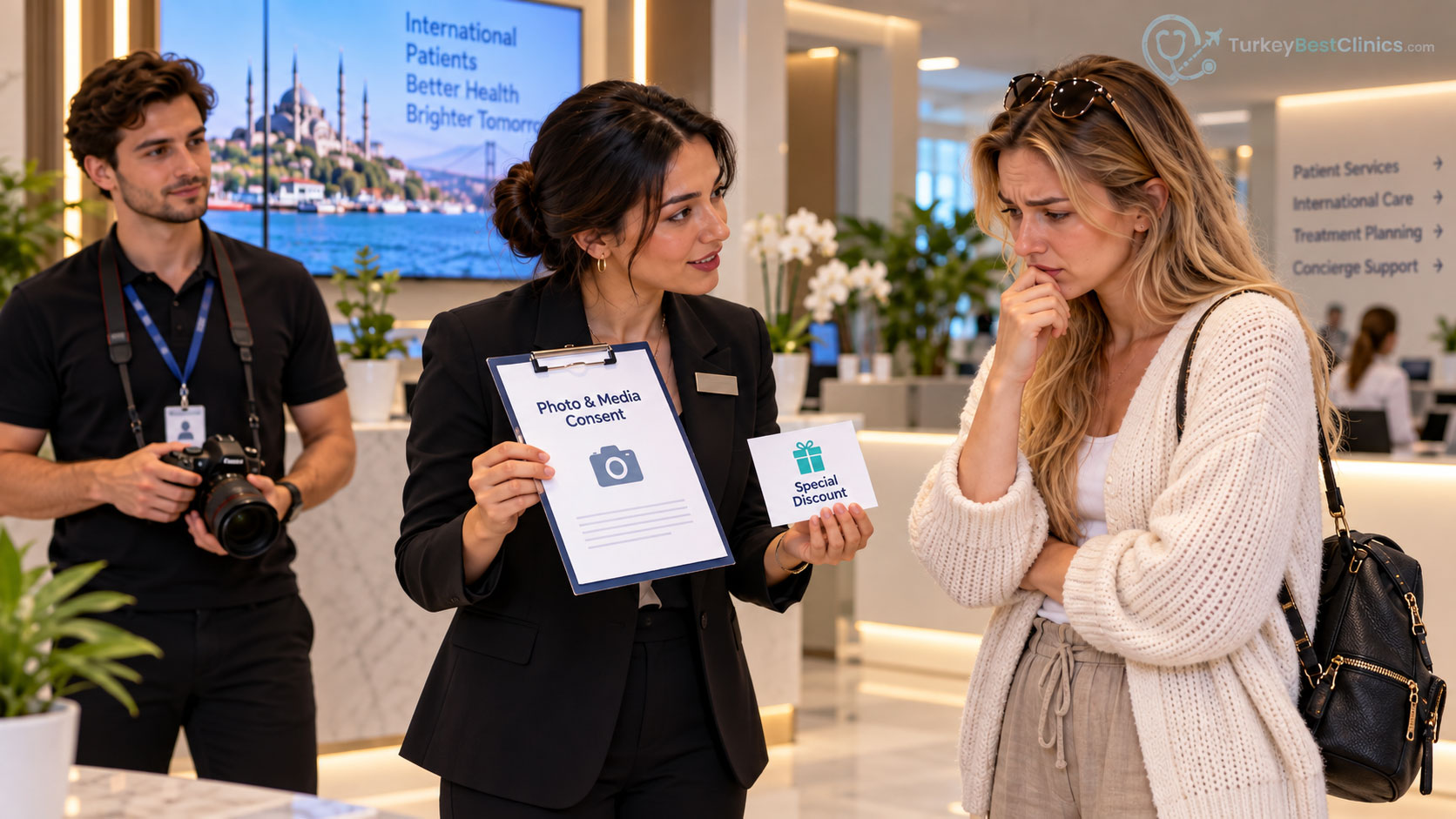
Short answer: You generally cannot be said to be required to allow photographs or video recordings of your treatment process for promotional, social media, website, or advertising purposes. A clinic may wish to make a discount conditional on such permission; however, for the offer to be considered valid and safe, it should be clear, understandable, in writing, and free from pressure.
Your refusal to give consent should not automatically become a condition affecting the medical assessment of your treatment or the healthcare services you need. However, images required to create your medical file or document the medical process are not the same as recordings made for advertising purposes. Assess them separately by determining why each image will be taken and where it will be used.
Distinguishing Medical Documentation from Promotion in Treatment Images
Photographs or videos may be requested for two different purposes. The first is medical documentation, which may be necessary for the doctor to create a treatment plan, compare your condition before and after treatment, or support your health records. The second is promotional material intended for use on the clinic’s website, social media accounts, advertising campaigns, presentations, or similar communication channels.
There is an important difference between images taken for medical documentation and stored with limited access as part of your health records, and the public sharing of your face, voice, or an identifiable body part. In the latter case, the purpose of use, the people who may access the material, and the sharing channels may be much broader.
If images concerning your health condition or treatment make you identifiable, special sensitivity may arise regarding the protection of personal data and health data. Under Turkey’s personal data protection rules and regulations governing healthcare services, it is generally expected that the data being processed and the purpose of processing will be explained. This general information does not replace a definitive legal opinion on a specific case; the contract and current regulations should also be reviewed.
Is Consent Truly Voluntary When Offered in Exchange for a Discount?
A clinic may offer a discount or another financial benefit in exchange for permission to use images for promotional purposes. The legality of such an offer cannot be determined solely by the fact that a discount is involved. It is important that consent is given explicitly, its scope is understood, and it is not presented as a mandatory condition for continuing treatment.
Clarify the nature of the discount offer in writing. Is the discount linked only to a specific promotional use? Are you also being asked to allow your face or voice to be used? Will the content be published only on the clinic’s own channels? Does it include third-party advertising platforms and social media accounts? The answers to these questions change the scope of the risk you are accepting.
Rather than combining the consent form, treatment contract, and price quotation into one unclear document, a separate and understandable section for promotional use is a more transparent approach. The standard price that would apply if you do not give consent should also be stated in writing beforehand. If it is not clearly explained how declining the discount could affect your access to treatment, medical decisions, or clinical care, ask for clarification before signing.
Checking Photo and Video Permission Before Signing
Check the following points one by one in the written document. Instead of relying solely on verbal explanations, request a copy of the text you will sign and make your decision only after asking for clarification about anything you do not understand.
- Purpose of the recording: Determine whether the image will be taken for medical records, education, scientific research, internal evaluation, or promotional purposes. If there is more than one purpose, ask for each purpose to be stated separately.
- Scope of the image: Check which elements may be used, such as your face, voice, name, age, country, medical file details, treatment area, or before-and-after images.
- Publication channels: Make sure the document distinguishes between the clinic’s website, social media, printed materials, digital advertising, video platforms, and third-party agencies.
- Duration and geographical scope: Find out whether use is limited to a specific period, country, or campaign. Also ask about the consequences of wording that allows use indefinitely and without geographical limits.
- Identity protection: Consider whether options such as blurring your face, altering your voice, or omitting your name are offered. However, an identifiable treatment area or the story being told may still reveal your identity.
- Control over the content: Obtain clear information from the clinic about whether the image may be cropped, edited, captioned, or used in a different context.
- Withdrawing consent: Ask how to apply if you later wish to withdraw permission and what will happen to content that has already been published. The effect of withdrawal on past uses, printed materials, or third-party posts may be regulated differently in the contract.
- Discount conditions: Ensure that the discount amount, validity period, applicable service, and standard fee payable if you do not grant image permission are clearly stated in writing.
- Data retention: Find out how long raw images, edited content, and consent records will be retained and who will have access to them.
- Contact and complaints procedure: Confirm in the document how to contact the data controller or the relevant department within the clinic, and which official application and information channels are available.
Pay Attention to Ambiguities in the Consent Form
Broad wording such as “use in all media, indefinitely and without limitation” may make it difficult to anticipate the scope of use you are accepting. Unexplained phrases such as “all procedures deemed necessary” or “advertising activities considered appropriate” may also leave it unclear what content you are authorizing.
Do not sign without reading or without understanding the translation because you are afraid of losing the discount. If the document is prepared in Turkish because you live in a foreign country, you may request an explanation in your native language or in a language you understand. If there is a difference between the translated text and the original document to be signed, ask for written confirmation that the two texts are consistent.
If you are asked to decide about a recording in the treatment room, while experiencing pain or under sedation, or immediately before the procedure, request time to consider it. Whether consent is genuinely voluntary depends on the specific circumstances; treatment dependency, time pressure, a substantial discount promise, or the impression that care will be discontinued may be relevant to this assessment.
What to Do If You Do Not Want to Give Permission
First, clearly state that you do not permit promotional recording and ask that images required for medical records be separated from advertising recordings. If the clinic says that the discount is conditional on permission, request the standard price, scope of services, and other contractual terms in writing.
If you do not understand the scope of a signed permission form, keep a copy of the document and seek information from an independent legal professional or the relevant official channels. The procedure for requesting an explanation of how your personal data is processed, or requesting access or correction, may vary depending on current legislation and the practices of the relevant institution; therefore, confirmation through official channels is important.
If a recording has been made but you believe you did not approve its publication, it is advisable to communicate your request in writing, specifying the date, and keep a record of it. However, remember that the outcome of a removal or deletion request may differ with respect to previously printed materials, third-party platforms, and provisions included in the contract.
Relevant Questions to Ask Before Making a Decision
- How should the scope of photo and video use be stated in the health tourism contract I sign?
- What information should I request about the processing and transfer abroad of my personal health data in Turkey?
- What written conditions may apply to a discount, deposit, or refund of treatment fees?