Why Is It Important to Protect Grafts After a Hair Transplant?
When you can return to sports and swimming after a hair transplant is important for helping the implanted grafts adapt to the scalp and protecting the treatment area from irritation. In the first few days, sweating, impacts to the head, tight equipment, and contact with pool water may negatively affect the healing process.
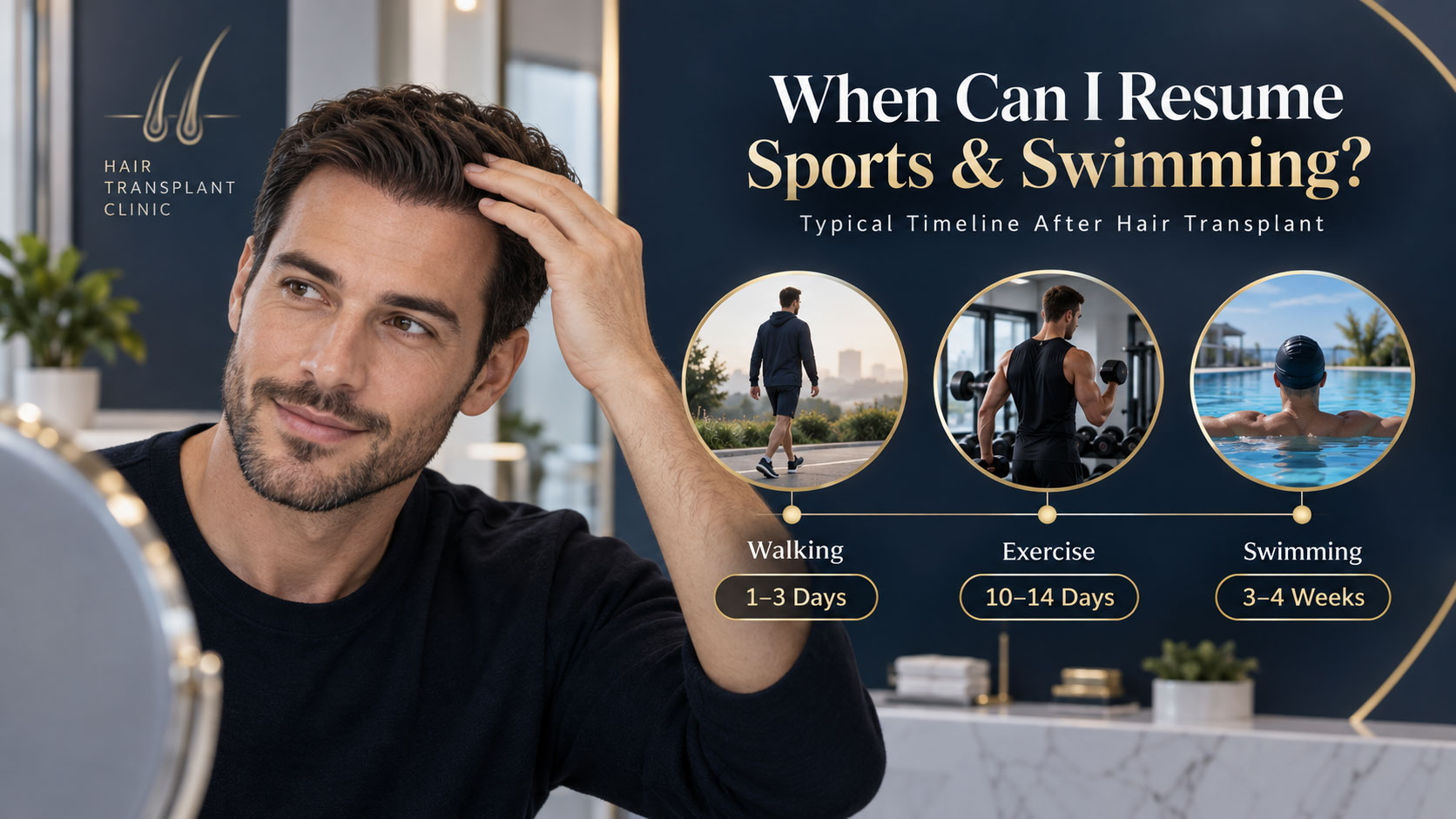
Grafts placed using the FUE or DHI technique are delicate during the initial stage. As a general guideline, short, gentle walks may be resumed within a few days, intense exercise after approximately 10–14 days, and swimming in a pool or the sea usually after 2–4 weeks. The exact timing should be determined based on the appearance of the recipient area and the doctor’s assessment.
Expected Scalp Changes in the First Few Days
- Mild redness, swelling, scabbing, or tenderness may occur.
- Sweating and friction around the head may cause scabs to come off prematurely.
- A bicycle helmet, swim cap, or tight sports equipment may place pressure on the transplant area.
- If unexpected severe pain, increasing redness, discharge, or fever develops, contact the treatment team without delay.
Safe Follow-Up Standards After FUE and DHI in Turkey
When planning a hair transplant in Turkey, choosing providers with a Ministry of Health-approved Health Tourism Authorization Certificate can help you verify that clinical and coordination services are being delivered within an official framework. The certificate’s validity and the treating doctor’s professional credentials should be confirmed in writing before treatment.
Hair transplant evaluations consider the number of grafts, donor-area density, hairline design, and the choice of FUE or DHI together. Turkish doctors may create a follow-up plan covering not only the transplantation procedure but also the scabbing period, washing protocol, return to exercise, and follow-up photographs.
Specific Points Assessed During Follow-Up
- The distribution of implanted grafts and the natural angle of the hairline
- Healing in the donor area and whether excessive tension is present
- Whether scabbing is decreasing and whether there are signs of irritation in the recipient area
- Personalized timing for returning to sports, swimming, sun exposure, and wearing headwear
Hair Transplant Packages and Planning Your Stay in Turkey
A package may include VIP transfers between the airport, clinic, and hotel, accommodation, interpreter support, and coordination of initial care products or the prescribed treatment plan in a single program. The contents should be clarified in writing according to the clinic and the selected range of services.
After FUE or DHI, the stay in Turkey is commonly planned for 3–5 days. This may be sufficient for the first wash, scab check, and discharge assessment. The stay may need to be adjusted in cases involving long-distance travel, regular intense exercise, a tendency to bleed, chronic conditions, or additional procedures.
Practical Schedule for Returning to Sports and Swimming
- First 2–3 days: Rest and take short, slow walks; bending over, lifting weights, and walking at a fast pace are not recommended.
- Days 4–7: Avoid exercise that causes the recipient area to sweat. Short walks may continue with the clinic’s approval.
- Days 10–14: If scabbing has decreased, a gradual return to low- or moderate-intensity exercise may be considered.
- Weeks 2–3: Seek the doctor’s approval before weight training, running, and intense cardio. Sports involving a risk of impact to the head may need to be postponed.
- Weeks 2–4: Returning to pools, the sea, and hot tubs should be planned only after the scabs have completely cleared and there are no open wounds.
Hair Transplant Costs in Turkey and International Comparison
The average package cost for an FUE or DHI hair transplant in Turkey may range from approximately €1,800 to €3,500. This is only a general market indication; the number of grafts, clinic services, accommodation, and follow-up care may affect the price.
| Country | Approximate Hair Transplant Cost | Currency |
|---|---|---|
| Turkey | 1,800–3,500 | € |
| United Kingdom | 4,000–10,000 | GBP |
| Germany | 4,000–8,000 | € |
| United States | 6,000–15,000 | USD |
When comparing prices, look beyond the procedure fee. Check whether the number of grafts, FUE or DHI technique, doctor’s role in the procedure, first wash, and follow-up method after returning home are clearly specified. Written aftercare instructions regarding restrictions on sports and swimming can also make the decision-making process more transparent.
Factors Affecting Hair Transplant Costs and Return to Exercise
- Doctor’s expertise and experience: Hairline design, planning a high number of grafts, protecting the donor area, and determining channel angles during FUE or DHI may affect the scope of the procedure. Ask in advance which stages the doctor will perform directly.
- Technique and method used: In FUE, grafts may be harvested using a micromotor or manual punch; in DHI, they may be implanted using an implanter pen. Sapphire blades for opening channels, the number of grafts, and the size of the treatment area may change the total price and aftercare plan.
- Clinic location: In major health tourism centers such as Istanbul, there may be a wider range of clinic, hotel, and transfer options. Plans in Ankara, Izmir, or other cities may differ in terms of travel distance, length of stay, and follow-up visits.
These factors determine the scope of the overall treatment plan separately from the date of returning to sports and swimming. If your exercise routine is intensive or swimming is a regular part of your lifestyle, discuss the waiting periods and follow-up requirements with the clinic in writing before the procedure.
Next Steps and Frequently Asked Questions After a Hair Transplant
Before making a decision, clarify the transplant technique, estimated number of grafts, who will perform the procedure, and how follow-up will be provided after you return to your country. The following questions can be addressed directly during your consultation.
- When and at what intensity can I return to weight training after FUE or DHI? How will your individual exercise program be progressed in terms of increased heart rate, sweating, and pressure on the head?
- What healing conditions must be met before using a pool, swimming in the sea, or entering a hot tub after a hair transplant? How will complete removal of the scabs, absence of open wounds, and sun-protection requirements be assessed?
- How will follow-up be managed if redness or scabbing in the recipient area increases after I return home? Are photo assessments, online consultations, and coordination with a local doctor available when needed?
This information is for general guidance and does not replace a medical examination. Depending on the findings in the recipient area, the technique used, and your general health, only the doctor following your treatment should determine when you can return to sports and swimming.