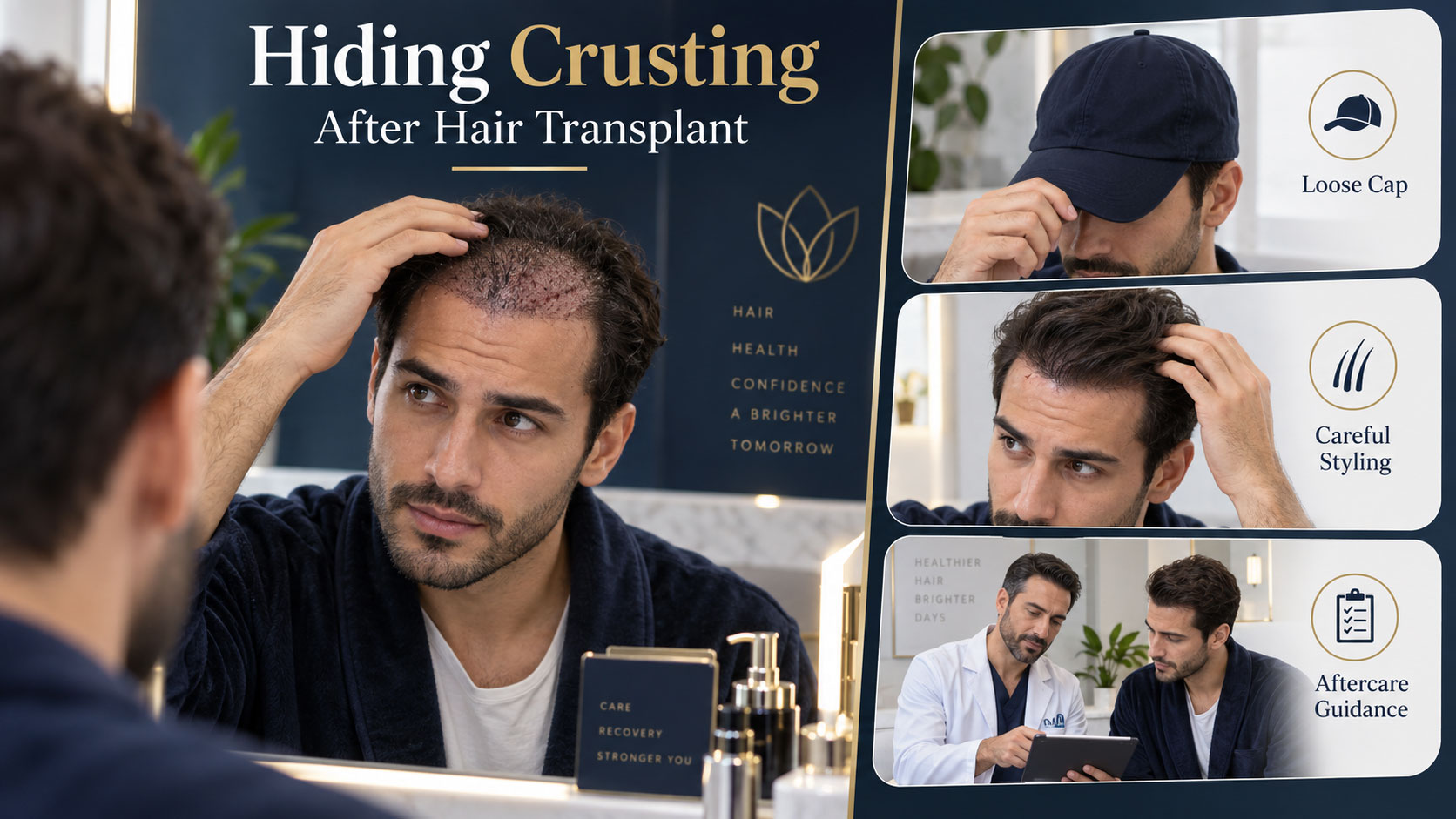
How Does Hair Transplant Scabbing Affect Your Daily Appearance?
After a hair transplant, small scabs, redness and mild swelling in the recipient area may be natural parts of the healing process. Scabbing usually creates a pinpoint appearance around the grafts in the transplanted area and may make the hairline look more noticeable during the first few days.
After techniques such as FUE or DHI, scab visibility varies depending on the number of grafts, the size of the treatment area, hair and skin colour, the washing protocol used and the skin’s healing rate. In many aftercare plans, scabs are expected to soften and fall off within approximately 7–14 days; the team performing the transplant should determine the exact timeframe.
The aim is not to remove the scabs by force, but to reduce their visibility without irritating the healing area. During the first few days, following the clinic’s aftercare instructions is safer than using makeup, hair fibres, colour sprays or heavy cosmetic products.
Safe Aftercare and Authorisation Certificates for Hair Transplants in Turkey
When choosing a provider under Turkey’s health tourism system, check both whether the organisation holds a Health Tourism Authorisation Certificate issued by the Ministry of Health and the hair transplant training of the doctor performing the procedure. The certificate indicates that health tourism services are provided under certain administrative and operational requirements; it does not guarantee individual results or freedom from complications.
When evaluating hair transplant providers, it is important that the doctor can explain their approach to areas such as FUE punch diameters, DHI implanter pens, graft placement angles and donor-area planning. When assessing Turkish doctors’ case experience, do not ask only about the annual number of procedures. Also ask how they plan for specific situations such as different hair types, curly hair, low donor density and the repair of previous unsuccessful transplants.
Do Not Touch the Scabs During the First Few Days
Removing scabs with your fingernails, rubbing harshly or trying to clean the area with pressurised water during the first few days may mechanically damage the grafts and increase the risk of bleeding. Since washing pressure, lotion use and the timing of massage may vary according to the clinic’s protocol, do not change your routine without receiving written instructions.
Hair Transplant Packages and Planning Your Stay in Turkey
Your hair transplant package may include airport or hotel transfers, accommodation, interpreter support when needed, and initial aftercare products or other support recommended by the doctor; check the scope and duration in the written quotation. To conceal scabbing, it is more realistic to stay in Turkey until at least the first check-up and initial wash have been completed, then organise your travel and social plans according to the expected period when the scabs will shed.
Many plans include approximately 3–4 nights of accommodation, depending on the procedure type and the treatment area. However, scabs may remain visible for longer than this period. Therefore, choose a clinic that provides remote photo checks, washing guidance and further assessment when necessary after you return home.
Safe Timing for Reducing Visibility
- First 48–72 hours: A hat, beanie or any other head covering should only be considered with the approval of the team that performed the procedure. Tight headwear that rubs against the grafts may be unsuitable.
- First week: Avoid hairspray, hair fibres, concealing powder, foundation or coloured cosmetic products to cover the scabs. These products may make washing more difficult and irritate the recipient area.
- Approximately days 7–14: As the scabs soften and once the clinic gives permission, follow a gentle washing protocol. If the scabs are still firmly attached, do not apply pressure to speed up shedding.
- After healing is complete: Hair fibres or scalp camouflage products may be considered only once there are no open wounds, discharge, pronounced redness or active scabs.
Hair Transplant Costs in Turkey and International Comparison
A separate medical procedure to conceal scabbing is generally not planned; the cost usually depends on the contents of the hair transplant package, the number of grafts and the technique used. The approximate average range for a hair transplant in Turkey may be €1,800–€3,500. The figures below are general market ranges; consultation, graft planning, accommodation and transfer services may change the price.
| Country | Approximate hair transplant cost | Price currency | General package note |
|---|---|---|---|
| Turkey | €1,800–€3,500 | EUR | Varies according to the technique, graft count and package |
| United Kingdom | £4,500–£9,000 | GBP | Generally includes the clinical service and procedure |
| Germany | €4,000–€8,000 | EUR | Graft count and doctor’s planning are key factors |
| United States | $6,000–$15,000 | USD | Costs vary widely according to the city, surgeon and procedure scope |
When comparing quotations, do not look only at the total price. Check in writing whether washing guidance during the scabbing period, postoperative checks, interpreter support, communication in case of complications and follow-up after returning to your country are included.
Cost and Process Factors Affecting Scabbing After a Hair Transplant
The factors determining cost and the time needed to return to daily life are not the same. Review the following points separately when assessing the price:
- Doctor’s expertise and experience: The doctor’s experience in hairline design, donor-area preservation, graft distribution and revision transplants may affect the quality of the plan. The team assessing scab formation should explain not only the transplant procedure, but also the first wash and follow-up stages.
- Technique and equipment used: The use of a motorised or manual punch in FUE, placement with an implanter pen in DHI, sapphire-tipped channel opening in Sapphire FUE and the number of grafts may change the quotation. Understand that these techniques do not eliminate scabbing completely; its appearance is also related to the skin’s response and the aftercare protocol.
- Clinic location: In cities with high levels of health tourism, such as Istanbul, transport, accommodation and clinic capacity may affect the price. In other centres such as Ankara, Izmir or Antalya, the procedure fee, hotel standard and local transfer costs may be calculated separately.
The suitability of products or applications offered for an additional fee to conceal scabs should always be discussed with the team that performed the procedure, particularly regarding graft safety. Applying concealer over open scabs should not be considered a safe standard practice.
Next Steps in Planning After a Hair Transplant
During your assessment, your hair density, donor area, procedure date and social plans may be considered together. The following questions can help you obtain clear answers from the clinic when reviewing different treatment and aftercare options:
- When will the first wash take place, and how will the scabs be softened? Ask for the clinic’s written protocol covering foam, lotion, water pressure and the order of massage.
- When can a loose hat be worn after FUE or DHI? Obtain the doctor’s approval regarding the inside surface, tightness and whether the headwear will touch the recipient area.
- When are hair fibres, scalp camouflage or colour sprays considered safe? Specifically ask whether these products may be used while open wounds, scabs, discharge or pronounced redness are still present.
If you experience increasing pain, active bleeding, foul-smelling discharge, widespread redness, fever or rapidly increasing swelling, contact the clinic that performed the procedure and, if necessary, a healthcare provider where you are located rather than trying to conceal the scabs. Sharing photographs may help with remote assessment; a clinical examination may be required for a definitive decision.