Is Plastic Surgery Specialization Required for a Hair Transplant?
Hair transplantation is a surgical procedure in which hair follicles are generally harvested from the donor area at the back or sides of the scalp and placed in areas affected by hair loss. For this reason, attention should be paid not only to the technique used to place the grafts, but also to scalp anatomy, skin healing, bleeding control, and the management of possible complications.
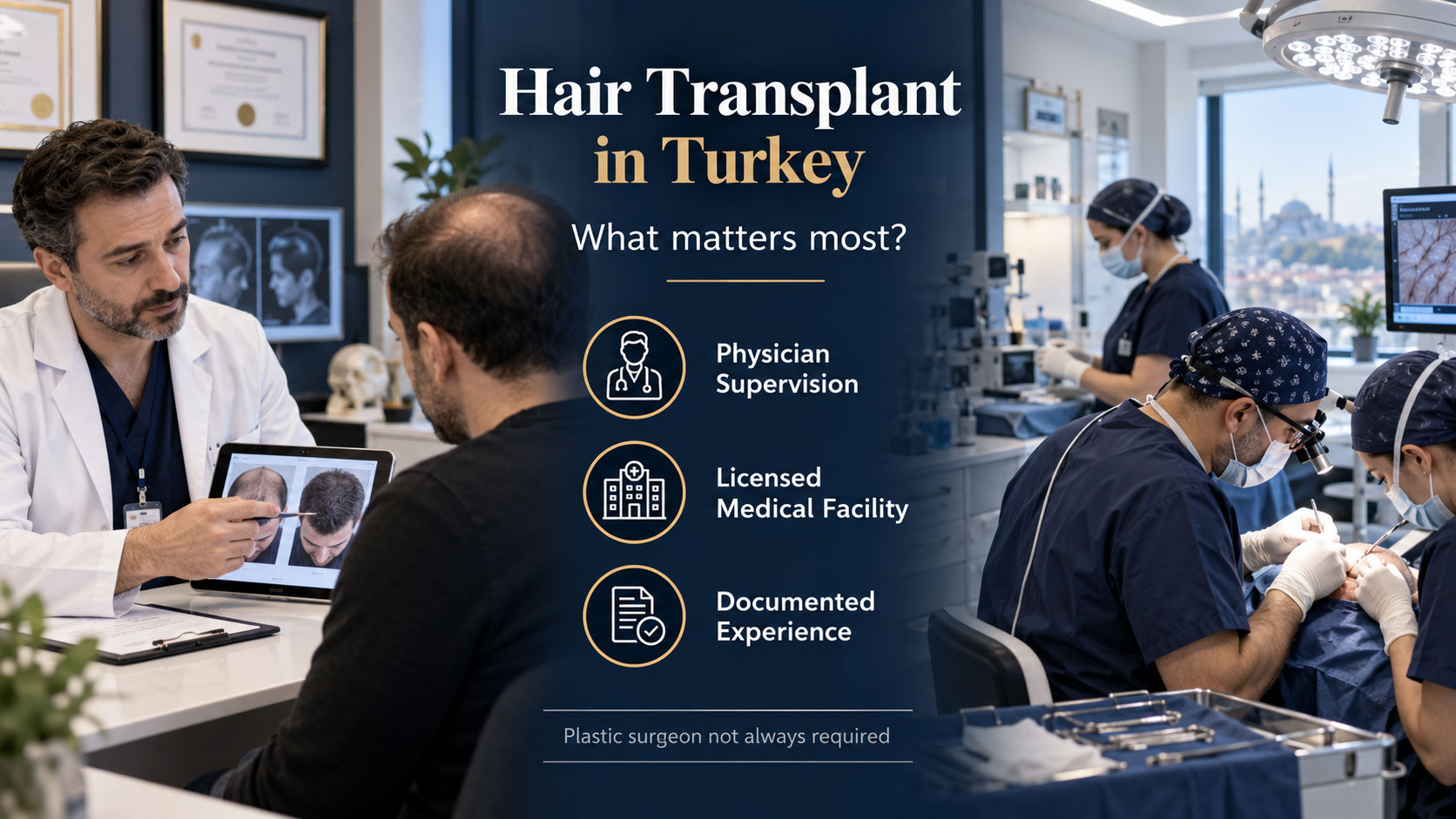
Having a specialist in plastic, reconstructive, and aesthetic surgery perform hair transplantation in Turkey can offer important advantages; however, this specialization alone does not guarantee competence. Dermatologists or physicians with specialized training and verifiable practical experience in hair transplantation may also manage the process under appropriate conditions. When making your decision, assess the doctor’s official authorization, the stages they personally perform, and their specific hair transplant experience rather than focusing only on their title.
What Plastic Surgery Training May Cover
Training in plastic, reconstructive, and aesthetic surgery covers skin, soft tissue, wound healing, tissue repair, and the management of surgical complications. This background may allow for a comprehensive evaluation, particularly for people who have undergone an unsuccessful hair transplant, have significant scar tissue, a limited donor area, or advanced hair loss.
However, hair transplantation also requires specific skills such as natural hairline design, graft direction, density distribution, and preservation of the donor area. When choosing a plastic surgeon, also review their hair transplant portfolio, the techniques they use—such as FUE or DHI—and their results in patients with similar hair loss patterns.
Authorization and Safety Criteria for Hair Transplants in Turkey
When traveling to Turkey from abroad, you should verify not only the doctor’s specialty but also the legal status of the facility where the procedure will be performed. Check official sources to confirm whether the organization providing health tourism services holds a Health Tourism Authorization Certificate issued by the Ministry of Health of the Republic of Türkiye.
At an authorized facility, the initial assessment, medical history, scalp examination, donor area analysis, and treatment planning should be documented. It should be clearly explained which parts of the hair transplant will be performed by the doctor and which by the healthcare team. Responsibility for stages such as graft extraction, channel creation, and implantation should not be left unclear.
How Can You Assess a Doctor’s Specific Hair Transplant Experience?
- In addition to the doctor’s diploma and specialist credentials, ask about their current professional training in hair transplantation.
- Find out which techniques they use—such as FUE, DHI, sapphire-blade channel creation, or motorized punch—and the clinical reasons for using them.
- Assess how they plan to preserve the donor area over the long term instead of automatically increasing the number of grafts.
- Ask who designs the hairline, whether the plan is approved by the doctor, and whether the photographs are taken under standardized conditions.
- Request written information about whom you should contact after the procedure in the event of a possible infection, excessive bleeding, folliculitis, or unexpected healing.
Terms such as “accredited,” “specialist team,” or “highly experienced doctor” are not sufficient evidence on their own. A more informed comparison can be made by reviewing the name of the doctor, their specialty, the clinic’s authorization certificate, the treatment protocol, and the follow-up plan together.
Hair Transplant Packages and the Treatment Process in Turkey
The planned package may include coordination of VIP transfers, accommodation, interpreter support, and products needed for initial aftercare; confirm the scope and any additional fees in writing before traveling. A stay of approximately 3 to 5 days is commonly planned for hair transplantation in Turkey; however, the duration may vary depending on the examination, blood tests, scalp assessment, and scope of the procedure.
During the initial consultation, the duration of your hair loss, previous procedures, family history, products you use, and current health status are assessed. If considered necessary, laboratory tests may be requested for conditions that could affect bleeding risk or treatment planning. The hairline, estimated graft requirement, and preservation of the donor area are planned based on photographs and examination findings.
Key Difference in FUE and DHI Planning
With the FUE technique, follicular units are individually extracted from the donor area and placed into prepared channels. With the DHI approach, extracted grafts may be placed using a specialized implantation pen; this method does not automatically produce better results for every hair loss pattern. The appropriate technique should be selected according to hair thickness, degree of curl, donor area capacity, target density, and the doctor’s treatment plan.
Hair Transplant Costs in Turkey and International Comparison
As of 2026, you may encounter hair transplant prices in Turkey of approximately €2,000–€5,000. This range is an approximate market indicator that varies according to the scope of the procedure and the clinic’s treatment plan; an examination and written quotation are required for an exact price.
| Country | Approximate price range | Price currency | Items that may generally be included |
|---|---|---|---|
| Turkey | €2,000–€5,000 | Euro | Consultation, procedure, basic check-ups, and some travel services |
| United Kingdom | £4,000–£10,000 | British pound | Procedure and clinical follow-up; travel services are usually additional |
| Germany | €4,500–€9,000 | Euro | Procedure and clinical check-ups; accommodation is usually additional |
| United States | $8,000–$15,000 | US dollar | Procedure and check-ups; transportation and accommodation are usually additional |
When comparing prices, do not focus only on the total amount. Review in writing who will perform the procedure, how the estimated graft number was determined, at which stages the doctor will be involved, the communication plan if revision is needed, and what the package includes.
Factors Determining Hair Transplant Costs and the Scope of Treatment
- Doctor’s specialty and experience: Specialization in plastic, reconstructive, and aesthetic surgery or dermatology may offer different advantages for clinical assessment. In addition, the doctor’s hands-on experience with FUE, DHI, repair procedures, and managing limited donor areas is important.
- Technology and technique: FUE, DHI, sapphire-blade channel creation, motorized punch, and manual punch involve different treatment processes. Knowing the name of the technique used is not enough; the clinic should also explain its protocols for preserving graft viability, reducing transection rates, determining channel direction, and protecting the donor area.
- Clinic location: The costs of rent, operating rooms, healthcare staff, and health tourism services may vary in cities such as Istanbul, Ankara, Izmir, and Antalya. Location can affect the price, but the name of the city alone is not a measure of medical quality.
When evaluating these three areas, the written quotation should include the doctor’s name, specialty, estimated graft range, procedure technique, follow-up period, and services not included. Very low prices, promises of an unusually high number of grafts, or unclear packages in which the doctor is not present during the procedure should be reviewed particularly carefully.
Questions to Ask Before Choosing a Hair Transplant
- Which stages of the hair transplant will the doctor personally perform? Request a written breakdown of responsibility for graft extraction, channel creation, and implantation, and clarify whether the doctor will only attend a brief initial consultation.
- Why is FUE, DHI, or another technique considered suitable for my hair? Ask why the technique was selected based on donor area density, hair shaft thickness, degree of curl, and the target hairline.
- How will follow-up continue after the hair transplant when I am outside Turkey? Find out when photo check-ups will take place, which healthcare professional you can contact if an unexpected symptom develops, and under what conditions a revision assessment will be provided.
Plastic surgery specialization provides valuable surgical training, but it is not the only criterion for selecting a safe hair transplant. You can make a more informed choice by considering the Ministry of Health authorization certificate, the doctor’s specific practical experience in hair transplantation, the actual medical responsibility for the procedure, the rationale for the chosen technique, and the written follow-up plan together.