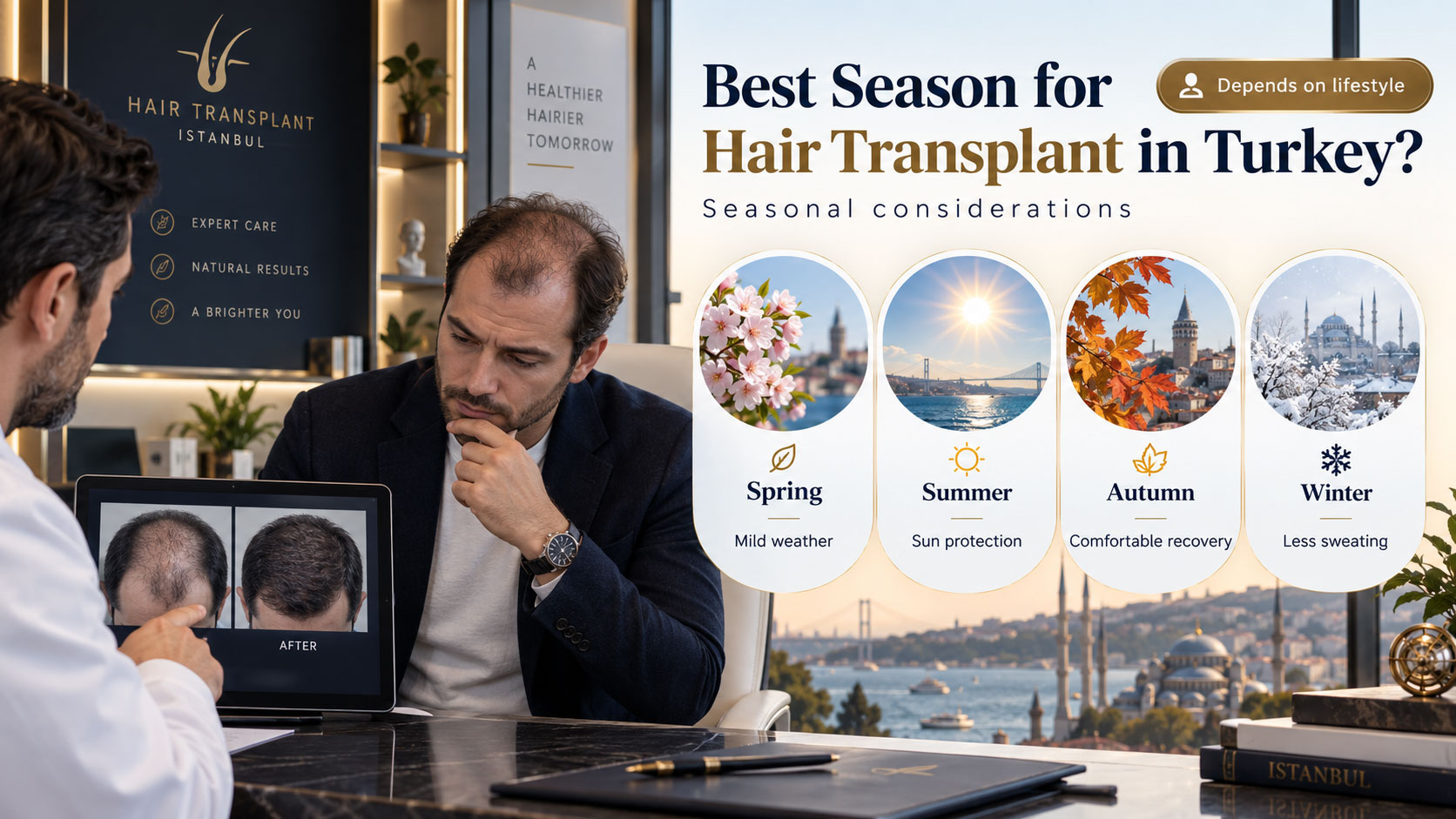
Why Is Seasonal Timing Important for a Hair Transplant?
The techniques used in hair transplantation, such as FUE, DHI and sapphire-tip channel opening, do not change according to the season. Success mainly depends on the condition of the donor area, graft planning, the quality of the surgical procedure and compliance with post-transplant care. However, air temperature, sunlight, sweating, sea and pool use can affect the first days of recovery.
Seasonal conditions vary between cities such as Istanbul, Antalya, Izmir and Ankara. When choosing your travel date to Turkey, consider not only the procedure day but also how well you can protect yourself from the sun and strenuous physical activity during the first 10–14 days.
Having a hair transplant in summer is not inherently harmful. However, if you are likely to have holiday plans, use the beach or spend long periods outdoors, scheduling the procedure separately from these activities may support a more controlled recovery.
Seasonal Safety Checks After FUE and DHI
Ministry of Health authorization and clinic verification
When choosing a clinic for medical tourism in Turkey, check whether it holds the Health Tourism Authorization Certificate issued by the Republic of Türkiye Ministry of Health. This certificate is an important verification point regarding a healthcare provider’s authorization to offer international healthcare services; it does not, by itself, guarantee a particular result.
When planning a hair transplant, clearly ask about the clinic’s actual FUE and DHI procedure workflow, how the graft count is determined, how responsibilities are divided during extraction and implantation, and the extent of physician supervision. Turkish dermatology and plastic, reconstructive and aesthetic surgery specialists may have different levels of clinical experience in areas such as scalp analysis, donor-area assessment, hairline design and graft placement.
Key points assessed before the procedure
- The distribution and potential progression of hair loss
- Hair density and hair shaft thickness in the donor area
- How well the frontal hairline suits the proportions of the face
- The estimated number of grafts required and the implantation area
- Whether there are active dermatological problems, scars or previous procedures on the scalp
- How sun exposure, sweating and travel plans may affect the first weeks
Pre-procedure assessment may be supported by a physical examination, photographic analysis and, when necessary, laboratory tests. Suitability should not be determined solely from photographs remotely.
Hair Transplant Packages in Turkey and Seasonal Planning
Depending on the services selected, a hair transplant package may include VIP transfers between the airport, hotel and clinic, hotel accommodation, interpreter support, and initial care products or necessary post-procedure guidance. Review the package contents, number of accommodation nights and any items that may incur additional charges in writing.
FUE or DHI hair transplantation is usually completed in a single procedure day; stays in Turkey are generally organized for 3–5 days, depending on the clinic’s protocol and travel plans. The first check-up and wash are planned by the clinic in most programs. If you are visiting in summer, avoid walking directly under the sun when returning to your hotel, and do not cover your head unless advised by the clinic.
Practical seasonal plan for the first 14 days
- During the first few days, limit keeping your head bent forward for long periods and avoid strenuous physical activity.
- Reduce direct sun exposure; if you need to go outside, follow the clinic’s instructions regarding headwear.
- Postpone swimming in the sea or pool until scabbing and surface healing are complete.
- Wait for the period recommended by your doctor before engaging in activities that cause heavy sweating, such as sports, sauna use or steam rooms.
- Do not scratch the transplanted area or pick at the scabs, and use care products only as instructed.
Sun exposure and sweating are generally easier to manage in autumn and winter. Spring may offer a balanced option for travel and daily care because of its mild weather; however, personal factors such as sudden sun exposure and pollen-related skin sensitivity should also be considered.
Hair Transplant Costs in Turkey and International Comparisons
The average package cost of a hair transplant in Turkey may range from approximately €2,000–€4,500, depending on the number of grafts, the choice of FUE or DHI, the procedure scope and accommodation services. The figures below are approximate ranges provided for market comparison; individual plans and clinic quotations may vary.
| Country | Approximate hair transplant cost | Main factors included in the price |
|---|---|---|
| Turkey | €2,000–€4,500 | Graft count, FUE/DHI, clinic and package contents |
| United Kingdom | £5,000–£10,000 | Graft count, surgeon’s location and clinic services |
| Germany | €4,500–€9,000 | Procedure scope, physician expertise and city |
| United States | $7,000–$15,000 | Graft count, surgeon’s fee and facility costs |
Season alone does not determine the medical cost of the procedure. Demand may increase in spring and autumn, which can affect scheduling availability or accommodation costs. Therefore, check in writing how long the quotation is valid and whether exchange-rate fluctuations affect the price.
Factors That Determine Hair Transplant Cost and Summer-Related Risks
- Physician expertise and experience: Hairline design, procedures involving a high graft count, previously transplanted areas and limited donor capacity may require specialized planning. Ask about the physician’s direct role in the procedure and the follow-up protocol.
- Technique and equipment: Motorized or manual graft extraction in FUE, use of an implanter pen in DHI, sapphire-tip channel opening and graft holding time may affect the price. Clarify which stages of the package are covered by the terms “DHI” or “sapphire.”
- Graft count and implantation area: The number of grafts needed for the frontal hairline, crown or entire upper scalp is not the same. More grafts may mean a longer procedure and more extensive donor-area planning.
- Clinic location: In cities with strong international transport links, such as Istanbul, clinic, hotel and transfer costs may vary; in tourism centers such as Antalya, seasonal demand may affect the overall budget.
- Summer conditions: Hot weather does not automatically prevent grafts from taking; however, excessive sweating, sunburn, early exposure to pool or seawater and failure to follow care instructions may make recovery more difficult.
If you are planning a procedure in summer, it may be more suitable to keep the first two weeks separate from a beach holiday, choose clean accommodation with air conditioning, avoid strenuous exercise and complete your check-up before traveling. Do not finalize your flight date before the clinic check-up has been completed.
Next Steps After a Hair Transplant and Frequently Asked Questions
1. When can I swim in the sea or pool after a summer hair transplant?
There is no single standard number of days for swimming in the sea or pool. The condition of the scabs, healing of the recipient area and the clinic’s assessment are determining factors; early exposure to chlorine, salt, sunlight and physical contact may cause unwanted irritation.
2. Should I choose FUE or DHI?
The choice is planned according to hair density, donor-area capacity, the area to be transplanted and the desired hairline. More important than the name of the technique are safe graft extraction, placement at the correct angle and a realistic density goal.
3. How many days do I need to stay in Turkey for a hair transplant?
Many international programs plan a 3–5-day stay; however, the need for check-ups, the procedure scope and flight duration may change this range. Before traveling, request a written procedure schedule, the timing of the first wash, confirmation of fitness to fly and details of remote follow-up.
Do not consider the season the only deciding factor. The date that allows you to avoid the sun, make time for initial care and complete your clinic check-up may be more suitable for your circumstances.