Why Are Blood Tests Evaluated Before Hair Transplantation?
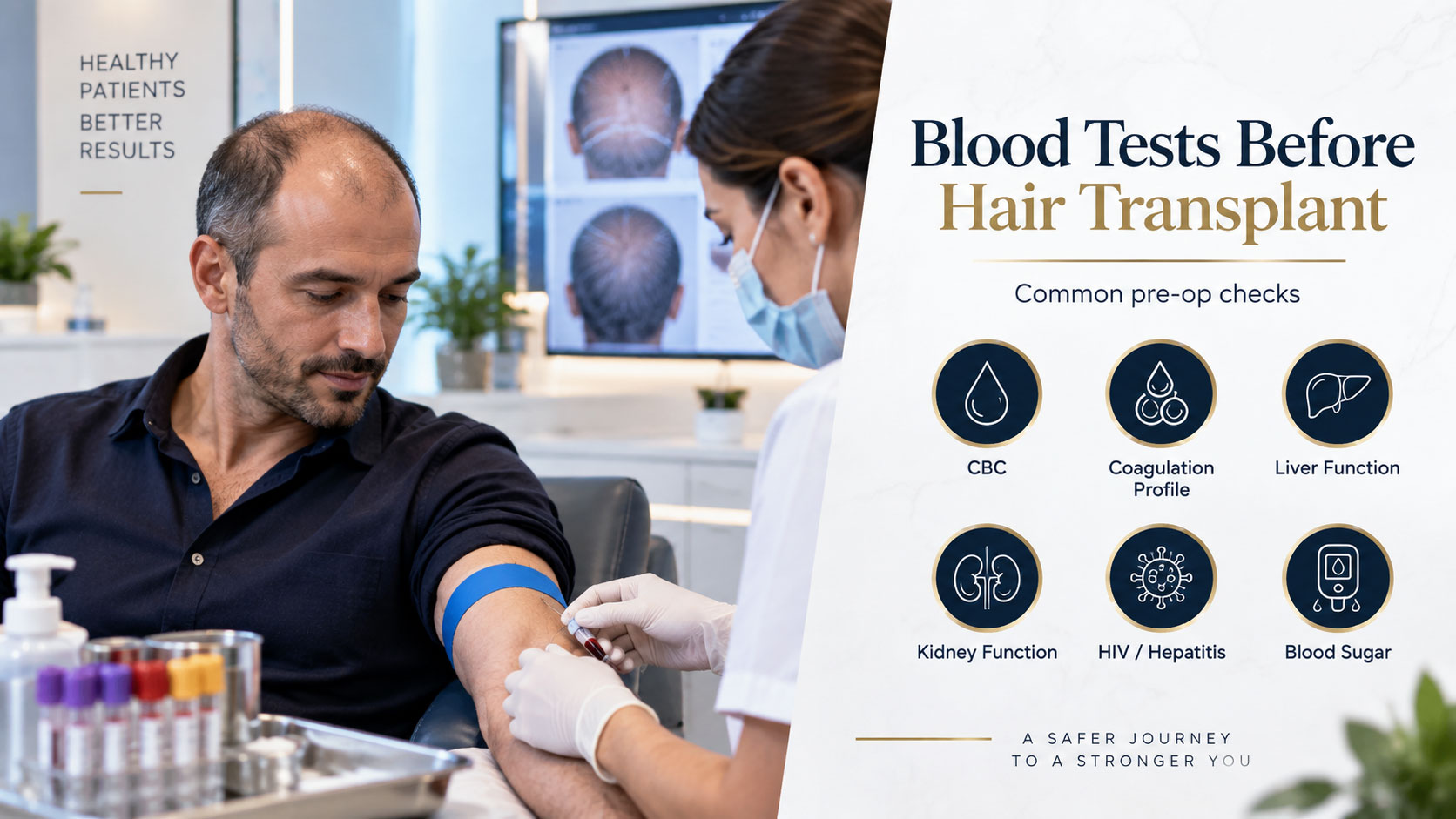
Blood tests before hair transplantation help ensure that the procedure is planned safely for you. The purpose is not only to assess hair loss; bleeding tendency, infection risk, blood sugar levels, and other general health factors that may affect the procedure are also evaluated.
Techniques such as FUE, DHI, and sapphire blade channel opening are generally performed under local anesthesia. Even so, the anesthetic agents to be used, procedure duration, existing medical conditions, and regularly used medications are reviewed together before transplantation.
Not every test is mandatory for every patient. The requested panel may vary depending on your age, medical history, the scope of the hair transplant, the clinic’s protocol, and the physician’s assessment.
Basic blood tests
- Complete blood count: Hemoglobin, hematocrit, white blood cells, and platelet levels are assessed. These results may indicate whether further evaluation is needed for anemia or clotting-related concerns.
- PT/INR and aPTT: These tests provide information about the blood-clotting process. They become particularly important if you have a history of prolonged bleeding, easy bruising, or a bleeding disorder.
- Fasting blood glucose or HbA1c: These tests may be requested if you have a history of diabetes or a risk related to blood sugar control.
- Liver and kidney function tests: Although not routinely requested by every clinic, these tests may be considered if you have a known liver or kidney condition, regularly take medication, or have additional medical risks.
Infection screening and personal information
Some clinics may request infection markers such as hepatitis B, hepatitis C, and HIV as part of procedure safety and laboratory protocols. The scope of these tests may vary according to laboratory practices in your country, the protocol of the clinic in Turkey, and informed-consent procedures. Results should be handled in accordance with privacy regulations.
Blood group testing is generally not decisive for hair transplantation on its own; not every center routinely requests it unless a blood transfusion is planned. For people who may be pregnant, a pregnancy test may also be considered in relation to the procedure and anesthesia plan.
Safety and Authorization Checks for Hair Transplantation in Turkey
When choosing a provider under Turkey’s health tourism system, check whether the clinic holds a Health Tourism Authorization Certificate issued by the Turkish Ministry of Health. The certificate’s validity, the name of the healthcare facility where the procedure will take place, and the details of the responsible healthcare professional should be provided in writing in advance.
Focusing only on the number of grafts is not sufficient when evaluating hair transplantation. The physician should consider scalp density, the follicular reserve in the donor area, the possibility of age-related changes to the hairline, and the direction of channel opening together.
Clinical details in hairline planning
When assessing the experience of Turkish physicians in hair transplantation, do not ask only about the total number of procedures performed. Also find out about their role in FUE and DHI procedures, who designs the hairline, whether grafts are separated under a microscope, and how responsibilities are distributed among the healthcare team during the procedure.
If a notable value appears in your preoperative blood results, only a physician can determine whether it affects your suitability for hair transplantation. Additional examination, another test, or management of an existing health condition may be recommended if necessary. Prescription treatments should not be stopped without consulting your physician.
Hair Transplant Packages and Test Preparation
A hair transplant package may often include airport transfers by VIP or private vehicle, hotel accommodation, interpreter support, and initial aftercare products or essential aftercare services. Check the scope, number of nights, and additional charges in the written quotation.
Your stay in Turkey may be planned for approximately 2 to 4 days for many procedures; this period may be extended depending on the number of grafts, the follow-up schedule, and the clinic’s practices. The first day may include an examination and blood tests, the hair transplant may take place the following day, and the follow-up appointment may be scheduled according to the clinic’s protocol.
Preparing test results when traveling from abroad
- Have your blood tests performed, if possible, 1 to 4 weeks before the procedure and send the results to the clinic in PDF format.
- Reports should include the test date, reference range, measurement unit, and laboratory information.
- Clearly disclose blood thinners, hormone treatments, chronic conditions, allergies, and any previous anesthesia problems.
- Ask the clinic in writing whether it accepts your results, whether repeat testing will be required in Turkey, and whether the testing fee is included in the package.
If the cause of hair loss is unclear, ferritin, TSH, vitamin D, vitamin B12, zinc, or hormone tests may be considered. These tests are not automatically requested before every hair transplant; they are selected following a dermatological evaluation if there is diffuse hair loss, thinning that began at an early age, or accompanying symptoms.
Hair Transplant Costs and the Role of Tests in the Package
The average package cost for hair transplantation in Turkey may be estimated at approximately €2,500. This amount may include the hair transplant itself, transfers, accommodation, preoperative assessment, and initial aftercare services. Whether blood tests are included in the package varies from clinic to clinic.
The figures below are approximate market ranges and do not replace a direct quotation. The total cost may change depending on the number of grafts, technique selected, length of accommodation, and the physician’s role in the procedure.
| Country | Approximate hair transplant cost | Note |
|---|---|---|
| Turkey | €1,800–€3,500 | Many quotations may be offered with package services included |
| United Kingdom | £4,000–£8,000 | Testing and follow-up fees may be calculated separately |
| Germany | €3,000–€7,000 | Varies according to the technique and number of grafts |
| United States | $5,000–$15,000 | Consultation, procedure, and follow-up may be priced separately |
Rather than comparing only low prices, assess in writing how many grafts are planned, whether FUE or DHI will be used, where the blood tests will be performed, and how postoperative follow-up will be provided.
Factors Affecting the Cost of FUE and DHI Hair Transplantation
- The physician’s expertise and responsibility during the procedure: The price may be affected by whether the physician personally conducts the consultation, designs the hairline, opens the channels, and handles critical stages. FUE graft extraction, DHI implantation with a pen, and high-density transplantation planning may require different levels of expertise.
- Technique and materials used: FUE, DHI, sapphire blade channel opening, and the use of a micromotor are not the same process. The separation of grafts into single, double, or multiple-root units, as well as the implantation pens and channel-opening method, may change the treatment plan.
- Clinic location: In centers with strong international flight connections, such as Istanbul, prices may vary according to clinic expenses, hotel standards, and the transfer plan. In cities such as Ankara, Izmir, or Antalya, the total cost may also differ depending on the service scope and accommodation choice.
When evaluating these criteria, it is important to consider the total number of grafts and the limitations of the existing donor area realistically. A preliminary quotation based on photographs may not fully replace an in-person or video consultation.
Next Steps and Frequently Asked Questions Before Hair Transplantation
Sharing your existing blood test results, a list of your medications, and when your hair loss began before receiving a quotation can make planning easier. The questions below can help guide the topics that should be discussed in detail during your consultation.
- How would my treatment plan change if my complete blood count or PT/INR results before hair transplantation showed values outside the normal range? This can help you learn whether further evaluation is required and whether the tests would need to be repeated in Turkey.
- Considering the density of my donor area and the planned number of grafts, which technique is considered more suitable: FUE or DHI? Clarify during the clinical consultation how the technique selected may affect the hairline, procedure duration, and aftercare plan.
- Are ferritin, TSH, vitamin D, or hormone tests included in the assessment of my hair loss? Ask why these tests are recommended, who will interpret the results, and whether another dermatological assessment is needed before hair transplantation.
Blood test results alone do not determine whether you are suitable for hair transplantation. The final plan should be developed based on the examination, scalp analysis, medical history, and the clinical assessment of the physician responsible for the procedure.