How Does Swelling and Facial Puffiness Develop After a Hair Transplant?
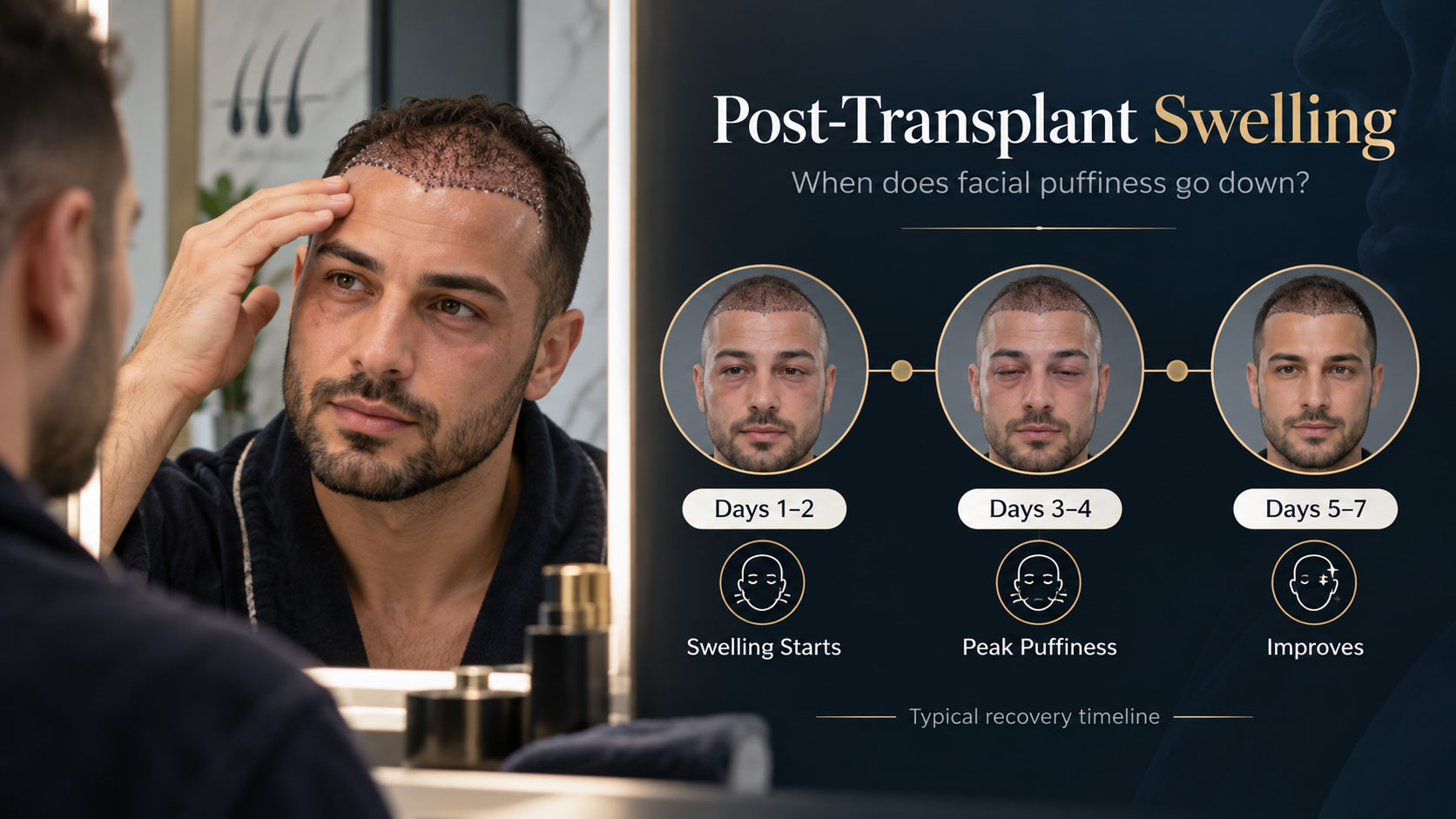
After a hair transplant, swelling that begins in the forehead may move toward the eyebrows and eye area under the effect of gravity. This appearance is usually associated with the fluids used during the procedure, a temporary tissue response in the scalp and the healing process; on its own, it does not mean that the procedure was unsuccessful.
Swelling usually becomes more noticeable on the second or third day after the procedure. In most cases, it begins to subside within a few days and decreases substantially within approximately 7–10 days. Mild swelling or yellowing around the eyes may persist for up to 10–14 days in some cases.
Facial swelling does not occur in the same area or with the same intensity in every person. The selected technique, such as FUE or DHI, the number of grafts transplanted, scalp sensitivity, the amount of fluid administered during the procedure and adherence to aftercare instructions may all affect the process.
Typical timeline for swelling
- First 24 hours: Tightness or mild swelling may begin in the forehead area.
- Days 2 and 3: Swelling may become more visible and move toward the eyebrows.
- Days 4 to 7: Swelling usually begins to decrease.
- Days 7 to 14: Mild residual swelling around the eyes generally subsides.
Hair Transplant Safety and Swelling Monitoring in Turkey
When planning a hair transplant in Turkey, it is important to choose a healthcare facility that holds a Health Tourism Authorization Certificate issued by the Ministry of Health and operates in accordance with the relevant regulations. This certificate indicates that the clinic is authorized to provide services within the scope of health tourism; by itself, it does not guarantee a specific result or complication-free recovery.
When evaluating swelling management, consider whether the physician performing the hair transplant is a specialist in dermatology or plastic, reconstructive and aesthetic surgery, as well as their practical experience with FUE, DHI, graft placement and scalp anatomy. Before the procedure, the physician should assess the planned number of grafts, hairline design, local anesthesia approach and medical history that could affect the risk of swelling.
At an authorized center, a pre-procedure examination, photographic records, hair density analysis and, when considered necessary, basic health checks are planned. After the procedure, the clinic monitors whether the swelling is within the expected range of healing, as well as crusting in the transplant area and the appearance of the donor area.
Distinguishing normal healing from warning signs
- Mild tightness, limited forehead swelling and gradual improvement are generally expected findings.
- If swelling increases each day or you experience severe or progressively worsening pain, marked redness or increased warmth, contact the clinic without delay.
- Symptoms such as changes in vision, difficulty breathing, a widespread rash, a feeling of faintness or fever require urgent medical evaluation.
- If swelling becomes severe enough that the eyelids cannot fully close, contact the team that performed the procedure on the same day rather than waiting for an online response.
Hair Transplant Packages: Transfers, Accommodation and Swelling Monitoring
Depending on the selected service scope, a hair transplant package may include airport-to-hotel VIP transfers, hotel accommodation, interpreter support and initial aftercare products or a clinic check-up. The package contents, length of stay and post-procedure communication process should be reviewed in writing.
A stay of approximately 2–4 nights is commonly planned in Turkey for FUE or DHI hair transplants; the exact duration varies according to the scope of the procedure and the flight schedule. Before the procedure, a scalp examination, graft planning and photographic assessment are carried out. Regarding swelling, clarify the timing of a long flight, when the post-procedure check-up will take place and how aftercare instructions will be provided before leaving the clinic.
Before the flight, it is helpful for the clinic to provide written guidance on head positioning, the use of bandages or dressings, contact with the scalp and emergency communication. The travel plan should also include how swelling of the forehead and eye area will be monitored during the flight.
Hair Transplant Costs in Turkey and International Comparison
Hair transplant prices in Turkey vary according to factors such as the number of grafts, the FUE or DHI technique, the scope of the procedure, physician involvement, accommodation and transfers. The figures below are approximate and provided for guidance; they do not replace a personalized quotation.
| Country | Approximate price range | Currency | General scope |
|---|---|---|---|
| Turkey | 1,800–4,500 | € | Usually the procedure, check-ups and package options |
| United Kingdom | 3,500–10,000 | £ | Mostly the procedure and clinic check-ups |
| Germany | 4,000–9,000 | € | Procedure scope varying by technique and graft count |
| United States | 8,000–18,000 | $ | Procedure, surgical team and facility fees |
Offers in Turkey should not be assessed solely on the headline price. Check whether the number of grafts, the team performing the procedure, the physician consultation, follow-up appointments, hotel nights and communication support for early concerns such as swelling are included in the quote.
Factors Affecting Swelling and the Hair Transplant Process
- Physician expertise and practical experience: Hairline design, graft distribution, preservation of the donor area and management of the fluids used during the procedure should be evaluated together with the physician’s level of experience. In FUE and DHI procedures, the angle of channel creation and the graft placement plan may affect both the appearance and the healing process.
- Technique and procedure scope: FUE, DHI and methods involving channel creation with sapphire blades are not the same procedure. The number of grafts to be transplanted, the distribution of single and multiple grafts, whether the procedure is shaved or unshaven and the size of the donor area can affect the price and procedure duration.
- Clinic location: In major health tourism centers such as Istanbul, transport and accommodation options may be extensive; the operating costs of city-center clinics may be reflected in their prices. For offers from Ankara, Izmir or other cities, airport transfers, hotel standards and access to follow-up care should also be reviewed separately.
To help reduce swelling, follow the clinic’s instructions regarding head positioning, contact with the scalp, physical activity, alcohol use and aftercare. This information provides general guidance; if you have existing health conditions, previous surgeries or regularly use any treatments, obtain personalized advice from the physician planning your procedure.
Next Steps After a Hair Transplant: Three Frequently Asked Questions
- What check-up is needed if swelling continues after day 7? The duration of swelling in the forehead and around the eyes is assessed together with any accompanying redness or pain; you can ask whether the clinic check-up should be conducted online or in person.
- Is there a difference in facial swelling after FUE and DHI? In addition to the selected technique, the number of grafts, the local anesthesia approach and the procedure duration can be evaluated to explain the individual risk profile.
- How should the flight date be scheduled after a hair transplant? A safe travel schedule can be created by considering the timing of the first post-procedure check-up, the course of forehead swelling and the availability of emergency communication together.
When deciding on a hair transplant in Turkey, review not only the day of the procedure but also the pre-procedure assessment, first-week aftercare, swelling monitoring and the communication plan after returning home. Swelling is expected to decrease day by day; if an unexpected or rapidly worsening condition develops, contact the healthcare facility directly.