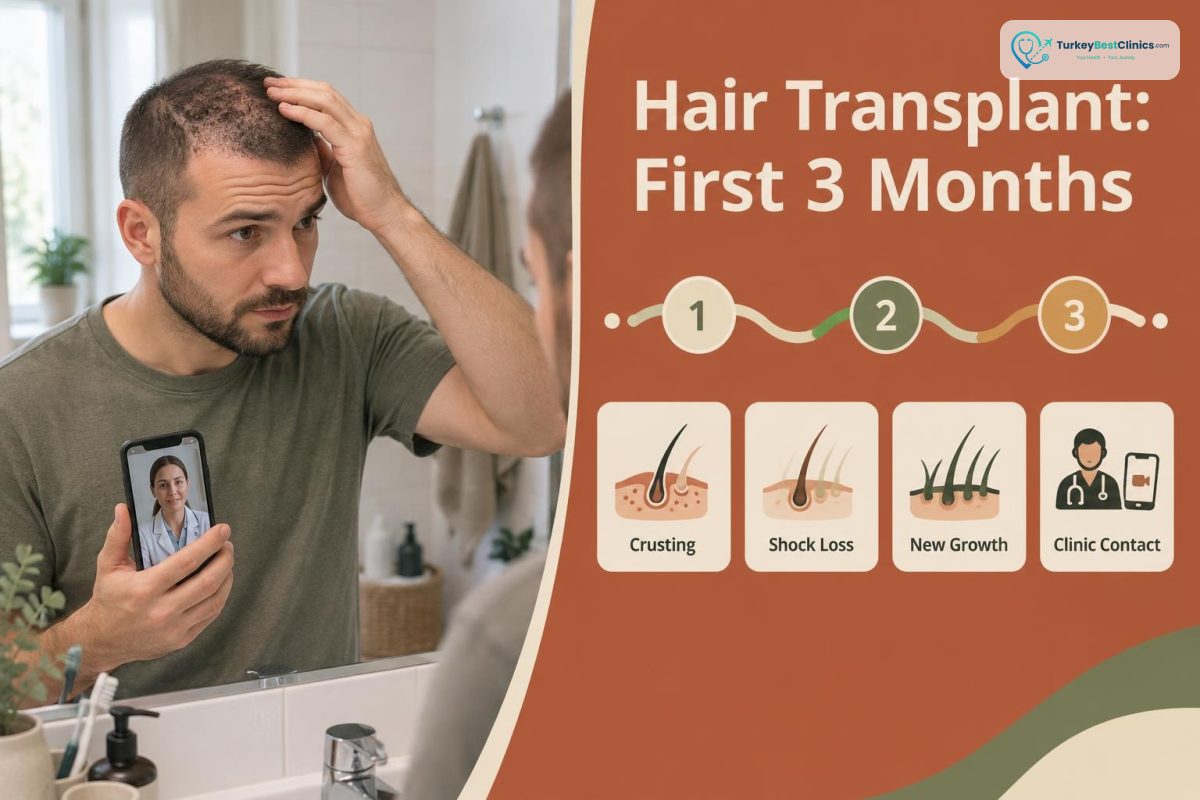
How Does Appearance Change During the First 3 Months After Hair Transplantation?
The first three months after hair transplantation are the period when appearance changes most rapidly, but the results still cannot be evaluated. You may notice short hair shafts along the hairline and in the recipient area, redness, scabbing, or temporary thinning.
During the first few weeks, your appearance in the mirror does not show the permanent outcome of the transplanted follicles. As grafts placed using the FUE or DHI technique enter a new growth cycle, temporary shedding may also occur in existing hair.
First 10 Days: Scabbing and Redness
During the first few days, small scabs, mild swelling, and redness may develop in the recipient area. This appearance usually varies depending on aftercare instructions, skin type, and the number of grafts transplanted. Removing scabs with your fingernails or rubbing the recipient area vigorously may negatively affect the healing process of the follicles.
Weeks Two and Three: Beginning of Shock Loss
From the second week onward, the transplanted hair shafts may become thinner and shed. At this stage, the follicle remains under the skin; seeing the hair shaft fall out does not necessarily mean that the graft has been lost.
Shock Loss and the Healing Cycle of FUE Grafts
Shock loss is a common process in which hair shafts temporarily shed after transplantation. It usually becomes noticeable between the second and eighth weeks and may affect both transplanted hairs and existing hairs in the surrounding area.
A hair follicle and a hair shaft are not the same structure. During shock loss, even if the visible hair shaft disappears, the follicular structure may remain under the skin and enter a new growth cycle in the following months. However, it is not possible to assess the condition of every graft with certainty based on photographs alone.
Appearance That May Be Considered Normal
- Temporary thinning or uneven density in the recipient area
- Short-term thinning of existing hair
- Mild redness or tenderness during the first few weeks
- New hair appearing very short, fine, or colorless during the second and third months
- Hair density that is not yet sufficient for evaluating the result
When Should You Contact the Clinic?
If you notice increasingly severe pain, a marked increase in warmth, pus-like discharge, widespread or worsening redness, fever, or heavy bleeding, contact the clinic that performed the procedure without delay. These signs do not necessarily indicate a definite problem, but they require clinical assessment rather than waiting at home.
Authorization and Follow-Up Standards for Hair Transplantation in Turkey
When planning hair transplantation in Turkey as part of medical tourism, verify that the procedure will be carried out at a healthcare facility holding a Ministry of Health Health Tourism Authorization Certificate and under the supervision of the relevant physician. The presence of a certificate alone does not guarantee a particular result; you should also review the scope of the procedure, the responsible physician’s role, and the postoperative communication plan.
In FUE, grafts are harvested while preserving their follicular unit structure, whereas DHI involves placement with an implanter pen. These approaches require different planning for stages such as channel opening, graft distribution, and hairline design. When evaluating teams working with these techniques in Turkey, look not only at their total number of procedures, but also at documented examples involving similar graft numbers, hair types, and hairline designs.
Follow-Up Planning for International Patients
The first wash, photographic check-ups, and assessment of scabs can be scheduled according to your travel itinerary. Before the procedure, clarify how you will communicate with the clinic after returning home, how often follow-up photos should be sent, and whom you should contact if unexpected symptoms occur.
Preparing for the First Three Months Within a Hair Transplant Package
A hair transplant package may typically include airport or hotel transfers, accommodation, interpreter support, and initial aftercare products or guidance. As package contents vary between clinics, compare flights, hotel nights, follow-up appointments, and possible additional services in writing.
For the first three months, stays in Turkey are generally planned around the procedure itself, the first wash, and an early follow-up appointment; the exact duration varies according to the number of grafts, the recipient area, and the clinic’s protocol. Before the procedure, a scalp examination, photographic analysis, and, when necessary, a basic health assessment may be performed. Tell your physician accurately about products that may have blood-thinning effects and about your existing health conditions; do not stop using any product on your own.
Key Points for Daily Aftercare
- During the first few days, do not direct high-pressure water straight onto the recipient area.
- Do not pick at the scabs or scratch the area vigorously.
- Follow the clinic’s instructions regarding restrictions on intense sun exposure, saunas, swimming pools, and strenuous exercise.
- Maintain the recommended sleeping position and first-wash method according to the written aftercare plan.
- During the first three months, monitor hair density with monthly photos taken in the same lighting and from the same angle, rather than checking it every day.
Hair Transplantation Costs in Turkey and the Economics of the Three-Month Process
The average package cost for hair transplantation in Turkey may generally range from approximately €2,000 to €4,500, depending on the number of grafts and the scope of the procedure. This is a general market estimate; the personal quote becomes clear after consultation and treatment planning. When comparing prices, consider not only the procedure fee but also the scope of follow-up care and aftercare.
| Country | Approximate hair transplant cost | Currency |
|---|---|---|
| Turkey | 2,000–4,500 | € |
| United Kingdom | 4,000–12,000 | £ |
| Germany | 4,000–9,000 | € |
| United States | 6,000–15,000 | $ |
The amounts in the table are approximate ranges that may vary according to the city, number of grafts, physician involvement in the procedure, and package contents. Exchange-rate differences, travel, additional accommodation, and dermatology check-ups in your home country after the procedure may need to be budgeted separately.
Factors That Affect the Price and the First Three Months
- Physician’s expertise and role in the procedure: The physician’s direct contribution to hairline design, donor-area analysis, graft distribution, and critical stages of the operation may affect the price. Ask in writing for examples involving similar hair-loss patterns and clarification of responsibility for the procedure.
- Choice of technique and materials: FUE, DHI, Sapphire FUE, motorized punch diameter, the method used to store grafts, and the protocol involving an implanter pen may change the procedure duration, planning, and cost. No technique should automatically be considered superior for every hair type or hair-loss pattern.
- Clinic location: Rent, operating-room infrastructure, accommodation, and transfer costs may differ between Istanbul, Ankara, Izmir, and other cities. When choosing a city, consider not only the price but also how easily you can reach the clinic for early follow-up.
Informed Steps to Take After the First Three Months
At the end of the third month, appearance usually does not reflect the final result. New growth generally becomes more noticeable in the following months; assessing density, thickening of the hair shafts, and the natural appearance of the hairline may require longer follow-up.
When comparing offers, review the graft number, FUE or DHI protocol, physician supervision, first wash, photographic follow-up, and communication plan for possible complications in the same table. Sending your photos in the same lighting and from the same angle can help the clinic provide a more consistent assessment.
Three Specific Questions to Consider
- During shock loss, in which month is trichoscopy or photographic follow-up performed to assess the condition of the transplanted grafts?
- What differences between FUE and DHI are considered regarding the hairline, graft number, and appearance during the first three months?
- If density appears low in the third month, which findings are considered normal and which require an in-person check-up?