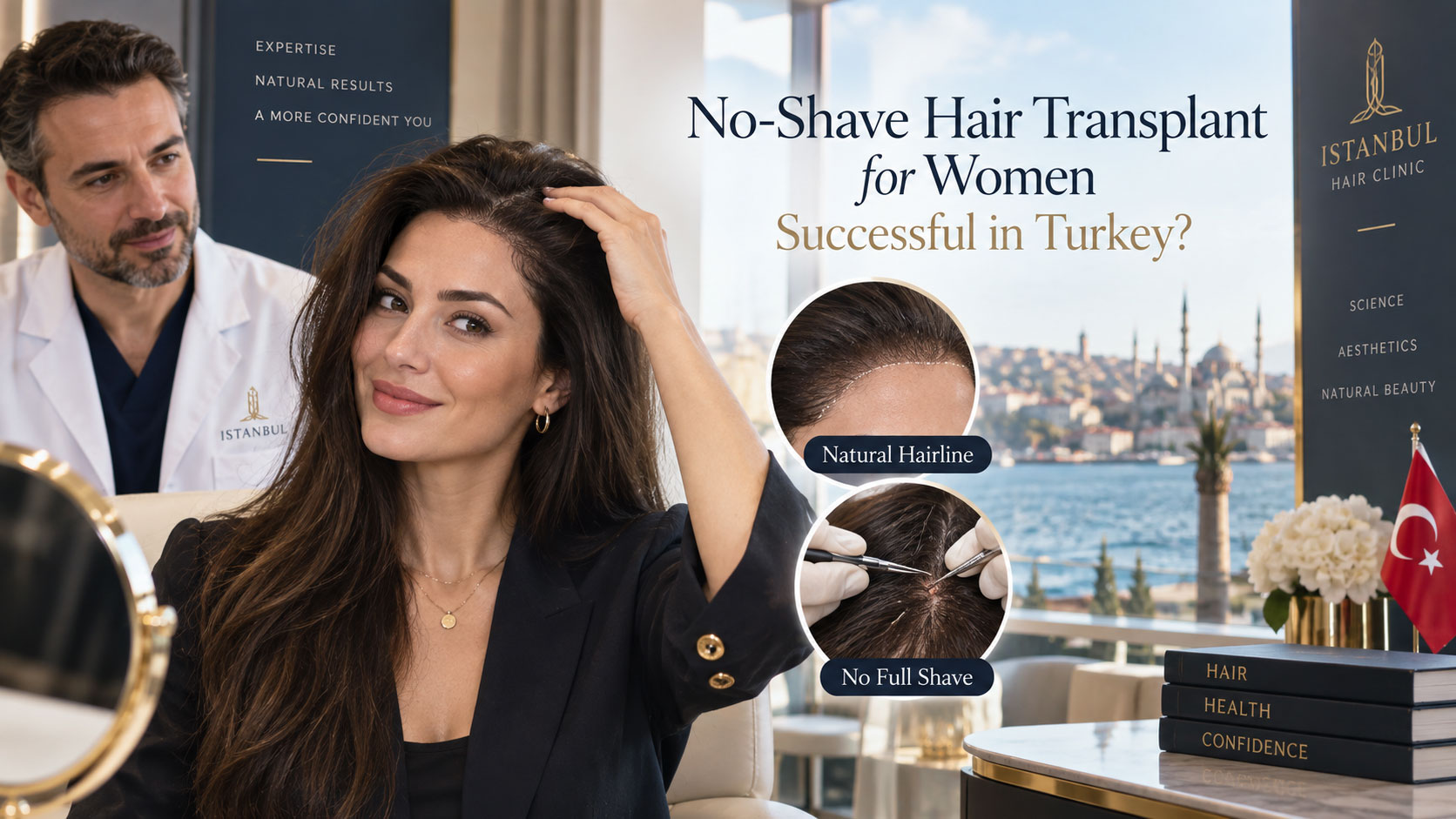
How Is Unshaven Hair Transplantation Planned for Women?
Unshaven hair transplantation for women aims to preserve their everyday appearance as much as possible, particularly when visible thinning or hairline recession is present. With this approach, follicular units may be extracted from the donor area without completely shortening the hair; however, not every technique or hair type is suitable for an unshaven procedure.
Success is not determined solely by whether the procedure is performed without shaving. The type of hair loss, the quality of the hair follicles, donor area reserves, the number of grafts to be transplanted, hairline design, and adherence to the recovery process are assessed together. During the initial evaluation, scalp photographs, medical history, and, when necessary, a dermatological examination are taken into consideration.
How the Unshaven Technique Differs for Women
Because the hair is not completely shaved with the unshaven technique, returning to social and professional life may be easier. However, a small section may need to be shortened to improve visibility during the procedure, or a few hairs in the recipient area may need to be trimmed. It is important to clarify these details in writing before the procedure.
Safety Considerations for FUE and DHI Procedures in Turkey
When choosing a procedure במסגרת health tourism in Turkey, check whether the clinic holds a Health Tourism Authorization Certificate issued by the Ministry of Health of the Republic of Türkiye. This certificate is an important administrative indicator of authorization to provide international healthcare services; by itself, it does not guarantee a specific outcome.
Safe planning for unshaven hair transplantation depends on details such as preserving the donor area, minimizing the time grafts remain outside the body, maintaining sterile working conditions, and placing hair follicles at appropriate angles. Turkish dermatology and plastic surgery teams may use various approaches, including FUE, DHI, sapphire-blade channel opening, and long-hair FUE; however, the technique should be selected according to the pattern of hair loss and the available follicle reserves.
Key Areas Considered During the Doctor’s Evaluation
- Whether the hair loss is associated with female pattern hair loss, traction alopecia, localized loss, or another dermatological condition.
- Hair density in the donor area, hair shaft thickness, degree of curl, and follicular unit distribution.
- How the frontal hairline will suit the proportions of the face and the realistic limits of the recipient area.
- Whether the required number of grafts can be obtained without excessively thinning the donor area.
If there is an active scalp condition, unexplained rapid hair loss, or insufficient donor reserves, the procedure may be postponed or an alternative assessment plan may be recommended. For this reason, an online photo assessment is not a substitute for an in-person examination.
What Is Included in a Women’s Unshaven Hair Transplant Package?
A health tourism package may include VIP transfers between the airport, hotel, and clinic, accommodation, interpreter support, and initial post-procedure care guidance. Since package contents may vary by clinic and city, the transfer arrangements, number of nights, follow-up appointment, and excluded services should be reviewed in writing.
A stay in Turkey for unshaven hair transplantation for women is generally planned for 3–5 days; this may vary depending on the scope of the procedure and the follow-up schedule. An examination and hairline design may take place on the first day, the transplant may be performed on the second day, and aftercare training and follow-up may take place on the following days. If there is a known issue involving iron stores, thyroid function, or hormonal status, sharing existing reports and previous test results can facilitate the assessment.
The Day of the Procedure and the Early Recovery Period
With the FUE approach, follicular units may be extracted using a micromotor or manual punch. In DHI procedures, grafts may be placed using an implanter pen; long-hair FUE focuses on directing the hair without cutting it or with minimal trimming. An unshaven procedure is not technically easier; it may require more planning to maintain visibility and select the grafts.
Redness, scabbing, swelling, and temporary tenderness may occur after the procedure. The clinic should explain the timing of hair washing, sleeping position, restrictions on physical activity, and follow-up appointments according to your individual plan. Only the operating physician’s instructions should be followed regarding the use of medicines or products.
Cost of Unshaven Hair Transplantation for Women in Turkey
The approximate total cost of unshaven hair transplantation for women in Turkey is between €2,000 and €4,500 in many packages. The number of grafts, the need for long-hair FUE or DHI, the length of stay, and the scope of the team performing the procedure can affect the price. The figures below represent market ranges for 2026; the exact price is determined after an examination and a written quotation.
| Country | Approximate price | Pricing note |
|---|---|---|
| Turkey | €2,000–€4,500 | The procedure, basic aftercare, and accommodation may be included in some packages |
| United Kingdom | £6,000–£12,000 | Accommodation and travel are generally calculated separately |
| Germany | €5,000–€10,000 | Varies according to the technical scope and doctor’s fees |
| United States | $8,000–$18,000 | Consultation, follow-up, and additional services may be charged separately |
When comparing quotations, do not focus only on the total amount. Check separately whether the surgeon’s role, number of grafts, extent of the unshaven procedure, follow-up appointments, possible additional nights, and local transportation are included.
Factors That Affect the Cost and Outcome of Unshaven Hair Transplantation
- The doctor’s expertise and responsibility during the procedure: The doctor’s experience in hairline design, donor area management, and the differential assessment of female pattern hair loss can affect the quality of the plan. Ask clearly who will perform graft extraction, channel opening, and implantation.
- Choice of technique and materials: FUE, DHI, long-hair FUE, and sapphire-blade channel opening involve different procedural workflows. Punch diameter, use of an implanter pen, graft storage conditions, and the planning of implantation angles may affect the price and process.
- Clinic location: In internationally well-connected centers such as Istanbul, clinic, transfer, and accommodation costs may vary. In cities such as Ankara, Izmir, or Antalya, the season, hotel standard, and travel distances may also change the total package.
It is not appropriate to make a decision based solely on the terms “unshaven” or “DHI” without considering these factors together. The written quotation should state the targeted graft range, the area to be shaved, the stages of the procedure, and the follow-up plan.
Next Steps After Unshaven Hair Transplantation for Women
Once your personal plan has been clarified following the assessment, you can verify the clinic’s authorization certificate, the doctor’s credentials, the scope of the procedure, and the follow-up arrangements. For an online consultation, provide current front, side, and crown photographs, along with information about how long the hair loss has continued and any previous procedures you have undergone.
Three Specific Questions to Ask Before Making a Decision
- Unshaven FUE or DHI? Based on my donor density and the number of grafts required, which method will be preferred, and which part of the hair will be shortened?
- Am I suitable for long-hair FUE? Do my hair shaft thickness, degree of curl, and donor area reserves support planning a long-hair technique?
- How will female pattern hair loss be assessed? Will a dermatological examination, scalp assessment, or any necessary blood tests be planned before the procedure?
The answers to these questions should be clear, measurable, and provided in writing. Unshaven hair transplantation in Turkey may provide successful results when the patient is appropriately selected and the procedure is properly planned; however, it is safer to assess the treatment based on individual suitability, realistic density goals, and regular follow-up rather than promises of a guaranteed outcome.