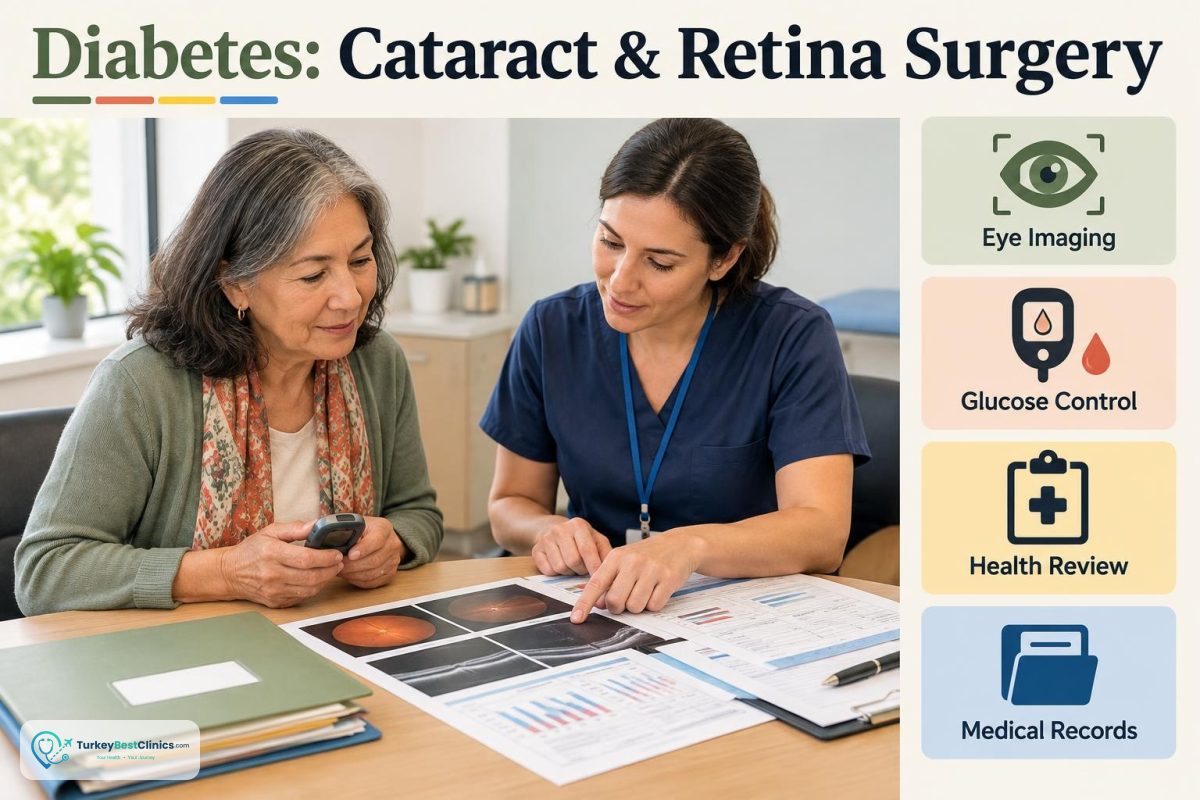
Preparing for Cataract or Retinal Surgery with Diabetes
Diabetes can accelerate cataract development and cause changes in the retinal blood vessels. For this reason, before traveling to Turkey, it is important to assess not only your level of vision but also the condition of the eye’s lens, the retinal tissue, intraocular pressure and blood glucose control.
A preliminary assessment helps determine which surgery may be needed and whether the trip can be planned safely. However, a remote file review does not constitute final approval; the definitive decision is made after a slit-lamp examination, fundus assessment and the necessary imaging tests in Turkey.
If you have diabetic retinopathy, macular edema or a history of intraocular injections, the surgical plan may differ from cataract surgery alone. This distinction is important when determining the length of your stay, postoperative appointments and return date.
Safety and Expertise Checks for Diabetic Eye Surgery in Turkey
The healthcare provider selected in Turkey should operate under a Health Tourism Authorization Certificate issued by the Ministry of Health. This is an essential checkpoint for coordinating international applications, managing medical records and maintaining postoperative communication. Surgery should be planned in a fully equipped hospital with operating-room sterilization protocols, anesthesia assessment and emergency care infrastructure.
During the ophthalmological evaluation, the stage of diabetic retinopathy, macular involvement, previous anti-VEGF injections or laser treatments, intraocular pressure and cataract density are assessed together. A surgeon experienced in phacoemulsification does not have the same role as a retinal specialist who regularly performs pars plana vitrectomy and diabetic retinal surgery; therefore, directing your case to the appropriate specialist is important.
Documents Required for File Review Before Traveling to Turkey
- Eye examination reports and visual acuity measurements from the past 6–12 months
- Optical coherence tomography (OCT) and, if available, fundus photographs
- Fluorescein angiography, ocular ultrasound or previous retinal imaging
- Hemoglobin A1c (HbA1c), fasting blood glucose and relevant internal medicine or endocrinology reports
- A medical summary showing current treatments, previous eye injections and surgeries
- Information about blood thinners, kidney disease, cardiovascular disease and allergies
Sending dated, readable images in DICOM or high-resolution format whenever possible improves the quality of the preliminary assessment. If information is missing from the reports, additional tests may be requested. Since this could delay your travel plans, it should be assessed clearly before booking a flight.
Planned Cataract and Retinal Surgery Package in Turkey
The package may include airport-to-hospital transfers, suitable accommodation, medical interpreter support and the coordination required during the initial care period. Postoperative prescriptions and care instructions, discharge documents and an online communication channel are also arranged according to the planned scope of your trip.
Cataract surgery usually requires preoperative biometry, corneal measurements, intraocular pressure testing and retinal screening. In patients with diabetes, OCT assessment of the macula is particularly important because significant macular edema may mean that cataract surgery alone is not sufficient. If retinal surgery is being considered, ultrasound, a dilated fundus examination and, when necessary, angiographic assessment may be planned.
The length of your hospital stay varies depending on the procedure and the condition of the eye. Following uncomplicated phacoemulsification, discharge is generally planned on the same day or after a short observation period, whereas vitrectomy may require several days of local follow-up.
Comfort and Nearby Support Planning for Your Companion
The conditions under which your companion can stay with you at the hospital are clarified in advance according to the selected hospital’s visitor and companion policies. Staying close to the hospital makes follow-up appointments easier. Since you may need to avoid long walks, intense sunlight and crowded environments after eye surgery, your companion may prefer low-key options nearby, such as a quiet walk in a local park, the hotel wellness area or a relaxing café.
Comparing the Costs of Diabetic Eye Surgery in Turkey
The average cost of cataract or retinal surgery in Turkey varies depending on whether one or both eyes are treated, the intraocular lens used, the need for retinal injections, the scope of vitrectomy, the hospital selected and the follow-up period. The ranges below are for guidance only; a definitive quotation is prepared after reviewing your records and completing an examination.
| Country | Approximate range for cataract surgery | Approximate range for retinal surgery |
|---|---|---|
| Turkey | €1,500–€3,500 | €3,000–€7,000 |
| United Kingdom | £3,500–£7,000 | £6,000–£12,000 |
| Germany | €3,000–€6,000 | €6,000–€12,000 |
| United States | $4,000–$8,000 | $8,000–$18,000 |
At some centers, these figures may not include biometry, OCT, anesthesia, the intraocular lens, medications or postoperative check-ups. If additional injections or laser treatment are needed for diabetic retinal disease, the overall plan may change separately.
Factors That Affect Suitability and the Surgical Process
- Specialist expertise and experience: For cataract surgery, phacoemulsification and intraocular lens planning are assessed; for retinal surgery, experience with pars plana vitrectomy, diabetic retinopathy and macular surgery is considered. The surgeon’s area of expertise should correspond to your OCT findings.
- Technique, equipment and materials: A cataract plan may include optical biometry, OCT-based macular analysis and monofocal, toric or multifocal intraocular lens options. In retinal surgery, the microsurgical systems used, endolaser, gas or silicone oil tamponade and any required injection protocol affect the scope of the procedure.
- Clinic and hospital location: Access to specialists and international transportation options may differ in centers such as Istanbul, Ankara, Izmir and Antalya. The distance between the airport, hospital and hotel can affect planning, particularly during the period when postoperative blurred vision or physical limitations may occur.
- Blood glucose and overall health: A high HbA1c level is not, by itself, an automatic prohibition against surgery; however, it is carefully interpreted by the physician in terms of healing, infection risk and retinal findings. Blood pressure, kidney function, cardiovascular status and current medications are also included in the assessment of anesthesia and surgical safety.
- Flight and follow-up timing: If a gas tamponade is used in the retina, air travel can pose a serious risk. You should not plan your return flight until you know the type of gas used and how long it will take to be fully absorbed. Silicone oil, laser treatment or the need for additional injections may also change your return date.
Comparing the Two Main Surgical Approaches for Your Case
| Methods Compared for You | Most Important Potential Benefit for You | Your Recovery and Hospital Stay |
|---|---|---|
| Phacoemulsification and intraocular lens implantation | Removing the cataractous lens through a small incision and planning the visual focus through lens selection | Usually outpatient or involving brief observation; initial check-ups within a few days, with vision stabilizing over several weeks |
| Pars plana vitrectomy | Directly treating intraocular pathology in cases of bleeding, traction, retinal detachment or advanced diabetic retinal changes | One or more nights depending on the scope of the procedure; flight and head-position restrictions if gas is used |
These two methods are not automatic alternatives to one another. If cataract is the predominant problem, phacoemulsification may be considered; if there is a serious retinal condition, vitrectomy or a combined approach may be recommended. Whether gas tamponade will be used, the implications for flight safety and any head-positioning requirements should be explained to you in writing before surgery.
Next Steps for Pre-Travel Suitability Assessment
After your records are reviewed remotely, you may request a written preliminary plan, an estimated length of stay and a list of any additional documents required. Rather than treating surgery as finalized before you arrive in Turkey, it is safer to learn which findings could change your eligibility.
- If diabetic macular edema is seen on OCT, would cataract surgery be delayed, or would injections and surgery be planned together?
- If gas tamponade is used during retinal surgery, how should my return flight and first check-up in my home country be scheduled?
- How might my HbA1c level, kidney function or cardiovascular condition affect the surgical and anesthesia assessment?
During online follow-up, your discharge report, operative note, imaging results and eye-drop schedule can be sent securely to your doctor in your home country. If you develop new pain, sudden vision loss, marked redness, flashes of light or a curtain-like sensation, seek urgent local ophthalmic assessment without waiting for an online response.