Returning to Daily Life After Cataract and Smart Lens Surgery
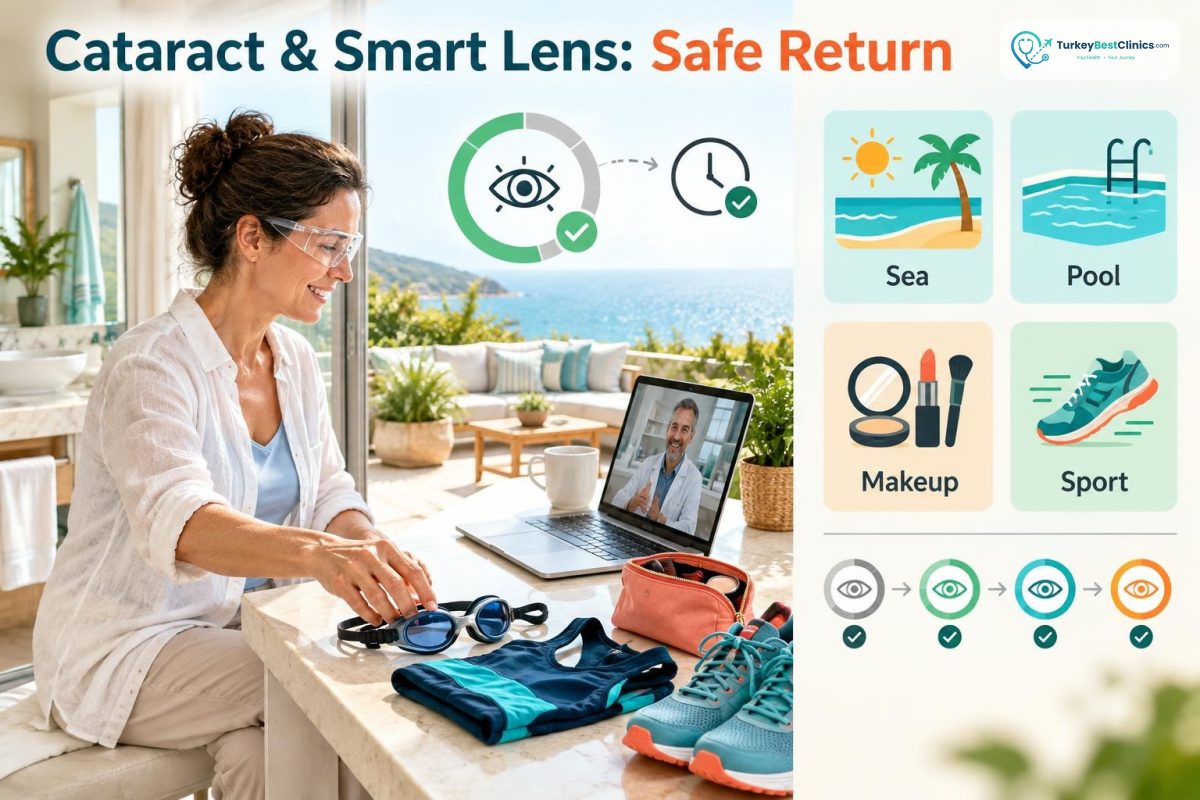
Vision may become noticeably clearer soon after cataract or smart lens surgery; however, it can take longer for the ocular surface and surgical entry site to settle completely. For this reason, activities such as swimming in the sea or pool, wearing makeup and exercising should be planned based not only on visual clarity but also on eye redness, watering, light sensitivity and examination findings.
When you travel to Turkey for treatment, you should receive a written activity schedule, follow-up plan and details of the online follow-up method to be used after returning home before discharge. Your surgeon’s individual advice always takes priority over the general timeframes below.
Basic protection during the first few days
- Do not rub your eye, and avoid direct contact with water, soap or shampoo.
- Use the protective eyewear recommended for you, especially while sleeping, outdoors and in dusty environments.
- Do not drive until your vision has stabilized fully; decisions about international flights and driving should be based on your follow-up examination.
- If you develop increasing eye pain, sudden vision loss, marked redness, flashes of light or new floaters, contact the surgical team without delay.
Turkey’s Safety Protocol for Intraocular Lens Surgery
As part of medical tourism in Turkey, it is important to verify whether the center you choose holds a Ministry of Health-approved Health Tourism Authorization Certificate. Planning surgery in a fully equipped hospital, under sterile operating-room conditions and with diagnostic facilities supporting biometry and corneal measurements, is a fundamental part of safety.
During the assessment, factors such as intraocular pressure, corneal topography or tomography, biometry, retinal examination and the tear film may be evaluated. Turkish ophthalmologists’ experience with phacoemulsification, toric intraocular lenses and multifocal or EDOF lenses allows the choice to be based not only on the lens brand but also on your eye structure and lifestyle expectations.
Follow-up appointments and remote monitoring
For international patients, the first check-up is often scheduled early after surgery, while a second assessment is arranged according to the surgeon’s protocol. After you return home, online follow-up may assess your visual acuity, redness, pain, light sensitivity and daily activities; when necessary, communication with an ophthalmologist in your home country can also be coordinated.
Cataract or Smart Lens Package and Companion Planning
A medical tourism package may include airport or hotel-to-hospital VIP transfers, accommodation, interpreter support and guidance for the initial recovery period. As package contents vary by center, the preoperative measurements, follow-up examinations, lens type to be used and any possible additional fees should be confirmed in writing before surgery.
For cataract or smart lens surgery, the stay in Turkey is commonly planned for approximately 3–7 days based on the early follow-up schedule. The exact duration depends on your eye structure and whether both eyes will be treated in the same session or on separate days. The conditions for your companion to stay with you at the hospital should be clarified in advance, the hotel should be within a short distance of the hospital, and your companion should have access to low-effort options such as peaceful park walks or wellness facilities at the hotel while you rest.
Documents to prepare before traveling to Turkey
- Records from previous eye examinations, your current glasses prescription and reports concerning any known eye conditions.
- A list of your regular medications and known allergies.
- If you wear contact lenses, written information from the clinic about how long you need to stop wearing them to ensure accurate measurements.
- Your flight dates, companion’s details and the contact information of the ophthalmologist who will provide follow-up care in your home country.
Practical timing for the sea and pool
As a general practice, swimming in pools, the sea, jacuzzis and lakes is usually postponed for at least 2 weeks; some surgeons may ask you to wait 3–4 weeks depending on the healing of the ocular surface. Even after receiving permission to enter the water, you should not open your eyes underwater, should use swimming goggles and should prevent pool water from entering the eye.
Makeup and facial care products
Eye makeup, eyeliner, mascara, eyeshadow and makeup removers are generally avoided during the first 1–2 weeks. If redness or sensitivity around the eye persists, this period may be extended. Not reusing old mascara and applicators, keeping products from contacting the inside of the eye and not sharing makeup can reduce the risk of infection.
A controlled return to exercise
Light walking can be planned early for many people, provided you feel well and your level of vision is safe. Activities involving bending over, straining, lifting weights, high-intensity cardio, swimming, contact sports or a risk of impact to the head generally require waiting 2–4 weeks; this period may vary if you have a retinal condition, glaucoma or an additional procedure was performed during surgery.
Comparing the Cost of Cataract and Smart Lens Surgery
In Turkey, prices for cataract surgery or refractive lens exchange vary according to the lens type, whether one or both eyes are treated, hospital facilities and the scope of included follow-up care. The figures below show approximate market ranges for 2026 only; a definitive quotation should be prepared after biometry and an eye examination.
| Country | Approximate treatment range for one or both eyes | Price currency |
|---|---|---|
| Turkey | €1,500–€4,500 | Euro |
| United Kingdom | £3,500–£8,000 | GBP |
| Germany | €3,000–€6,500 | Euro |
| United States | $4,000–$10,000 | USD |
When comparing quotations, do not look only at the total price. Check whether the lens type, biometry and corneal measurements, operating-room costs, early follow-up visits, interpreter services, transfers, accommodation and online follow-up after returning home are included.
Factors That Vary by Lens Type, Surgeon and Location
- Surgeon’s expertise and experience: Experience with phacoemulsification, planning for toric or multifocal lenses and the approach to assessing associated conditions such as retinal or corneal problems may affect the price and treatment plan.
- Technology and lens selection: Monofocal, toric, multifocal and EDOF intraocular lenses differ in terms of optical design, degree of astigmatism and expectations for night vision. The measurement capabilities of the biometry device and the use of additional technologies such as femtosecond laser may also be reflected in the quotation.
- Clinic location: Hospital, accommodation and transportation costs may differ in cities such as Istanbul, Ankara, Izmir and Antalya. When comparing a private hospital in a city center with a smaller center, consider emergency access, ease of follow-up and accommodation distance together.
The term smart lens does not refer to one single standardized lens; different optical designs, such as multifocal, trifocal or EDOF lenses, may be offered under this heading. Factors such as night driving, the need for close-up work, astigmatism and current retinal health are important when determining which option may be suitable.
Next Steps for Returning to Swimming and Exercise
Before choosing a center in Turkey, requesting the postoperative restrictions and follow-up plan in writing can help you plan your return date more safely. The following questions are particularly important when speaking with the eye clinic and reviewing related guides:
- When can I swim in the sea or pool? How do treatment of one or both eyes, early examination findings and healing of the ocular surface affect this timeframe?
- How are night vision and returning to exercise assessed after smart lens surgery? At which stage of follow-up are symptoms such as halos, glare or reduced vision in low light evaluated?
- How will online follow-up be managed after I return home? Which images, measurements or reports from a local ophthalmologist should be shared, and which symptoms require urgent assessment?
This information is for general guidance and does not replace an examination. The timing of your return to activities should be determined by the examination findings of the ophthalmologist who performed your surgery and your individual healing rate.