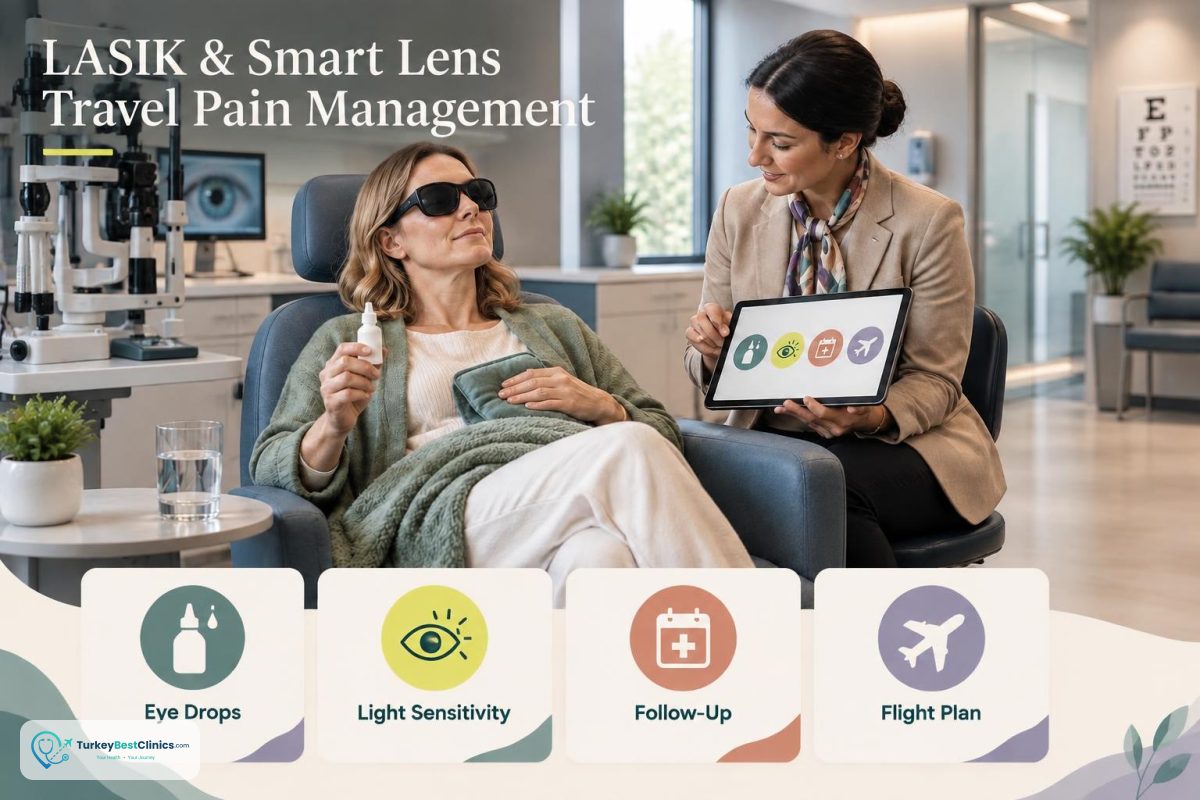
Causes of Stinging and Burning After LASIK and Premium Lens Surgery
During the first few hours after LASIK, you may experience a gritty sensation, stinging, burning, watering and sensitivity to light. These symptoms are generally associated with temporary effects on the corneal surface, disruption of the tear film and short-term sensitivity of the surface nerves.
With trifocal, EDOF or similar intraocular lens procedures, commonly known as premium lens surgery, the healing process of the tissues inside the eye is more prominent. Mild pain, a foreign-body sensation, halos around lights and fluctuating vision may occur during the first few days. The intensity of symptoms varies according to the surgical technique, the condition of the eye surface and the individual's healing rate.
Before the procedure, dry eye, blepharitis, corneal structure, eye pressure, retinal health and existing refractive errors should be assessed in detail. Increasing pain, a significant decrease in vision, severe redness, discharge, trauma or light sensitivity severe enough to prevent you from looking at light are not considered normal healing symptoms. In such cases, contact the surgical team on the same day rather than continuing your travel plans.
Turkish Standards for Corneal and Intraocular Lens Safety
As part of medical tourism in Turkey, check whether the centre you choose holds a Health Tourism Authorisation Certificate issued by the Ministry of Health of the Republic of Türkiye. It is also important for the surgery to be planned at a centre where an ophthalmologist performs the procedure and where laser technology, femtosecond laser facilities, intraocular lens implantation infrastructure and emergency assessment services are available.
LASIK assessment may include corneal topography or tomography, corneal thickness measurement, tear-film evaluation, refraction testing and a fundus examination. For premium lens planning, biometry, corneal measurements, retinal and macular assessment, eye pressure and existing conditions that could affect lens selection should also be examined.
In Turkey, ophthalmologists perform various surgical stages, including corneal reshaping with an excimer laser, flap creation with a femtosecond laser and intraocular lens implantation through phacoemulsification. However, technical infrastructure, surgeon experience and postoperative follow-up protocols may vary between centres. When making your decision, compare not only the device name but also the measurement process and the complication-management plan.
Key Differences Between LASIK and Premium Lens Surgery
| Methods Compared | Key Distinguishing Advantage | Effect on Recovery Time |
|---|---|---|
| LASIK | Focuses on correcting myopia, hyperopia and astigmatism by reshaping the corneal tissue with a laser; no lens is implanted inside the eye. | Stinging and burning are usually more noticeable during the early period. Vision may recover quickly, although dryness and fluctuations can last longer. |
| Premium lens surgery | A multifocal or EDOF intraocular lens is implanted in place of the eye's natural lens to target distance, intermediate and near vision. | Because it involves intraocular surgery, follow-up requirements are more comprehensive. Halos, light scatter and visual adaptation may continue for weeks or longer. |
LASIK and Premium Lens Accommodation Packages in Turkey
Packages may include VIP airport-hotel-clinic transfers, hotel accommodation meeting the selected standards, interpreter support when needed and the guidance required during the initial care period. The length of stay, type of surgery, number of follow-up visits, signs of eye healing and the safety of the return flight should be assessed together. It is helpful to request the package inclusions in writing.
For LASIK, most programmes include preoperative measurements, an assessment on the day of the procedure and an early follow-up plan; the exact duration is determined by the clinic. For premium lens surgery, the stay in Turkey may be planned for longer because of biometry, lens selection, postoperative intraocular pressure checks and vision assessments.
In Istanbul, your companion may rest near the hotel on the day of the procedure, choose an enclosed and quiet shopping area or take a short break at a café. For you, a quiet room away from dust, smoke, intense sunlight and long walks would be more suitable. In Antalya and Izmir, choose a short, shaded route with little wind rather than a light coastal walk, and avoid activities that could expose the eyes to water, sand or strong air currents.
Care Plan for Pain and Dryness in the Hotel Room
- After surgery, use only the eye drops and care products recommended by your ophthalmologist, according to the specified timing and dosage. Do not add advice from another centre to your current protocol.
- Do not rub your eyes or apply pressure to the eyelids. Before using a hotel towel around the eyes, ask the clinic about its hygiene instructions.
- Keep the room free from cigarette smoke, strong perfume and dust, and avoid direct airflow from the air conditioner. Since air conditioning or heating may increase dryness on the eye surface, make sure the airflow is not directed at your face.
- After LASIK, use protective glasses or an eye shield during sleep if your doctor considers them appropriate. After premium lens surgery, also follow instructions to avoid contact with and pressure around the eyes.
- Limit phone, tablet and computer use during the initial period. Looking at screens for long periods can reduce blinking and increase burning and dryness.
- Asking hotel staff not to use strong chemicals, aerosols or intense fragrances during room cleaning may help protect the eye surface.
If burning and stinging are mild, rest and the planned care routine may often be sufficient. However, adding over-the-counter products to suppress the pain is not appropriate without medical advice. Symptoms that occur with reduced vision or increase over the course of hours should be reported to the clinic without waiting, particularly for patients travelling from abroad.
Cost and International Price Comparison in Turkey
The price of LASIK or premium lens surgery varies according to whether one or both eyes are treated, the technology used, the lens type, preoperative tests, the number of follow-up visits and the accommodation package. The ranges below are general market indicators; an individual quotation and surgical suitability can be determined after examination.
| Country | Approximate LASIK range | Approximate premium lens range |
|---|---|---|
| Turkey | €1,200–€2,500 | €2,500–€5,500 |
| United Kingdom | £2,000–£4,500 | £5,000–£8,500 |
| Germany | €2,000–€4,500 | €4,500–€7,500 |
| United States | $3,000–$6,000 | $6,000–$10,000 |
These figures are approximate comparisons based primarily on the surgical fee and do not always include currency fluctuations, taxes, additional tests or complication management. In particular, the optical design of the lens, intraocular measurements and scope of follow-up can significantly affect the total cost of premium lens surgery.
Cost and Planning Factors Affecting Stinging and Burning
Review the following points together when assessing the total price and travel plan:
- Surgeon's expertise and experience: Experience in corneal surgery, refractive laser procedures or cataract and intraocular lens surgery is important for interpreting measurement results, selecting the appropriate method and assessing postoperative symptoms.
- Technology and method used: For LASIK planning, consider the features of the femtosecond and excimer laser platforms, the corneal mapping method and personalised ablation options. For premium lens planning, consider the biometry device, lens design, trifocal or EDOF option and the phacoemulsification approach.
- Clinic location: In medical tourism centres such as Istanbul, Antalya and Izmir, transport, hotel prices, access to follow-up appointments and the possibility of returning quickly to the same centre when needed may differ. Distance from the airport and city transfer time can also affect postoperative comfort.
In the quotation, check in writing whether both eyes are included, what the preoperative examination and measurements cover, which follow-up appointments are included, how additional assessments will be charged if considered necessary and which communication channel is available after you leave the country. This information provides a more meaningful comparison than making a decision based only on the lowest total price.
Pre-Flight Check and Next Steps
Before leaving Turkey, complete the planned follow-up with your ophthalmologist and confirm the medically appropriate flight timing directly with the surgical team. Dryness in the aircraft cabin may increase burning and stinging after LASIK. After premium lens surgery, fluctuating vision or light scatter may affect travel comfort.
During the flight, avoid rubbing your eyes, do not direct the cabin airflow at your face and continue only the care plan approved by your doctor. Keep the telephone number of the centre you can contact in an emergency, your surgical report, details of the lens or procedure used and your follow-up results with you.
Three Specific Questions to Ask About This Topic
- After LASIK, which symptoms indicate that stinging and burning have exceeded the limits of normal healing and require contacting the clinic instead of waiting at the hotel?
- When choosing a premium lens, how do trifocal and EDOF lenses differ in terms of light halos, near vision and adaptation after travel?
- Which eye examinations should be completed before the flight, and how should follow-up continue if unexpected pain or reduced vision develops in the country you return to?