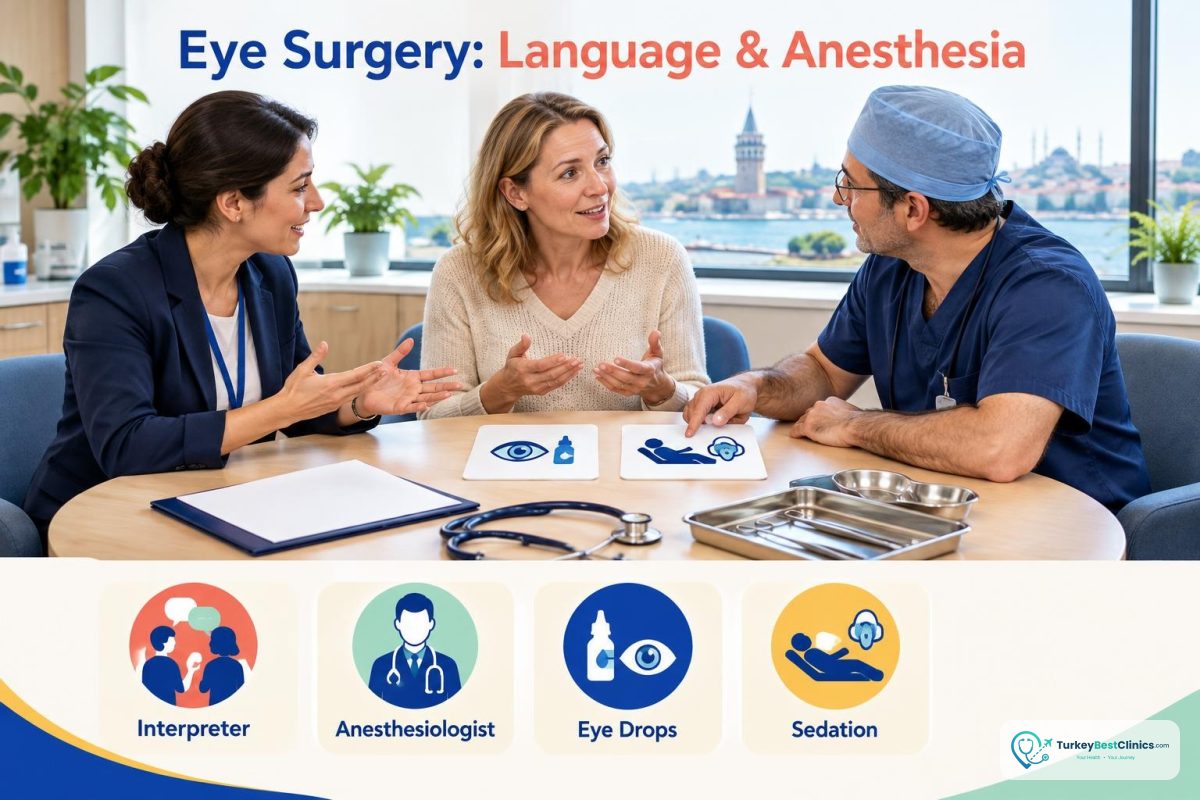
Why Is Anesthesia Communication Important in Eye Surgery?
Feeling comfortable and safe during eye surgery depends not only on the anesthesia method selected, but also on how clearly communication is established before the procedure. Your anesthesiologist should receive accurate information about any medication allergies, previous problems related to anesthesia, medications you take, chronic conditions, and any anxiety you may experience during the procedure.
When you come to Türkiye for eye surgery, your language preference can be recorded during the initial communication stage. A professional medical interpreter can support you during the preoperative assessment and, when necessary, during operating room preparation, helping you communicate your questions fully. A family member or friend may provide support; however, using them as the sole communication channel for medical consent, risk explanations, and the anesthesia consultation is not the appropriate approach.
When choosing between topical anesthesia, light sedation, regional anesthesia, or, less commonly, general anesthesia, the final decision is made by considering the type of eye surgery, procedure duration, the need for movement control, and your overall health assessment together.
Safety and Communication Standards for Eye Surgery in Türkiye
Planning your surgery at a healthcare facility holding a Health Tourism Authorization Certificate issued by the Ministry of Health of the Republic of Türkiye can help ensure that international applications, interpreter coordination, and information provided in foreign languages are managed within an established institutional framework. Any national or international quality certificates held by the facility should also be verified through the current records of the relevant institutions.
Your eye surgery should be performed in a fully equipped hospital or a surgical center with the appropriate licenses, under conditions that include sterilization protocols, preoperative identity verification, monitoring of vital signs, and emergency response infrastructure. Before the procedure, the anesthesiologist evaluates your medical history and explains the limitations of the selected method. During surgery, respiratory function, circulation, oxygen levels, and level of consciousness are monitored according to the type of procedure.
Practical Checkpoints for Communication in a Foreign Language
- Your preferred language, level of fluency, and need for help understanding medical terms should be documented during the initial consultation.
- Medication allergies, previous anesthesia experiences, sleep apnea, heart or lung conditions, and regularly used medications should be communicated through a professional interpreter.
- The anesthesiologist should explain the topical anesthesia or sedation plan in clear language and ask you to summarize the plan in your own words.
- Consent documents should be provided in a language you understand or explained by a qualified medical interpreter.
- A verbal or nonverbal communication signal to use if you experience pain, pressure, shortness of breath, nausea, or intense anxiety during surgery should be agreed upon in advance.
Turkish ophthalmic surgeons may consider using topical anesthesia and conscious sedation together or separately for different procedures, such as cataract surgery, refractive surgery, retinal procedures, and intraocular lens implantation. However, actual experience and suitability should be verified by reviewing the selected physician’s area of expertise, the number of procedures performed, and the anesthesia records of the center you are considering.
Interpreter and Anesthesia Planning in an Eye Surgery Package
Planning may generally include airport-hospital-hotel transfers, accommodation close to the hospital, professional interpreter coordination, and initial post-discharge care instructions; you should check the exact scope in the written quotation. During the initial examination, eye-surgery-specific tests such as visual acuity measurement, intraocular pressure testing, biometry, or corneal evaluation, together with a pre-anesthesia assessment, are planned.
It should be arranged in advance that your companion can stay with you at the hospital during the designated hours, that your accommodation is within a short travel distance of the hospital, and that it provides a quiet environment suitable for your rest after the procedure. If an eye patch or blurred vision is possible, easy access for your companion to low-effort options such as wellness facilities, a quiet café, or a short walk in a park may help reduce stress while waiting.
From Preoperative Planning to Online Follow-Up
- Remote pre-assessment: Your eye reports, medications, allergies, and previous surgical experiences are reviewed. At this stage, it is helpful to mention any specific concerns about anesthesia and your preferred communication language.
- In-person examination in Türkiye: The ophthalmic surgeon assesses the need for the procedure, while the anesthesiologist discusses topical anesthesia, sedation, or another option based on your general health.
- Day of surgery: Your identity, procedure, and eye side are verified. Your final questions are answered with interpreter support, and the planned anesthesia approach is reconfirmed.
- Discharge: Instructions about eye drops, protective eyewear, visual restrictions, and the follow-up appointment are communicated in a language you understand. For medication names or dosing frequency, follow only written instructions approved by the physician.
- Online follow-up: After you return to your country, your recovery is assessed through a planned video consultation or secure digital communication. If you experience severe pain, a sudden change in vision, intense redness, or trauma, seek local emergency medical care without waiting for an online consultation.
Comparison of Topical Anesthesia and Sedation
| Methods Compared for You | Most Important Potential Benefit for You | Your Recovery and Hospital Stay |
|---|---|---|
| Topical anesthesia | Reduces sensitivity on the surface of the eye and may allow rapid recovery and communication during most short eye procedures. | Same-day discharge is generally planned; visual clarity and the ability to move around safely vary according to the type of procedure. |
| Topical anesthesia and controlled sedation | May help reduce anxiety and discomfort; the anesthesia team closely monitors your level of consciousness and breathing. | Longer observation may be required after the procedure; you must leave with a companion and must not drive while the effects of sedation continue. |
| Regional or general anesthesia | May provide a different surgical setting for procedures involving difficult movement control, longer operating times, or specific medical requirements. | The observation period may be longer; the timing of standing up, eating, and traveling is determined according to the anesthesia assessment. |
This table is for general information and does not replace personalized medical advice. In particular, if you have sleep apnea, serious heart or lung disease, a possibility of pregnancy, a bleeding tendency, or a previous anesthesia complication, the choice should be made only through a joint assessment by the anesthesiologist and ophthalmic surgeon.
Eye Surgery and Anesthesia Costs in Türkiye
The cost of eye surgery in Türkiye varies according to the type of procedure selected, such as cataract, refractive, retinal, or corneal surgery. The ranges below are approximate and intended only for international comparison of eye surgery and anesthesia planning; examinations, lens or equipment selection, accommodation, and travel expenses may be calculated separately.
| Country | Approximate Total Procedure Range | Main Factors That May Affect the Price |
|---|---|---|
| Türkiye | €1,500–€5,500 | Type of surgery, intraocular lens selection, and adding sedation to topical anesthesia |
| United Kingdom | £3,000–£8,000 | Private hospital, surgeon, and the lens or laser platform used |
| Germany | €3,500–€9,000 | Procedure scope, hospital standards, and additional tests |
| United States | $4,000–$12,000 | Center, insurance coverage, surgical technique, and anesthesia services |
When requesting a quotation, do not consider only the price. Review in writing whether the anesthesiologist consultation, professional interpreter, preoperative tests, follow-up examination, and any additional observation time are included. You should also ask clearly whether there is an additional fee for sedation in combination with topical anesthesia.
Factors Determining the Price and Anesthesia Process
- Physician’s expertise and experience: Experience with phacoemulsification in cataract surgery, laser platforms in refractive surgery, or microsurgery in retinal surgery may affect the complexity of the procedure and surgical planning. The anesthesiologist’s working practices regarding sedation management during eye surgery and communication in a foreign language should also be assessed.
- Technology, technique, and materials: The phacoemulsification device, monofocal or multifocal intraocular lens, femtosecond laser, topical eye-drop anesthesia, or intravenous sedation used may influence the cost. Not every technology is suitable for every eye structure or type of surgery.
- Clinic location: Choosing a hospital in Istanbul, Ankara, İzmir, or another city may change the logistics of transportation, accommodation, interpreter access, and follow-up appointments. Proximity to the airport alone is not sufficient; the availability of emergency assessment and observation facilities should also be reviewed.
In addition to these factors, the need for observation instead of same-day discharge, scheduling surgery on both eyes on different days, or accompanying systemic diseases may extend the overall process. Preoperative fasting, the requirement for a companion, the timing of your return flight, and the eye-drop schedule should be clarified in writing.
Next Steps and Important Questions Before Eye Surgery
Before finalizing your treatment plan in Türkiye, request written details from the healthcare facility about the procedure scope, anesthesia approach, and communication protocol. The following three questions may make your next consultation more productive:
- Is topical anesthesia sufficient for my planned eye surgery, or for what specific reason is controlled sedation being recommended? If sedation is recommended, how will the level of consciousness, respiratory monitoring, post-procedure observation, and need for a companion be managed?
- Will a professional medical interpreter be present during my consultation with the anesthesiologist? Will the interpreter’s role during preoperative consent, operating room preparation, discharge, and online follow-up be specified in writing?
- At what intervals will eye examinations and online follow-up take place after I return to my country? If sudden vision loss, severe pain, or unusual redness develops, how will the responsibilities of the team in Türkiye and the emergency eye service in my country be divided?
It is entirely reasonable to ask for anything you do not understand to be explained again, ask the interpreter to summarize the information, and learn the conditions under which the anesthesia option can be changed before signing consent. A safe process depends not only on expectations regarding surgical outcomes, but also on clear anesthesia communication, assessment of personal risks, and sustainable follow-up after you return home.