Initial Evaluation When Your Expectations Are Not Met After Laser Eye Surgery
Failing to achieve the intended level of vision after laser eye surgery, experiencing fluctuating vision, or having discomfort from lights at night can be discouraging. In such cases, the result should not be judged solely by your vision during the first few days; the recovery period varies according to the technique used, corneal characteristics, and the initial refractive error.
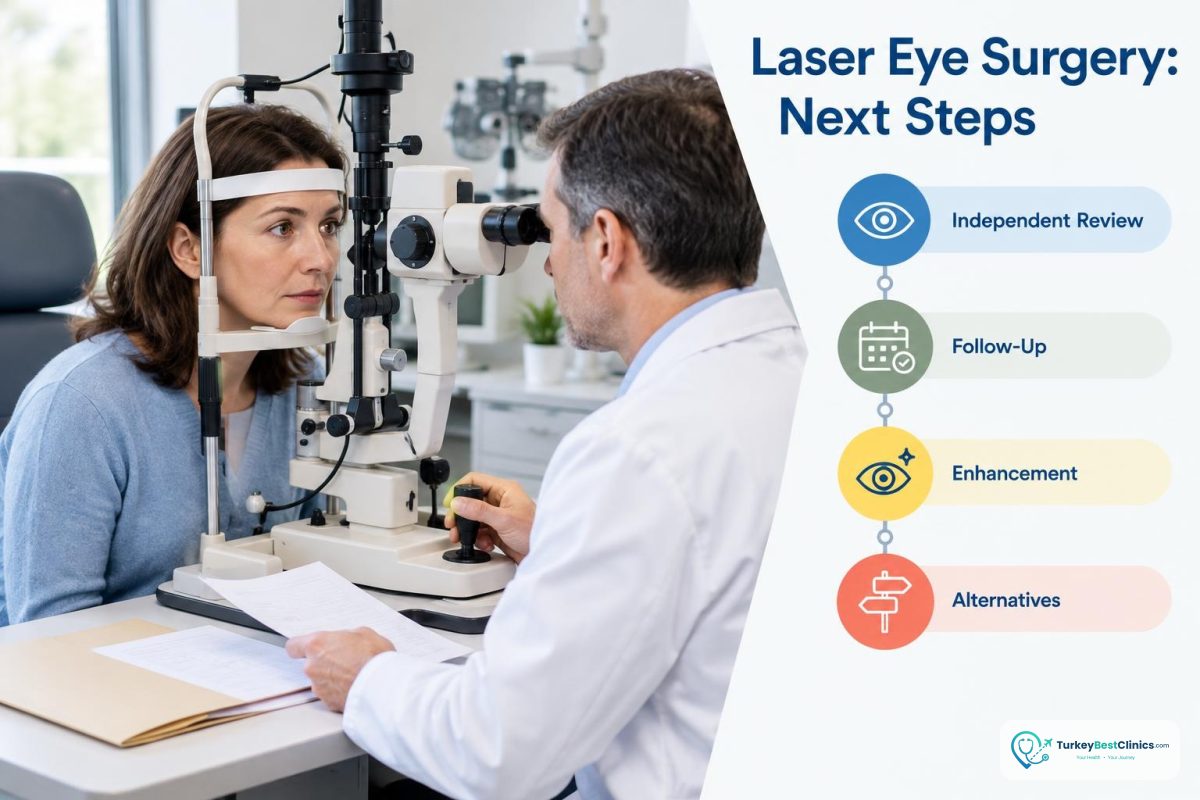
The priority is to complete the planned follow-up with the ophthalmologist who performed the surgery and, if necessary, obtain a second opinion from an independent corneal specialist. During the examination, preoperative measurements, the procedure report, the laser technique used, current corneal thickness, and up-to-date ocular surface findings are reviewed together.
Important Differences Between LASIK and PRK
Understanding the technique used is important when determining the cause of dissatisfaction. In LASIK, a flap is created in the cornea, whereas PRK or TransPRK is performed through the surface layers of the cornea. Therefore, the timeline for visual clarity and assessment for an enhancement may not be the same.
| Techniques Compared | Key Advantage That Makes a Difference | Impact on Recovery Time |
|---|---|---|
| LASIK | Because a flap is created, surface healing generally progresses more quickly; in suitable corneal structures, patients may return to daily life within a short time. | Initial visual clarity may develop earlier, but refractive stabilization and dry-eye assessment still require follow-up. |
| PRK / TransPRK | No corneal flap is created; it may be considered as an alternative for thin corneas or certain corneal characteristics. | Surface healing may take longer; clarity may improve over several weeks, and the final assessment may be performed later. |
Corneal Topography and Safe Assessment in Turkey
For reassessment or a possible additional procedure in Turkey, choosing facilities that hold a Health Tourism Authorization Certificate issued by the Ministry of Health is an important starting point for safety. You can verify this certificate with the clinic or hospital and request written information about the facility, the surgeon, and the operating-room conditions in which the procedure was performed.
A reliable assessment involves more than a standard refraction measurement. Corneal topography or tomography, corneal thickness measured by pachymetry, tear-film assessment, ocular surface examination, pupil diameter, and, when necessary, aberrometry should be evaluated together.
When assessing Turkish ophthalmologists’ approach to refractive surgery, do not rely solely on claims that a doctor is “highly experienced.” Ask about the surgeon’s verifiable annual case volume for LASIK, PRK, or TransPRK, enhancement rates, candidate-selection protocol based on corneal mapping, and experience managing complications.
If you experience sudden vision loss, severe pain, marked redness, flashes of light, heavy discharge, or rapid worsening of vision, you need an urgent eye examination without waiting for your travel plans. These symptoms do not indicate a definite diagnosis; they are warning signs that require prompt assessment.
Check-Up and Support Packages for Laser Surgery Results in Turkey
Planning may include VIP airport-hospital-hotel transfers, accommodation assistance, a language-speaking interpreter, and basic care arrangements for the initial follow-up period. Ask for the services provided, length of accommodation, and number of follow-up appointments to be clearly stated in the written quotation.
If you are traveling to Turkey solely for an enhancement, a remote file review and submission of your preoperative images may save time. Whether additional laser treatment can be performed is decided after assessing whether the current refractive error is stable, whether the corneal tissue remains within safe limits, and whether the ocular surface is sufficiently balanced.
After a follow-up appointment in Istanbul, a covered museum, a quiet shopping center, or a short evening food tour may be more suitable for an accompanying person. In Antalya, a seaside walk close to the hotel, with limited wind and strong sun, may be preferable. In Izmir, a short, relaxed visit to a café or covered bazaar may be more appropriate. If light sensitivity or blurred vision persists, dusty or windy outdoor activities, prolonged outdoor events, and intense sun exposure should be postponed.
Costs of Enhancement After Laser Eye Surgery in Turkey
In Turkey, the average total cost for a check-up, additional laser assessment, or an appropriate enhancement procedure may be approximately €900–€2,500. This range varies depending on whether treatment is planned for both eyes, which examinations are required, whether records from the previous surgery are available, and the scope of additional follow-up. The exact fee is determined after examination.
| Country | Approximate Cost | Currency | Note |
|---|---|---|---|
| Turkey | 900–2,500 | € | Varies according to the scope of the check-up, examinations, and any enhancement considered appropriate. |
| United Kingdom | 1,500–3,500 | £ | The private center, technique, and total follow-up period affect the cost. |
| Germany | 2,000–4,500 | € | The procedure and follow-up appointments may be charged separately. |
| United States | 2,500–6,000 | $ | The cost can vary significantly depending on whether both eyes are treated, the surgeon, and the technology selected. |
When comparing prices, do not look only at the surgical fee. Check whether the quotation includes the preliminary assessment, corneal tomography, postoperative check-ups, possible additional measurements, an interpreter, transfers, and the policy on retreatment.
Criteria Affecting the Decision to Have an Enhancement
The Surgeon’s Expertise and Verifiable Experience
The experience of a surgeon specializing in refractive surgery with LASIK, PRK, and TransPRK is important, particularly their approach to assessing residual refractive error, irregular astigmatism, or ocular surface problems after a previous procedure. If records of the previous surgery are unavailable, the surgeon is expected to conduct a more cautious evaluation.
Corneal Structure and the Technique to Be Used
When an additional laser procedure is being considered, corneal thickness, the regularity of the corneal map, and the remaining stromal tissue are assessed together. In some cases, repeat laser treatment may not be appropriate; advice may instead be provided about glasses, contact lenses, ocular surface treatment, or a different surgical approach.
The City Where the Clinic Is Located
Istanbul may offer a wide choice of specialists and hospitals, while Antalya and Izmir may provide different advantages for accommodation and planning for accompanying persons. However, the choice of city should also take into account access to urgent examinations, continuity of postoperative follow-up appointments, and travel time between the clinic and the airport.
The Next Step: Records, Follow-Up, and Realistic Expectations
When you are dissatisfied, the safest approach is to collect your records and proceed based on measurements rather than making a quick decision about an additional procedure. Keep your preoperative prescription, corneal topography, pachymetry results, procedure report, technique used, follow-up notes, and any visual acuity measurements together in one file.
- When can an enhancement be evaluated? Why is it important for the refractive error to stabilize, corneal healing to be complete, and findings such as ocular surface dryness to be brought under control?
- Which measurements are used to investigate residual refractive error after LASIK or PRK? How do corneal tomography, pachymetry, tear-film assessment, and aberrometry results affect the decision-making process?
- What options can be considered if repeat laser treatment is not suitable? Under which corneal and visual conditions might glasses, specialty contact lenses, or different surgical approaches be considered?
A remote preliminary review can be helpful; however, the decision about an enhancement does not replace a comprehensive eye examination in Turkey or in your country of residence. Do not consent to treatment until the treatment plan, risks, follow-up period, and retreatment conditions have been explained in writing.