Returning to Daily Life After Retinal Detachment Surgery
Retinal detachment occurs when the light-sensitive layer at the back of the eye separates from its normal position and may require timely surgical assessment because of the risk of vision loss. When general anesthesia is used, the plan covers not only eye recovery but also safe awakening from anesthesia, nausea control, mobilization and observation during the first night.
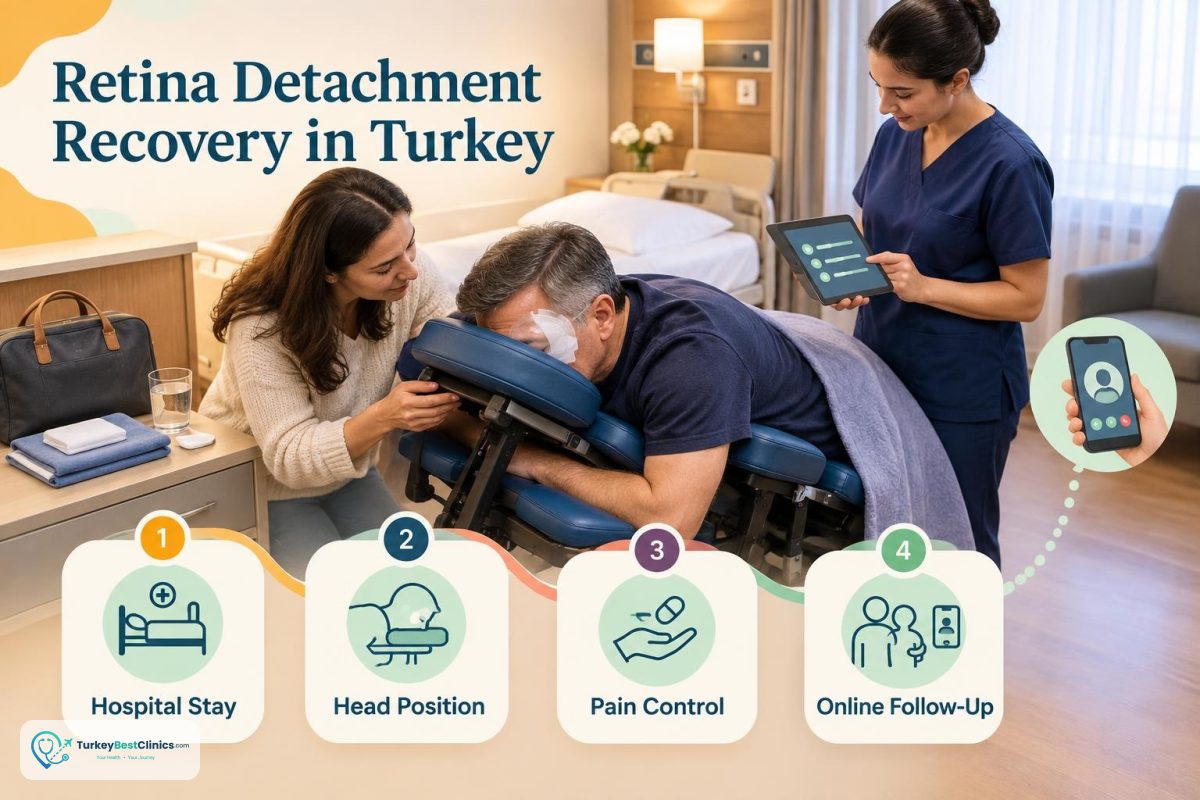
The position in which you should sit or sleep after surgery depends on the location of the retinal tear and whether gas or silicone oil has been placed inside the eye. Maintaining the head position specified by your surgeon may help the retina remain in contact with the treated area. For this reason, positioning instructions should be considered an individualized protocol that must not be changed without medical advice.
Pain is often described as stinging, burning, pressure or a foreign-body sensation around the eye. You should contact the surgical team without delay if you experience severe or worsening pain, a sudden decrease in vision, intense redness, vomiting or flashes of light.
Safety and Hospital Standards for Retinal Surgery in Turkey
When choosing a provider for medical tourism in Turkey, it is important to verify that the facility holds a Health Tourism Authorization Certificate issued by the Ministry of Health and that retinal surgery will be performed in a fully equipped hospital. The operating room’s sterilization protocols, availability of an anesthesia team, postoperative observation area and emergency response capacity should be assessed together.
Turkish ophthalmologists performing retinal surgery plan different approaches, such as pars plana vitrectomy, scleral buckling and, when necessary, silicone oil removal or exchange, according to the eye’s anatomical findings. During your consultation, it is useful to ask clearly about the surgeon’s specialist training in retinal and vitreous surgery, their approach to similar retinal tears or detachments, and the postoperative positioning protocol.
Key points reviewed during the safety assessment
- Evaluation of the fundus examination, dilated retinal assessment and, when necessary, optical coherence tomography or ultrasound results.
- Anesthesia assessment for general anesthesia, review of your current health status and any necessary blood tests.
- Written information about the type of gas used during surgery or the silicone oil plan, as well as air travel and pressure changes.
- Prior explanation of first-night observation, vision checks, intraocular pressure assessment and discharge criteria.
Postoperative Support in a Retinal Detachment Package
A planned medical tourism package may include airport-to-hospital transfers, accommodation, interpreter support and coordination of the initial care process in a concise plan. Preoperative retinal images are reviewed, the assessments required for general anesthesia are completed, and the planned technique and approximate length of stay in Turkey are clarified.
Having your companion stay with you in the hospital, stay at a nearby hotel and assist with your needs during the first night can improve comfort, especially when head positioning is restricted. While you rest, your companion may choose low-key options that do not involve long walks or an intensive schedule, such as hotel wellness areas, quiet café breaks or relaxed walks in calm parks near the hospital.
The process from preoperative assessment to returning home
- Preliminary assessment: Existing eye reports, surgical history, medications and general health information are reviewed. The final surgical decision is made after an in-person examination.
- Hospital day: General anesthesia assessment, placement of an intravenous line and confirmation of the eye and surgical side are performed. The procedure time varies according to the extent of the detachment and the selected surgical technique.
- First night: In many cases, observation on the same day or for one night may be sufficient. However, your general health, nausea, intraocular pressure and the surgeon’s assessment may extend the hospital stay.
- Discharge: Written instructions are provided regarding head positioning, eye protection, bathing and physical activity limits, the follow-up date and an emergency contact number.
- Online follow-up: The timing of check-ups with your local ophthalmologist after returning home is shared with you. Changes in vision, pain and redness can be assessed during online consultations, with an in-person examination recommended when necessary.
Scleral Buckling and Vitrectomy Options
| Options being compared for you | Potential key advantage for you | Your recovery and hospital stay |
|---|---|---|
| Pars plana vitrectomy | The vitreous is removed and the retinal tear is accessed directly; the retina may be supported with gas or silicone oil. | Observation on the same day or for one night may be planned in many cases. If gas is used, head positioning and flight restrictions become important factors. |
| Scleral buckling | A silicone band placed around the outside of the eye may reduce mechanical traction around the retinal tear; depending on the anatomy, gas may not need to be placed inside the eye. | Observation is generally brief. Tenderness around the eye and the recovery period may differ from those associated with vitrectomy. |
These two approaches are not automatic alternatives to one another. The number and location of the tears, the extent of the retinal detachment, lens status, vitreous traction and previous eye surgeries determine the technique. Combined surgery may be necessary in some cases.
Comparing the Cost of Retinal Detachment Surgery in Turkey
The approximate total cost of retinal detachment surgery in Turkey varies according to the surgical technique, whether a single or combined procedure is required, the use of gas or silicone oil and hospital admission. The ranges below are for general market comparison only; a definitive quotation is prepared after examination and surgical planning.
| Country | Approximate surgical cost | Items generally included |
|---|---|---|
| Turkey | €3,500–€8,000 | Retinal surgery, anesthesia, short-term hospital observation and basic check-ups |
| United Kingdom | £7,000–£14,000 | Private hospital surgery and initial postoperative assessments |
| Germany | €8,000–€15,000 | Surgery at a private healthcare facility, anesthesia and follow-up care |
| United States | $12,000–$25,000 | Services varying according to the hospital, surgeon, anesthesia and insurance coverage |
Flights, hotel accommodation, interpreter services, companion expenses, later silicone oil removal, additional laser treatment and follow-up examinations in your home country may not be included in every quotation. When requesting a quote, ask for the policy on gas or silicone oil use, overnight admission, postoperative OCT or ultrasound requirements and any potential second procedure in writing.
Factors Affecting the Cost and Recovery of Retinal Surgery
- The surgeon’s expertise and experience: Training in retinal and vitreous surgery, the surgeon’s approach to similar detachment patterns and the ability to manage complications when necessary may affect pricing.
- Technology, technique and materials: A 23-, 25- or 27-gauge pars plana vitrectomy system, endolaser, cryotherapy, intraocular gas or silicone oil may change the scope of the procedure. The type of material to be used and whether it will need to be removed later should be explained in advance.
- Clinic location: Hospital operating costs, accommodation options and airport transfer distances may differ between Istanbul, Ankara, Izmir and other cities.
Maintaining comfort while sitting, sleeping and managing pain
Head positioning may be prescribed to help the gas contact the intended area of the retina. In some cases, you may be instructed to lie face down, on your side or at a specific head angle. Because this decision depends on the location of the tear, no general positioning rule should be applied. Sitting with your head bent forward for long periods, turning suddenly or lying on your back when not permitted by the surgeon may be inappropriate.
For pain relief and comfort, it is important to use the eye shield correctly, take rest breaks, avoid bright light and follow the care instructions provided. Managing pain is not limited to medication; preventing nausea, standing up safely, having support from a companion and access to the call system throughout the night are also part of the plan. Your individualized pain-control plan should be discussed with the anesthesia and ophthalmology teams before discharge.
Air travel and certain pressure changes can pose serious risks while there is gas inside the eye. Do not plan a flight until your surgeon has confirmed that the gas has completely disappeared. Even if silicone oil has been used, clarify the decision to fly with the surgical team and your local ophthalmologist.
Safe Next Steps After Retinal Detachment Surgery
When comparing treatment plans in Turkey, consider not only the surgical fee but also the general anesthesia infrastructure, first-night observation, training on head positioning and the communication plan after returning home. The following questions may help you make a more informed decision during your retinal surgery consultation:
- Will gas or silicone oil be placed inside my eye, and how will this choice affect my head position, flight date and the possibility of a second procedure?
- For the location and extent of my retinal detachment, are you considering pars plana vitrectomy, scleral buckling or a combined approach?
- How many hours or nights of observation will be needed after general anesthesia, and how will online follow-up be coordinated with local eye examinations after I return home?
This information is provided for general educational purposes and does not replace an examination. If you develop vision loss, a curtain or shadow in your vision, new flashes of light, severe pain, marked redness or repeated vomiting, seek urgent ophthalmic assessment without waiting for your travel plans.