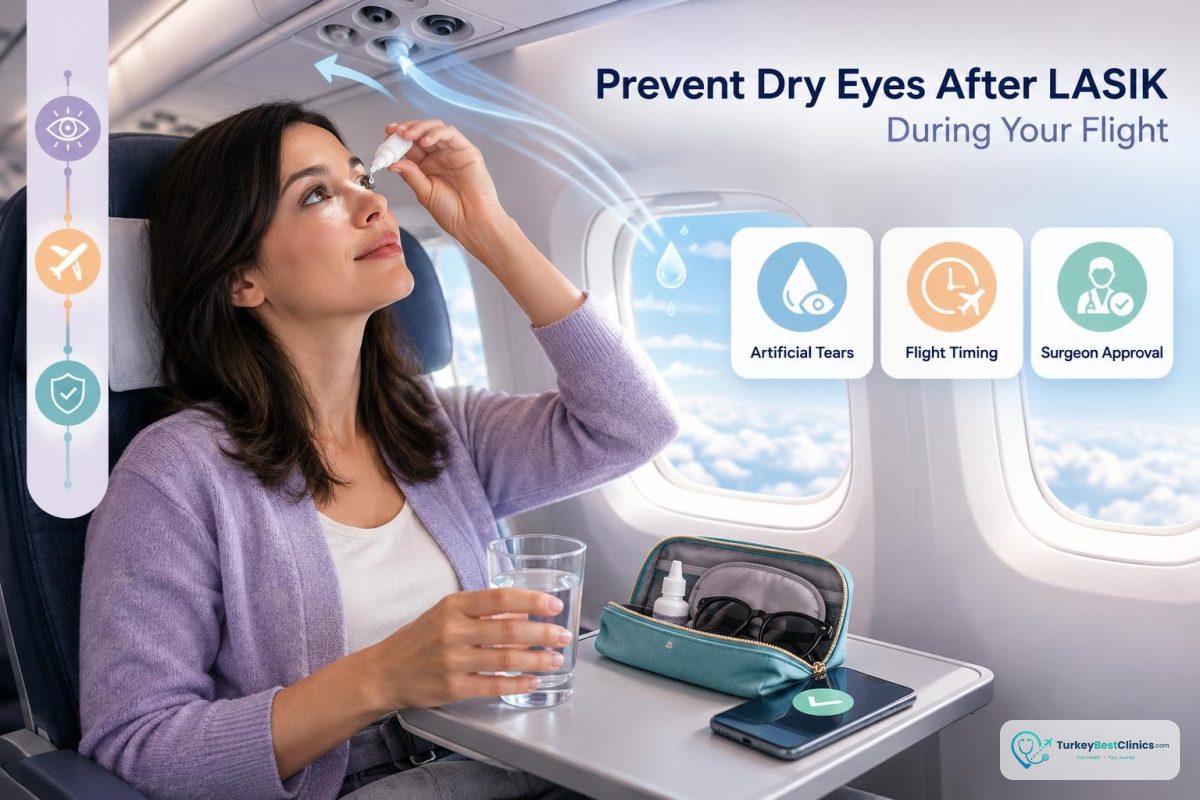
Maintaining Eye Comfort During Flights After Laser Eye Surgery
After laser eye procedures such as LASIK, PRK, or TransPRK, the ocular surface may remain sensitive for some time. Low cabin humidity, air-conditioning airflow, prolonged screen use, and reduced blinking may increase dryness, stinging, burning, or temporary blurred vision.
Before travel, the aim is to keep the ocular surface hydrated without placing unnecessary strain on the eyes and to prepare artificial tears so they can be used easily during the flight. The type of product, frequency of use, and travel date must be approved by the ophthalmologist who performed your surgery.
Essential preparation before the flight
- Carry preservative-free, single-use artificial tear vials, or the product recommended by your doctor, in your hand luggage.
- Do not place artificial tears in your checked luggage; products you may need during security screening and the flight should be readily accessible.
- Schedule your postoperative follow-up before the flight and obtain written or clearly documented medical approval confirming that your ocular surface is suitable for air travel.
- Unless specifically recommended by your doctor, do not use products intended to reduce eye redness instead of artificial tears.
Safety Standards in Turkey After LASIK and PRK
When planning laser eye surgery in Turkey, it is important to choose a healthcare facility that holds a Health Tourism Authorization Certificate approved by the Turkish Ministry of Health and has the licenses required for eye surgery. Operating room sterilization records, laser maintenance documents, corneal mapping, and the postoperative follow-up protocol are essential components of travel safety.
Turkish ophthalmologists assess the femtosecond laser and excimer laser stages in LASIK, while for PRK or TransPRK they evaluate controlled healing of the corneal surface and follow-up of the bandage contact lens. When choosing a clinic, consider more than the laser brand. Review the technique used by the surgeon, the suitability assessment based on corneal topography and tomography, and the clinic’s postoperative flight-monitoring protocol.
Assessment of the corneal surface and suitability for flying
Before a flight, visual acuity, the tear film, the corneal surface, epithelial healing, intraocular pressure, and any stinging or dryness symptoms are assessed. Because surface healing may take longer after PRK or TransPRK than after LASIK, the same flight schedule is not considered suitable for both procedures.
If you experience significant eye pain, marked light sensitivity, increasing redness, discharge, or progressively worsening vision, postpone your travel plans and contact your surgical team directly. These symptoms should not simply be attributed to cabin dryness.
Your Laser Eye Surgery and Companion Support Package
Planning may include airport-to-hotel VIP transfers, a hotel near the hospital, a medical interpreter, and essential support during the initial care period. The scope should be clarified in writing in advance according to the selected clinic and travel plan. After LASIK, most plans require a brief observation and follow-up period, whereas for PRK or TransPRK, the length of stay in Turkey may be extended depending on epithelial healing and bandage contact lens checks; your surgeon will determine the exact schedule.
Having your companion stay with you at the hospital, choosing a hotel within a short distance of the clinic, and making use of quiet park walks or hotel wellness areas during recovery may make postoperative transportation and stress management easier. However, activities involving chlorine, steam, dust, or intense sunlight should be postponed until your ophthalmologist confirms that they are permitted.
Artificial tear plan before the flight
- Product selection: Preservative-free, single-dose products are often preferred in many treatment plans to help protect the ocular surface, particularly when frequent use is needed during the day. The appropriate product viscosity should be determined after examination.
- First application: Application shortly before boarding, before a feeling of dryness begins, may be considered. Timing and dosage should follow the prescription or discharge instructions.
- During the flight: Choose a seat where air-conditioning airflow is not directed toward your eyes, blink as often as possible, and avoid prolonged uninterrupted screen use. Use artificial tears according to the preventive schedule recommended by your doctor, not only when symptoms become severe.
- Hygiene: Do not allow the vial tip to touch your eyelashes or eye, do not store and reuse an opened single-dose product, and do not share the product with anyone else.
Comparison of surgical approaches for LASIK and PRK
| Methods Compared for You | Most Important Potential Advantage for You | Your Recovery and Hospital Stay |
|---|---|---|
| LASIK | A more limited healing process on the corneal surface and, in many cases, the possibility of returning to daily activities sooner | Usually brief observation and early follow-up; the flight date is not set until visual stability and dryness findings have been approved |
| PRK or TransPRK | Surface treatment without creating a corneal flap; suitability is assessed according to corneal thickness and topography | Epithelial healing may take longer; bandage contact lens monitoring and a surface assessment before flying are required |
Laser Eye Surgery Costs and Comparison with Turkey
The price of laser eye surgery in Turkey varies according to the choice of LASIK, femto-LASIK, PRK, or TransPRK, whether both eyes are treated in the same session, the preoperative examinations, and the scope of postoperative follow-up. The figures below are general planning ranges for 2026 and do not replace a personal quotation or definitive price.
| Country | Approximate cost of laser eye surgery for both eyes | What the price generally covers |
|---|---|---|
| Turkey | €1,200–€2,800 | Preoperative corneal measurements, the procedure, early follow-up, and travel support depending on the selected package |
| United Kingdom | £2,500–£5,000 | Technique, city, surgeon’s experience, and follow-up appointments |
| Germany | €2,000–€4,500 | Technical method, clinic facilities, and postoperative eye examinations |
| United States | $3,000–$6,000 | Procedure type, surgeon, technology, and scope of follow-up services |
Flights, accommodation, companion services, additional artificial tear treatments, or unexpected follow-up needs may not be included in every package. When requesting a quotation, ask for the total cost for both eyes, the laser technique to be used, preoperative examinations, number of follow-up visits, and flight-suitability assessment as separate line items.
Factors That Change the Cost and Process When Preparing to Fly
The cost and timing of travel after laser eye surgery depend on more than the surgical fee. The following factors may affect both your choice of clinic and the length of your stay in Turkey:
- The surgeon’s expertise and experience: The surgeon’s experience with LASIK, PRK, or TransPRK and ability to perform an individualized suitability assessment using corneal topography, tomography, and tear film evaluation are important.
- The technique and technology used: Technologies such as femtosecond laser, excimer laser, wavefront-guided, or topography-guided treatment may be selected according to corneal measurements and visual goals. Not every technology is suitable for every eye.
- Clinic location: In cities with strong international flight connections, such as Istanbul, airport transfers may be easier. The city center, hospital-to-hotel distance, and access to the clinic for early follow-up can affect the overall plan.
- Flight duration and date: On long-haul flights, exposure to cabin dryness lasts longer. The flight should be scheduled to leave enough time for the first follow-up and any additional assessment that may be required.
Next Steps and Frequently Asked Questions Before Flying
How many days after surgery can I fly?
There is no single safe number of days. Your surgeon will determine this based on the difference in healing between LASIK and PRK or TransPRK, ocular surface findings, visual stability, and flight duration. Schedule a flight-suitability assessment before purchasing your ticket.
How often should I use artificial tears on the plane?
The frequency depends on the degree of dryness, the formulation of the product, and your postoperative instructions. Whether a preservative-free product or more frequent use is needed should be clarified during an examination; do not increase the dosage on your own.
Will I need glasses or sunglasses?
UV-protective sunglasses may help reduce sensitivity to bright light and wind. Avoiding eye rubbing, staying away from direct air-conditioning airflow, and using the protective equipment recommended by your doctor are more important during the flight.
How will follow-up continue after I leave Turkey?
Follow-up findings and your artificial tear plan may be reviewed through a secure online follow-up consultation. When necessary, a surgical report, corneal measurements, and discharge instructions should be prepared for presentation to an ophthalmologist in your home country.