What are the systems used in retinal and cataract surgery for?
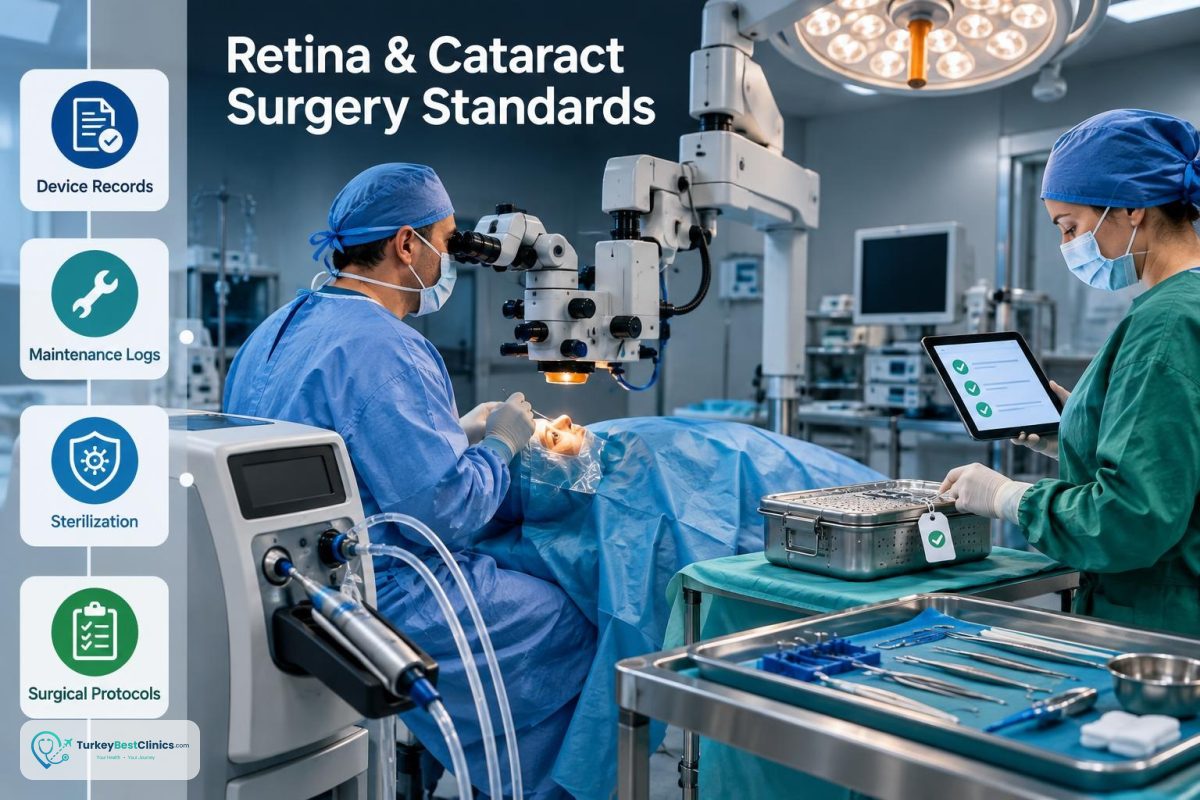
In retinal surgery, the operating microscope provides a magnified and illuminated view of the very small anatomical structures in the back of the eye. In cataract surgery, the phacoemulsification system helps break up the clouded natural lens using controlled ultrasonic energy, remove it through a small incision and replace it with an intraocular lens.
Compliance with global standards cannot be determined by looking at the brand name alone. The device’s compliance with medical device regulations, installation and calibration records, sterile surgical infrastructure, traceability of single-use components and the surgeon’s experience with the specific system should all be assessed together.
For conditions such as retinal detachment, vitreous hemorrhage, macular hole, epiretinal membrane or cataract, the appropriate method is determined through an eye examination, optical coherence tomography, ocular ultrasonography and, when necessary, biometry results. It is not possible to make a definitive diagnosis or surgical plan online.
How are phaco and vitreoretinal microscope safety verified in Turkey?
Certification and technical traceability
The healthcare provider you apply to within the scope of medical tourism in Turkey should hold a Health Tourism Authorization Certificate issued by the Ministry of Health of the Republic of Türkiye. This certificate alone does not guarantee the clinical performance of a specific device; however, it is an important starting point regarding the management of international applications, compliance of healthcare delivery with regulations and the institution’s authorized status.
Before surgery, requesting the following information from the clinic in writing is a rational verification step:
- The manufacturer and model of the operating microscope, the device’s inventory number and the date of its latest maintenance.
- The manufacturer and model of the phaco system, and the traceability of single-use components such as handpieces and cassettes.
- Records of periodic maintenance, calibration and fault interventions performed in accordance with the manufacturer’s maintenance protocol.
- Confirmation that the surgery will be performed in a fully equipped hospital operating room using sterilization and infection-control procedures.
- The technical specifications of the intraocular lens to be implanted, how it will be selected based on biometry and whether the product label will be recorded in the surgical file.
Surgical team and hospital infrastructure
Turkish ophthalmologists use 23G, 25G or 27G microincision vitrectomy systems in retinal surgery, and perform steps such as phacoemulsification, capsulorhexis and intraocular lens implantation in cataract surgery. When evaluating a surgeon’s experience, it is more meaningful to ask not only about the total number of surgeries performed but also about the nature of retinal or cataract cases similar to yours and their approach to managing complications.
The hospital where the surgery takes place should have anesthesia assessment, emergency intervention facilities, a sterilization unit, biomedical technical support and a postoperative observation area. CE marking or conformity documents associated with the applicable European Union Medical Devices Regulation should be assessed together with the manufacturer’s quality system and maintenance chain; the existence of documentation does not guarantee every surgical outcome.
What processes are included in a retinal and cataract surgery package?
The planned package may include airport-to-hospital transfers, accommodation, medical interpreter support when needed and basic guidance regarding the initial care period. The scope should be clearly specified in the written quotation according to whether surgery is planned for one or both eyes, the extent of the retinal procedure and the selected length of accommodation.
During the initial assessment, visual acuity, intraocular pressure, slit-lamp examination, retinal imaging, OCT, biometry and, when necessary, ultrasound may be performed. Cataract surgery is usually planned as a same-day procedure or with a short observation period, whereas vitreoretinal surgery may require approximately one to three nights of hospital monitoring depending on the clinical findings; details such as the use of a gas tamponade or silicone oil may change the duration.
The conditions under which your companion can stay in the same hospital should be clarified in advance. Choosing a hotel close to the hospital makes it easier to attend postoperative check-ups; while you rest, your companion may spend time taking quiet walks in nearby parks or participating in low-intensity wellness activities, but travel and physical activity restrictions after retinal surgery are determined according to the physician’s instructions.
After you return to your country, the Online Follow-up process may include sharing the surgical report, device and lens details, general care instructions not related to prescription medicines and follow-up images with your ophthalmologist. If a gas tamponade has been used, do not plan travel without obtaining written medical approval, particularly regarding flights, changes in altitude and procedures requiring anesthesia.
What is the cost range for retinal and cataract surgery in Turkey?
The figures below are approximate general market ranges for one eye in private hospital settings. Phaco cataract surgery and retinal vitrectomy do not have the same cost structure; silicone oil, gas tamponade, additional retinal procedures, intraocular lens selection and the length of hospital stay may change the total quotation.
| Country | Phaco cataract surgery | Retinal vitrectomy |
|---|---|---|
| Turkey | Approximately €1,800–€4,000 | Approximately €4,000–€8,500 |
| United Kingdom | Approximately £3,500–£7,000 | Approximately £7,000–£14,000 |
| Germany | Approximately €3,000–€6,000 | Approximately €6,000–€12,000 |
| United States | Approximately $4,500–$9,000 | Approximately $10,000–$25,000 |
When comparing quotations, check not only the total price but also whether examinations such as biometry and OCT, the intraocular lens, anesthesia assessment, initial postoperative check-ups, transfers and, when necessary, a revision or emergency communication plan are included. The final price is confirmed after an individual assessment due to exchange-rate differences, tax practices, additional retinal procedures and the selected lens type.
Retinal and phaco criteria that determine the price and surgical process
- The surgeon’s expertise and experience: Experience with phacoemulsification in cataract surgery is important, while in retinal surgery, competence in specific procedures such as microincision vitrectomy, membrane peeling, endolaser or tamponade management is significant. Complex retinal findings may require a longer operation and more intensive follow-up.
- Method and materials used: The scope of standard phacoemulsification and a femtosecond laser-assisted approach for cataract surgery may differ. In retinal surgery, options such as 23G, 25G or 27G vitrectomy systems, wide-angle visualization, endolaser, gas tamponade or silicone oil affect the cost and recovery plan. The appropriate option is determined by the anatomy of the eye and the type of condition.
- Location of the clinic and hospital: In internationally accessible centers such as Istanbul, Ankara, Izmir and Antalya, hospital capacity, technical support, operating-room use and accommodation logistics may be reflected in the surgical fee. The choice of city should be considered not only in terms of price but also access to postoperative check-ups and rapid clinical assessment when needed.
| Methods compared for you | Potential key advantage for you | Your recovery and hospital stay |
|---|---|---|
| Cataract surgery through a small incision using phacoemulsification | Smaller incision, potential for faster visual rehabilitation and a shorter procedure | Usually discharged the same day; visual recovery may take days or weeks depending on individual eye findings |
| 23G–27G microincision vitrectomy | Access to procedures inside the retina through small entry points and, in some cases, less surgical trauma | Approximately one to three nights of observation may be required; the use of gas or silicone oil may change follow-up and positioning restrictions |
Three retinal and phaco questions to ask before applying
The following are specific topics you can use directly when comparing a clinic’s quotation and surgical plan:
- What are the brand and model of the operating microscope and phaco system, the date of their latest calibration and the biomedical maintenance record?
- For my retinal or cataract findings, why is 23G–27G vitrectomy, standard phacoemulsification or a femtosecond laser-assisted approach being recommended?
- If a gas tamponade, silicone oil or intraocular lens is used, how will flight travel, follow-up imaging and the Online Follow-up plan after I return to my country be managed?
Before deciding on surgery, ask the surgical team to assess your current eye examination, imaging results and general health information. If symptoms such as severe pain, sudden vision loss, marked redness, flashes of light or a new curtain-like shadow in your field of vision occur, seek an urgent eye assessment where you are rather than relying on remote messages.