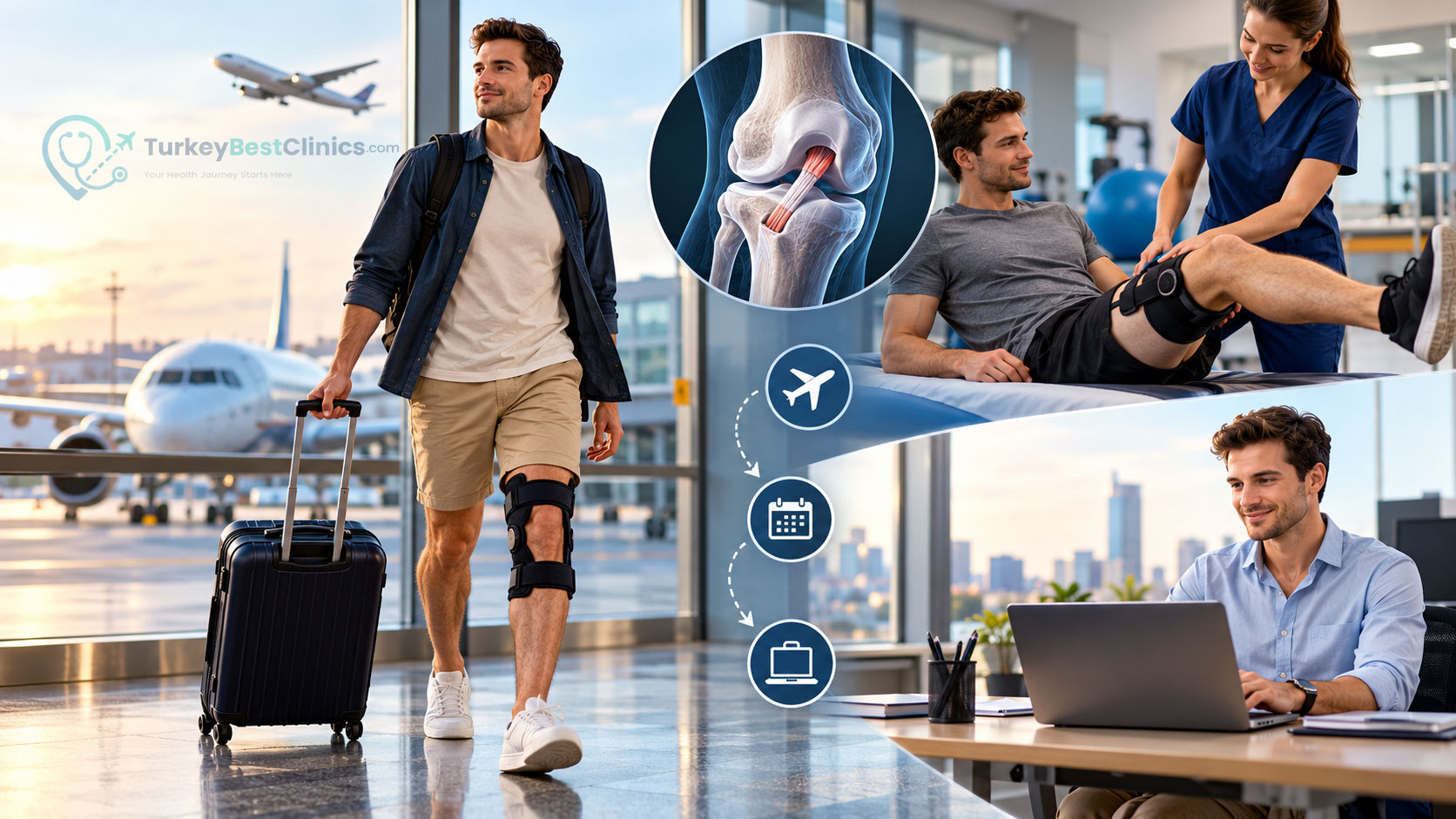
Returning to Daily Life After Anterior Cruciate Ligament Reconstruction
Anterior cruciate ligament reconstruction is a planned procedure in which the ligament tissue in the knee is recreated using a graft, usually through an arthroscopic technique. After surgery, a knee brace, crutches, controlled weight-bearing and regular physical therapy are key parts of returning to work, travelling and daily life.
You should not limit your stay in Turkey to the day of surgery alone. Planning a long flight before the first wound check, assessment of your knee's range of motion, swelling monitoring and safe walking training have been completed may not be appropriate.
Safety and Hospital Standards in Arthroscopic Knee Surgery
Beforehand, confirm whether the institution where your surgery will take place holds the Health Tourism Authorization Certificate issued by the Turkish Ministry of Health and whether the procedure is planned at a fully equipped hospital. Sterilization traceability, operating-room infection-control protocols, anesthesia assessment and postoperative orthopedic follow-up are as important as the surgical technique itself for your travel safety.
Orthopedic teams in Turkey gain experience in specific stages of ACL surgery, including arthroscopic tunnel creation, the use of hamstring or bone-patellar tendon-bone autografts, meniscus repair and early postoperative mobilization protocols. However, the appropriate graft should be selected by your surgeon according to your age, sporting activity level, associated meniscal damage, ligament laxity and previous surgical history.
Before surgery, an orthopedic examination, review of knee MRI scans, blood tests, an anesthesia assessment and, if considered necessary, an electrocardiogram may be performed. You should clearly inform the medical team about blood-thinning medication, any history of clotting, previous surgeries, allergies and your plans for a long flight.
Travel and Companion Arrangements in an ACL Treatment Package
The arrangements may include VIP airport-hospital-hotel transfers, accommodation, a medical interpreter and the essential support needed during the initial care period. For preoperative assessment, the arthroscopic procedure, the first dressing change and an orthopedic check-up, you may need to stay in Turkey for approximately 7–14 days in many treatment plans; this period may be extended if meniscus repair or additional surgery is performed.
Whether your companion can stay in the same hospital room will be clarified according to the institution's policy. Choosing a hotel close to the hospital can provide accommodation that avoids stairs and long walks. While you rest, your companion may plan low-exertion activities suited to your postoperative knee restrictions, such as using the hotel's wellness area, taking a quiet walk in a park or having a short café break.
During the first few days, you will be expected to keep your knee elevated, apply ice only as recommended by the medical team and use your crutches correctly. Before your flight, the wound, knee swelling, signs of circulation in the leg, pain control and your ability to use the toilet and walk safely should be reassessed.
ACL Surgery Costs in Turkey and Your Travel Budget
Under 2026 market conditions, the average surgical cost of arthroscopic ACL reconstruction in Turkey may be approximately €3,500–€7,500. This amount may not consistently include the surgeon's fee, graft type, hospital standard, anesthesia, whether meniscus treatment is required, accommodation and the scope of physical therapy.
| Country | Approximate surgical cost | Important pricing note |
|---|---|---|
| Turkey | €3,500–€7,500 | Graft, hospital, surgeon, follow-up appointments and package inclusions may vary |
| United Kingdom | £9,000–£15,000 | Private hospital and surgeon fees affect the total |
| Germany | €8,000–€14,000 | Hospital stay, implant and rehabilitation may be priced separately |
| United States | $18,000–$35,000 | Insurance coverage, facility and anesthesia fees can create significant differences |
Consider these figures as an initial budget comparison rather than a definitive quote. Ask for the written quotation to specify separately the graft material, possibility of meniscus repair, hospital stay, postoperative follow-up, physical therapy, non-medication care supplies, transfers and any possible additional-night charges.
Surgical Factors That Determine Flight and Return-to-Work Timing
Your flight and work schedule are determined not only by the number of days that have passed, but also by your knee function and the length of the flight. Especially on long-haul flights during which you will remain inactive for extended periods, an individual assessment is needed because of the risk of leg swelling and deep vein thrombosis. Compression products or an exercise plan should be used only on your surgeon's recommendation.
- Surgeon's expertise and reconstruction plan: Primary or revision surgery, single- or multi-ligament injuries, meniscus repair and graft selection can change the recovery timeline. If meniscus repair is added, weight-bearing and knee-flexion restrictions may last longer.
- Technology and surgical technique: Arthroscopic reconstruction requires imaging and measurement infrastructure for precise placement of the femoral and tibial tunnels. Hamstring autografts and bone-patellar tendon-bone autografts may differ in terms of pain, kneeling comfort, graft healing and rehabilitation protocols.
- Clinic location: Airport transfers may be easier in a city such as Istanbul, which has direct international flight connections. However, the hotel-to-hospital distance, traffic time, stair access and access to a physical therapy center should also be assessed.
Flight Timing
For short-haul flights, many surgical teams consider an interval of approximately 7–14 days after the wound check and basic walking assessment have been completed. For long-haul flights, many plans may require waiting 2–4 weeks or longer. The exact timing is determined by considering knee swelling, restricted movement, your clotting risk and any additional procedures performed during surgery.
If flight clearance is granted, you can plan in advance for an aisle seat, companion support, wheelchair assistance at the airport and regular, safe leg movements. Request assistance instead of lifting cabin baggage, standing for long periods or walking across the terminal during a connection.
Return-to-Work Timeline
Desk-based or home-based work may be resumed gradually after approximately 2–4 weeks, depending on pain and your tolerance for sitting. Jobs requiring prolonged standing, climbing stairs or moving around in the field may require 6–12 weeks or longer. For duties involving heavy lifting, squatting, pivoting or physical intervention, the return-to-work decision is based on rehabilitation findings.
The timing of driving should also be planned separately. Braking after right-knee surgery, clutch use after left-knee surgery and the difference between automatic and manual vehicles are important considerations. Do not drive until your reflexes, knee movement and pain control are adequate.
Practical Comparison of Two Graft Approaches
| Methods Compared for You | Most Important Potential Advantage for You | Your Recovery and Hospital Stay |
|---|---|---|
| Hamstring tendon autograft | There may be less direct sensitivity at the front of the knee and kneeling area; it may be preferred depending on suitable anatomy and activity level | Usually approximately one night of hospital monitoring; the surgeon determines the early movement and weight-bearing protocol |
| Bone-patellar tendon-bone autograft | May be considered for some high-demand sports profiles because of bone-to-bone healing | Usually a short stay; anterior knee pain and kneeling comfort are monitored specifically within the rehabilitation plan |
This table provides a general comparison and does not mean that a method will be selected automatically for you. Hospital stays are one night in most straightforward arthroscopic cases, although same-day discharge or a two-night stay may be appropriate in some situations. Your condition after anesthesia, additional meniscus procedures and mobilization safety can change the duration.
Online Follow-Up and Next Steps After Returning Home
Your discharge documents should include the operative report, graft details, suture and dressing instructions, weight-bearing limit, knee-brace instructions, physical therapy goals and emergency contact information. Arrange your orthopedic and physiotherapy appointments before returning home. Establish a secure communication channel with the clinical team for video follow-up, wound-photo assessment and range-of-motion checks.
If you develop increasing calf pain or one-sided swelling, shortness of breath, chest pain, fever, marked redness or discharge from the wound, discoloration of the foot or new numbness, seek emergency medical care in your country without waiting for an online response.
- Which checkpoints should be completed before a long-haul flight? Wound review, safe crutch use, the progression of knee swelling, leg circulation and the surgeon's written flight clearance should be assessed.
- How does return to work and flying change if meniscus repair is added? Because weight-bearing and knee-flexion limits may last longer, a schedule prepared for ligament reconstruction alone should be revised.
- Which documents should I request from Turkey before starting physical therapy in my country? The operative report, graft type, rehabilitation protocol, imaging records and online follow-up plan should be provided to your local orthopedic team.