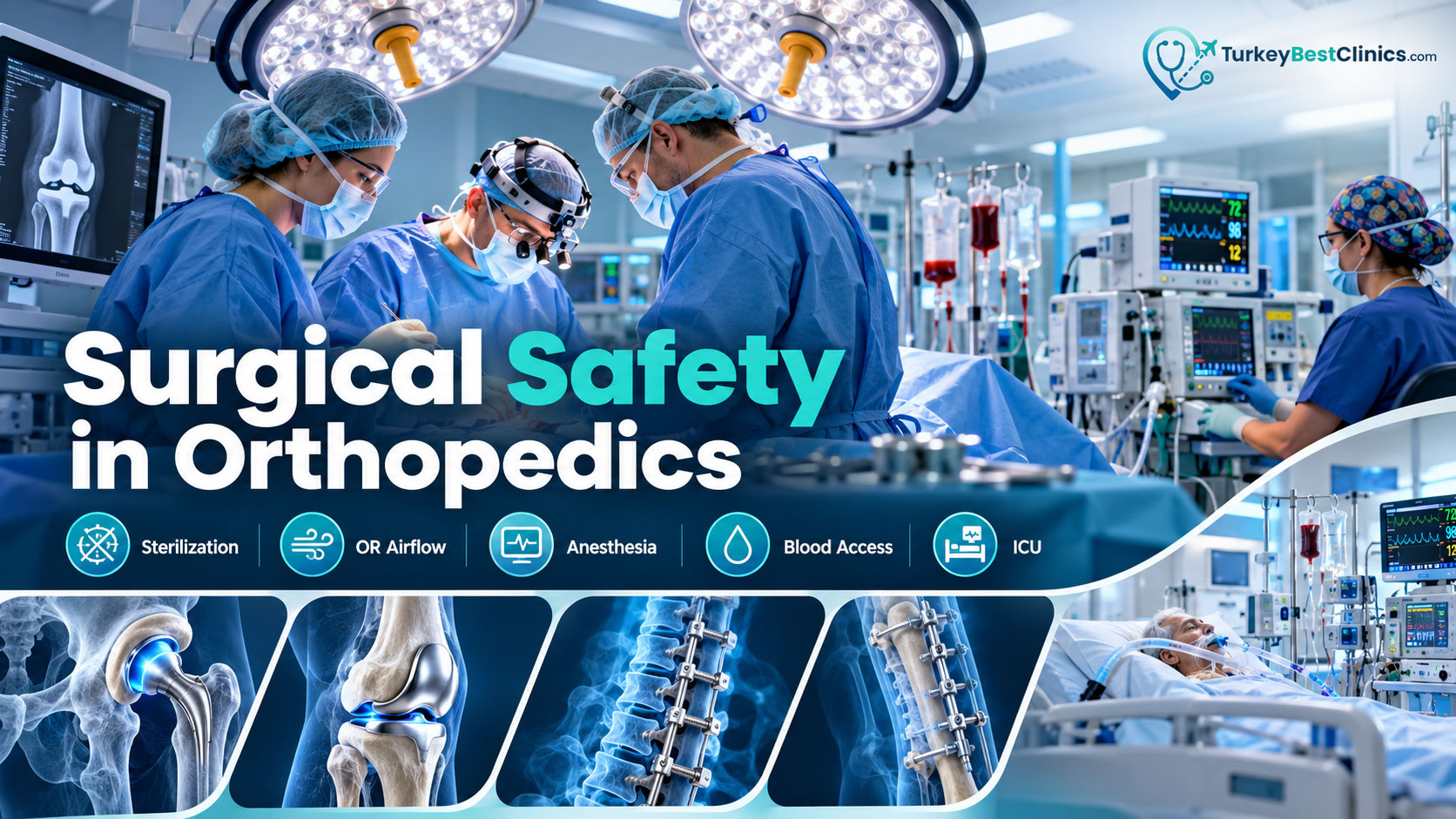
Why is sterilization critical in prosthetic and implant surgery?
Materials placed inside the body, such as joint prostheses, dental implants, orthopedic screws, plates, or spinal implants, can cause serious complications if they come into contact with environmental microorganisms during surgery. Therefore, the goal is not only to keep the operating room clean, but to control the entire chain, from the period before the surgical instrument is used through packaging, the sterilization cycle, and opening it during surgery.
The risk of infection cannot be reduced to mathematically zero in any clinic. However, when a central sterilization unit, validated equipment cycles, proper management of single-use materials, appropriate operating room airflow, and postoperative follow-up are implemented together, the level of safety increases.
When you travel from abroad, focusing not only on the clinic’s general presentation but also on sterilization records and the infection prevention plan specific to the type of prosthetic or implant surgery you will undergo allows for a more informed assessment.
Safety and authorization standards for prosthetic surgery in Turkey
When receiving healthcare services in Turkey as part of medical tourism, check whether the facility holds the Medical Tourism Authorization Certificate issued by the Turkish Ministry of Health. This certificate does not mean that sterilization is flawless on its own; however, it is one of the key documents showing that the facility is authorized to provide medical tourism services and meet certain administrative standards.
It is important for the surgery to be planned in a fully equipped hospital with central sterilization services. Turkish orthopedic, general surgery, plastic surgery, and oral, dental, and maxillofacial surgery teams may work with different implant groups, including joint prostheses, trauma implants, dental implants, and spinal fixation systems. When assessing practical experience, ask not only about the physician’s total years in practice, but also the annual number of procedures involving the implant type to be used, experience with revision surgery, and the rate of repeat surgeries due to infection.
The sterilization chain that should be audited
- Pre-cleaning: Used instruments should be transferred to the cleaning area before dried blood and tissue residues are allowed to remain on them.
- Cleaning and disinfection: For complex hinged instruments, manual cleaning or a washer-disinfector should be used in accordance with the manufacturer’s instructions.
- Packaging: The sterile barrier system should be selected according to the size of the instrument and the sterilization method.
- Sterilization: A steam autoclave, low-temperature hydrogen peroxide plasma, or another method approved by the manufacturer may be used.
- Monitoring: Physical, chemical, and, when necessary, biological indicator results should be recorded.
- Traceability: The barcode or record number on the package should be matched with the equipment, cycle, date, and usage information.
What support services may be included in an implant surgery package?
The planned package may include VIP transfers between the airport or hotel and the hospital, accommodation arrangements, medical interpreter support, and logistical guidance required during the initial care period. The scope should be clearly stated in the written quotation, and clinical care should be distinguished from hotel and transportation services.
Before prosthetic or implant surgery, blood tests, imaging, an anesthesia assessment, evaluation of existing sources of infection, and a review of the manufacturer’s instructions for the implant may be planned. Depending on the type of surgery, you may need to stay in Turkey for approximately 3 to 10 days; the exact duration is determined based on wound checks, drain status, mobility, and the surgical team’s approval for air travel.
Find out in advance whether your companion can stay with you in the hospital; some wards have separate rules regarding companion seating or accommodation. Staying at a hotel close to the hospital may be helpful, while your companion may be able to use wellness areas that do not require strenuous physical activity, quiet park walks, or short rest options near the hospital while you recover.
Preoperative and postoperative process protocol
- A remote medical assessment is carried out and existing medical reports are reviewed.
- After arrival in Turkey, a physical examination, necessary blood tests, and imaging are completed.
- The anesthesia team evaluates your chronic conditions, previous surgeries, allergies, and the products or medications you use.
- During surgery, the operating room team checks the sterile implant’s packaging and expiration date.
- Before discharge, wound care, movement restrictions, and warning signs are explained.
- After you return to your country, wound images, mobility status, and follow-up reports can be shared with the surgical team through online follow-up.
Costs of sterilization and implant surgery in Turkey
The total cost of prosthetic or implant surgery in Turkey is determined more by the scope of the operation, implant type, hospital stay, and complexity of the surgery than by the sterilization protocol. The ranges below are general market estimates and do not replace a written medical assessment and quotation for an individual procedure.
| Country | Approximate total surgical cost | What is usually included in the price |
|---|---|---|
| Turkey | €6,000–€18,000 | Hospital, surgical team, standard implant, and a specified length of stay |
| United Kingdom | £12,000–£30,000 | Varies according to the private hospital, surgeon, implant, and rehabilitation coverage |
| Germany | €15,000–€30,000 | Private hospital, implant, and inpatient stay; scope varies by facility |
| United States | $25,000–$60,000 | Surgery, hospital, and implant; insurance coverage is assessed separately |
When requesting a quotation, focus less on whether sterilization is charged separately and more on whether these processes are included in the hospital infrastructure and can be verified. The implant brand, need for revision, bone grafting, possible intensive care, extended hospitalization, and additional imaging can change the total cost.
Key factors affecting price and infection risk
- Physician expertise and experience: Directly relevant experience should be assessed, such as primary and revision joint replacement surgery, cases involving insufficient bone in dental implant treatment, or complex fixation in spinal implant surgery. The ability to diagnose infection early and develop a revision plan is also important if an infection develops.
- Implant and sterilization method: Cemented or uncemented joint prostheses, titanium dental implants, PEEK spinal cages, single-use surgical sets, and sterilization options based on the manufacturer’s instructions can affect the cost. Steam sterilization is not suitable for every material; components requiring a low-temperature method should be processed according to the manufacturer’s instructions.
- Location of the clinic and hospital: Hospital, accommodation, transportation, and postoperative check-up costs may vary in Istanbul, Ankara, Izmir, and other cities. Regardless of location, priority should be given to whether the central sterilization unit is physically located within the hospital, whether records are accessible, and whether emergency care is available.
Comparison of two surgical approaches in prosthetic surgery
The comparison below presents a general overview of surgical access options, not sterilization methods. The appropriate approach is determined by the surgeon according to the implant’s location, anatomical structure, previous surgeries, and overall health.
| Methods being compared for you | Key potential advantage for you | Your recovery and hospital stay |
|---|---|---|
| Open surgery | Broader visualization and detailed access for complex implant placement | Generally longer wound healing; approximately 2–5 days or longer depending on the scope of the procedure |
| Limited-incision or minimally invasive approach | A smaller incision and earlier mobility in suitable anatomy | Shorter hospitalization in selected procedures; usually 1–3 days, although this may vary depending on the implant type |
Your checklist and next steps for obtaining information
Send the following questions to the clinic in writing. Ask for the answers to be supported by documents, records, or a procedure plan rather than general statements.
- How does your central sterilization unit validate steam sterilization cycles in accordance with ISO 17665, EN 285, or the relevant manufacturer’s instructions?
- Can you add the barcode of the prosthesis or implant to be used to my surgical file and share the sterilization and implant traceability records with my follow-up team in my country?
- If wound redness, discharge, fever, or increasing pain occurs during online follow-up after surgery, what emergency assessment plan will be implemented in Turkey and after I return to my country?
In addition to these questions, review the facility’s Medical Tourism Authorization Certificate, whether the hospital has an infection control committee, the training of sterilization staff, and compliance with the implant manufacturer’s instructions for use. Even when the sterilization protocol is robust, surgical wound care, hand hygiene, management of operating time, safe discharge, and follow-up after you return to your country should be assessed together.