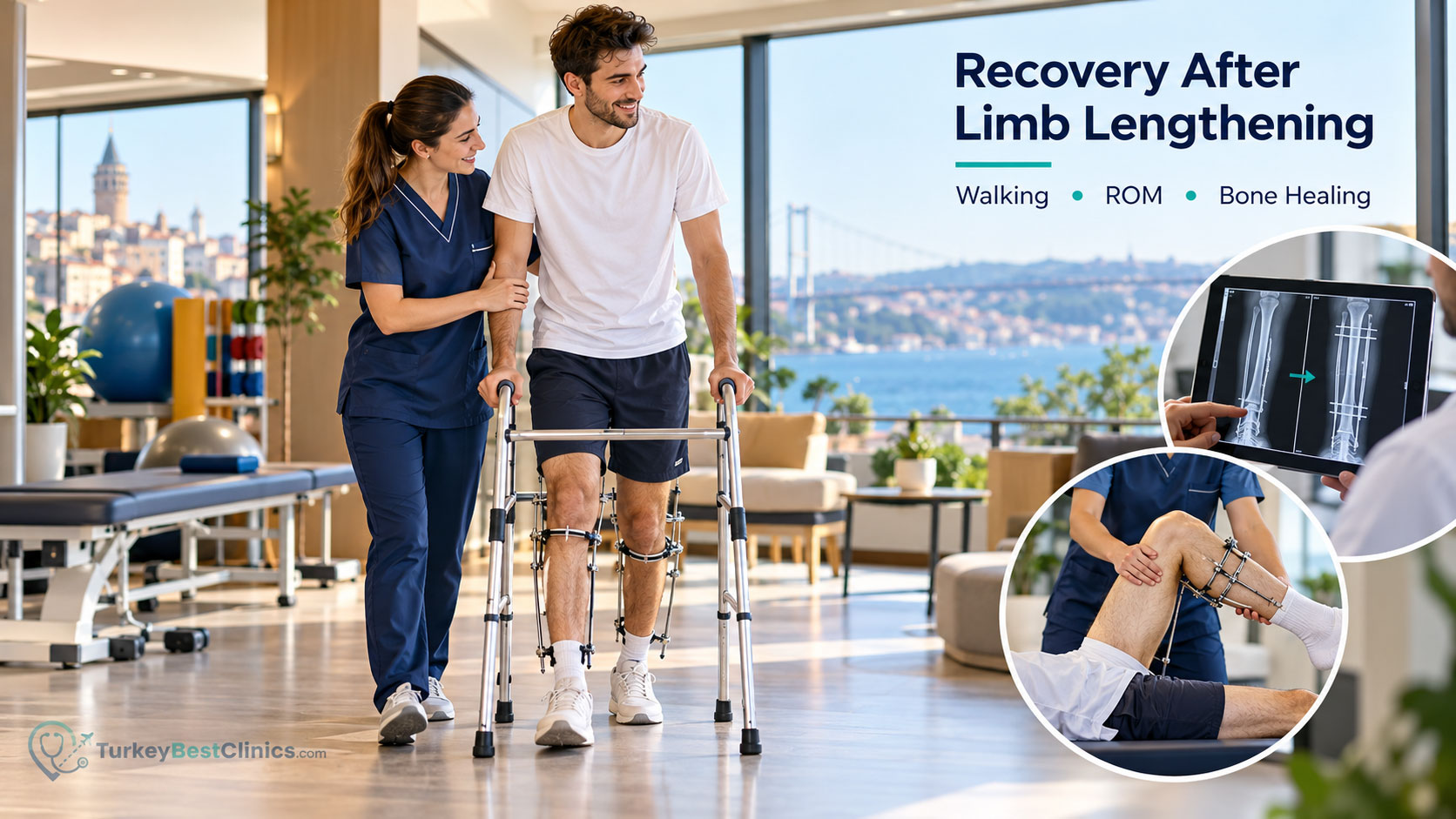
Walking and Bone-Healing Follow-Up After Limb Lengthening
After limb-lengthening surgery, the goal is not simply to reach a specific height. Controlled bone lengthening, maintaining knee and hip movement, supporting muscle strength, and safely regaining daily mobility are assessed together. At the accommodation center in Turkey, walking exercises with a physiotherapist are coordinated with the surgeon’s weight-bearing instructions and regular radiological checks.
During the early period, walking distance, the mobility aid being used, leg swelling, joint range of motion, and pain levels are reviewed before each session. Rather than increasing exercise intensity on your own, following the written program provided by the surgical team and physiotherapist is important for protecting the lengthened bone segment and surrounding soft tissues.
The follow-up plan varies according to the surgical technique used, the location of the lengthened bone, the amount of lengthening, the rate of bone healing, and your overall health. The information here provides a general framework; the orthopaedic team assessing you will make the final decisions regarding weight bearing and exercise.
Safety Standards in Turkey for Femur or Tibia Lengthening
An accommodation center after surgery is not a substitute for a hospital. Surgical follow-ups, required imaging, and assessments for possible complications must be coordinated with a fully equipped hospital licensed by the Ministry of Health.
The healthcare tourism provider in Turkey should hold a Ministry of Health-approved Health Tourism Authorization Certificate. The orthopaedics and traumatology team’s verifiable experience with motorized intramedullary nails, external fixators, bone-lengthening protocols, and preventing joint contractures during the lengthening phase should also be reviewed. The center should provide written information about its sterilization procedures, postoperative infection-monitoring protocol, emergency hospital access time, and 24-hour communication plan.
Items monitored during safe follow-up
- The surgical report, the type of implant or fixator used, and the planned amount of lengthening.
- Initial tests, including a complete blood count, kidney function tests, electrolytes, and any other tests considered necessary by the surgeon.
- X-ray findings, including the bone cut, new bone formation, implant position, and alignment.
- Regular measurements of knee, hip, or ankle range of motion and muscle strength.
- Daily observation of the wound, circulation, changes in sensation, fever, and unusual swelling.
If you develop worsening calf pain, sudden shortness of breath, chest pain, marked coldness or discoloration of the toes, high fever, discharge from the wound, or new numbness, seek urgent medical assessment rather than waiting at the accommodation center.
Accommodation and Companion Planning After Limb Lengthening
The package may include airport-hospital-accommodation center transfers, a hotel near the hospital or medical accommodation, interpreter support when needed, and arrangements for initial care. The length of your stay in Turkey is determined according to the surgeon’s first follow-up, X-ray results, your ability to transfer safely, and whether physiotherapy can begin. Many plans allow for at least several weeks of close follow-up after discharge.
During the first few days, it is important for the accommodation center to be within a short and reliable distance of the hospital, have entrances suitable for wheelchair or walker use, and provide an accessible physiotherapy area. Plan for your companion to stay at the same facility, ensure that the room’s bathroom and resting arrangements are safe, and provide access to non-strenuous options nearby, such as quiet park walks or wellness areas, while you rest between sessions.
To reduce the burden on your companion, transfer times, appointment days, laundry and meal support, and emergency contact numbers should be clarified in advance. Long periods of standing, crowded sightseeing schedules, and activities involving stairs should be excluded from your and your companion’s plans during the early rehabilitation period.
Step-by-step follow-up protocol
- Discharge assessment: The wound condition, pain control, circulation, sensation, walking aid being used, and safety of the transfer to your home or accommodation center are documented.
- Initial physiotherapy consultation: Knee, hip, and ankle movements are measured. Bed mobility, the use of crutches or a walker, and safe transfers are taught.
- Daily sessions: Within the weight-bearing limits authorized by the surgeon, joint exercises, isometric muscle activation, ankle exercises to support circulation, and short walks are performed.
- Radiological follow-up: X-rays are taken at the specified intervals. Weight bearing is not increased until the appearance of the lengthened bone segment and the implant position have been assessed.
- Remote follow-up: After returning to your country, online appointments may include reviewing a walking video, range of motion, wound appearance, and current imaging reports. These consultations do not replace an in-person examination or emergency assessment.
Cost of Care After Limb Lengthening in Turkey
The ranges below are approximate budget indicators for postoperative accommodation in Turkey, physiotherapy, transfers, and follow-up imaging, separate from the surgery itself. The final quotation is determined after considering the accommodation standard, number of sessions, X-ray frequency, companion arrangements, and any additional hospital visits.
| Country | Approximate range for postoperative accommodation and rehabilitation | Currency |
|---|---|---|
| Turkey | 5,000–15,000 | € |
| United Kingdom | £8,000–£22,000 | GBP |
| Germany | 9,000–25,000 | € |
| United States | $12,000–$35,000 | USD |
Exchange-rate fluctuations, city, season, and the scope of the clinic contract may affect prices. Ask for the quotation to list accommodation nights, physiotherapy session duration, imaging, hospital follow-ups, interpreter services, transfers, and any additional days separately.
Factors That Affect Cost and the Walking Process
- The surgeon’s expertise and experience: The team’s volume of experience with femur or tibia lengthening, motorized intramedullary nail follow-up, external-fixator care, and rehabilitation aimed at preventing joint stiffness should be assessed.
- Technique and materials used: An internal motorized intramedullary nail and an external-fixator technique do not require the same care. With nail-based plans, external-frame care may be reduced; with an external fixator, pin-site care and infection monitoring may become more prominent. Weight-bearing limits are determined according to the implant design and imaging findings related to bone healing.
- Clinic location: Access to orthopaedic hospitals, X-ray departments, and physiotherapy facilities may differ in major centers such as Istanbul, Ankara, or Izmir. The accommodation center’s distance from the hospital, accessible transportation, and emergency transfer time directly affect the overall plan.
Each of these factors can affect not only the cost but also how long you may need to stay in Turkey. If bone healing is slower than expected or knee movement decreases, the return date may need to be reassessed.
How two surgical approaches affect the follow-up plan
| Methods Compared for You | Most Important Potential Advantage for You | Your Recovery and Hospital Stay |
|---|---|---|
| Motorized intramedullary nail | Because there is no external frame, dressing, sitting, and some aspects of daily care may be easier in certain cases. | Hospitalization can often be planned for several days; weight bearing and walking progression depend on X-rays and the surgeon’s instructions. |
| External fixator | The lengthening mechanism can be adjusted from outside and may be preferred in certain complex bone conditions. | The frame and pin care may affect daily life; the hospital and accommodation stays may be extended depending on pin checks, skin condition, and bone healing. |
This table does not indicate that one method is superior for everyone. The choice is made based on bone quality, the target lengthening, anatomical suitability, previous surgeries, soft-tissue condition, and the surgeon’s safety assessment.
Next Steps Before Leaving Turkey
Before returning to your country, obtain a written discharge summary, your latest X-ray images, implant information, permitted weight-bearing level, physiotherapy program, and online follow-up schedule. Your flight plan should take into account safe seating, support during transfers, airport assistance services, and the surgeon’s travel clearance.
- When choosing between a motorized nail and an external fixator, how are differences in bone healing and daily care assessed?
- If knee or ankle range of motion decreases at the accommodation center, how will the physiotherapy program and X-ray follow-up be adjusted?
- After returning home, which imaging, walking videos, and physical measurements should be shared during remote follow-up?