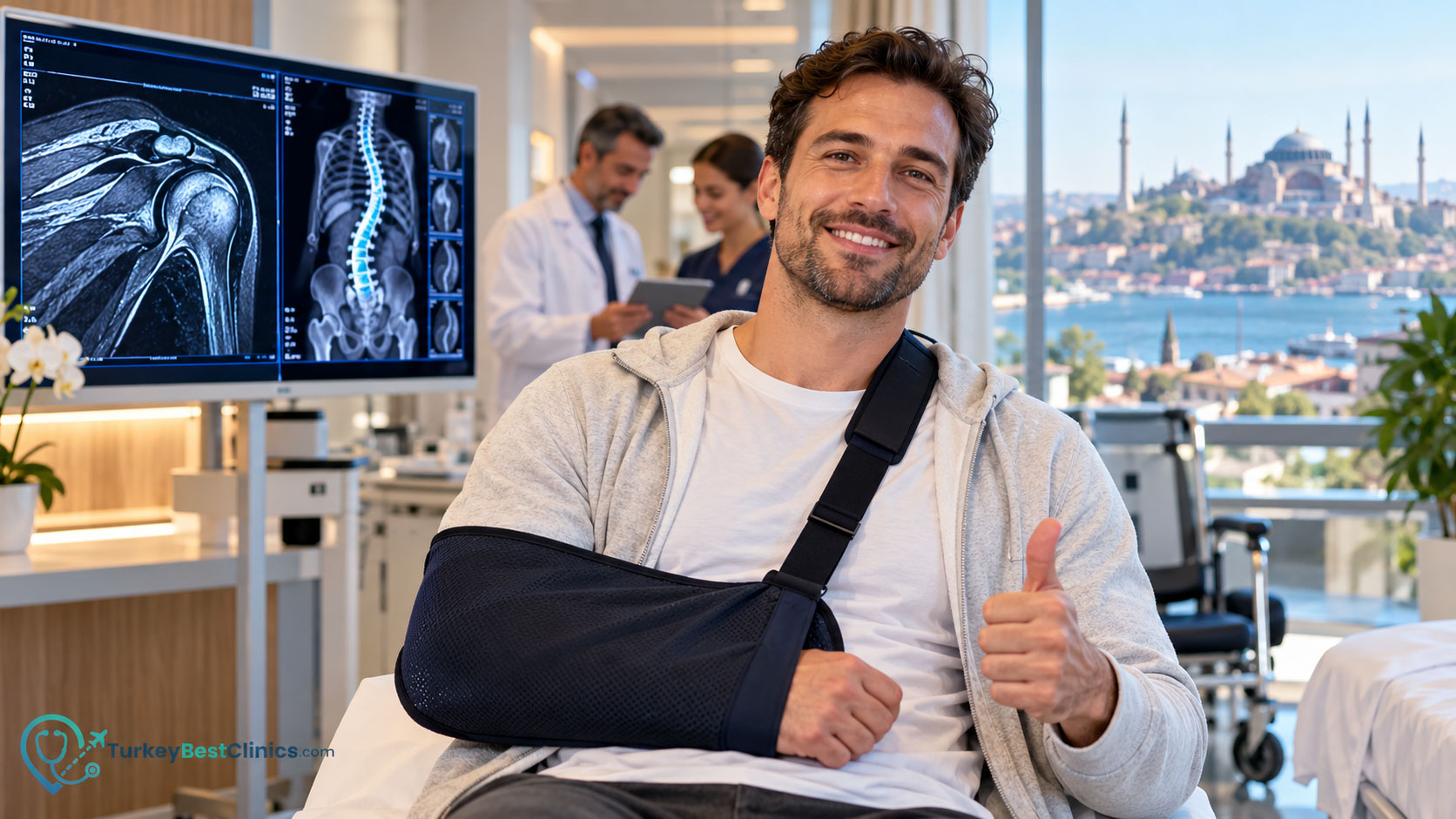
The Turkey Option for Shoulder Arthroscopy and Scoliosis Surgery
Shoulder arthroscopy is a surgical approach that uses small incisions and a camera to assess tendon, labral, cartilage or impingement problems around the shoulder joint. Scoliosis surgery is a more extensive procedure planned according to the degree of the spine’s three-dimensional curvature, the risk of progression and its impact on daily life.
Even when these two procedures are offered within the same clinical package, their medical scope is entirely different. Shoulder arthroscopy often involves a short hospital stay and early, controlled movement, while scoliosis surgery is determined by spinal implants, neuromonitoring, blood management and a longer rehabilitation plan.
When considering treatment in Turkey, you should assess more than the surgical fee. Consider the surgeon’s experience with the relevant procedure, whether the operation will be performed in a fully equipped hospital, which implants are included in the package, interpreter support, the follow-up plan and online follow-up after you return home.
Safety Standards for Shoulder and Spine Surgery
The healthcare institution providing services within the scope of medical tourism should hold a Medical Tourism Authorization Certificate issued by the Ministry of Health of the Republic of Türkiye. It is also important that the surgery is planned in a fully equipped hospital with intensive care and emergency response facilities.
For shoulder arthroscopy, the evaluation may include magnetic resonance imaging, X-rays and, when necessary, ultrasound results. When choosing between procedures such as rotator cuff repair, labral repair, subacromial decompression or treatments related to frozen shoulder, the range of joint motion and the extent of tendon damage are taken into account.
For scoliosis surgery, standing full-spine X-rays, computed tomography, magnetic resonance imaging and necessary blood tests may be used. The degree of curvature, spinal balance, neural structures and the pedicle screws, rod systems and neuromonitoring equipment to be used during surgery are fundamental parts of the surgical plan.
Turkish orthopaedic and spine surgeons work with various case groups, including rotator cuff and labral repairs in shoulder arthroscopy, as well as adolescent or adult deformities, fusion and instrumentation procedures in spine surgery. When evaluating this experience, ask about the exact planned procedure, the surgeon’s annual case profile and the techniques they use rather than relying on a general statement of expertise.
What May Be Included in Your Shoulder and Scoliosis Package
A medical package may include VIP airport-hospital-hotel transfers, accommodation at a hotel near the hospital, a medical interpreter and initial postoperative care or essential support services. The exact scope should be established after a written quotation and preliminary assessment; intensive care, additional implants, complications, extended stays and rehabilitation outside the package may be charged separately.
For shoulder arthroscopy in Turkey, a stay of approximately 4 to 8 days is generally planned, although a longer stay may be necessary depending on the scope of the procedure. For scoliosis surgery, most travel plans require approximately 14 to 21 days, including preoperative assessment, hospitalisation and the first wound check. The exact duration depends on the complexity of the spinal curvature and the speed of recovery.
Whether your companion can stay with you in the hospital can be arranged according to the rules of the selected ward and the room type. Staying at a hotel near the hospital can make daily transportation easier. After scoliosis surgery, long walks and an intensive schedule may not be suitable, so your companion can plan quiet walks in the nearby area, use of the hotel wellness facilities or other low-intensity activities suitable for rest. After shoulder arthroscopy, the period during which the arm must be protected should also be taken into account.
Before surgery, a complete blood count, coagulation tests, kidney and liver function tests, an electrocardiogram and an anaesthesia assessment may be requested. For scoliosis surgery, bone density, lung capacity or a neurological assessment may also be needed. For shoulder arthroscopy, the range of joint motion and imaging results may need to be reviewed again.
After you return home, wound checks, movement restrictions, the transition to physiotherapy and imaging results can be assessed through online follow-up appointments. Online follow-up does not replace an in-person examination; if you experience fever, worsening numbness, new weakness, wound discharge or uncontrolled pain, you should seek local emergency medical care.
Estimated Cost Comparison Between Turkey, the NHS and Europe
The ranges below represent approximate levels that may be seen in international private medical tourism quotations during 2025–2026. Exchange rates, implant brands, whether the surgery is performed in one or two stages, the need for intensive care and complications can significantly change the price.
Approximate private-sector prices for shoulder arthroscopy
- Turkey: Approximately €3,000–€5,500. Consultation, anaesthesia, operating theatre, a short hospital stay and basic transfer services may be included in some packages.
- United Kingdom: Approximately £8,000–£14,000. For people eligible for NHS treatment, the public service may not involve a direct charge; however, referral procedures and waiting times vary according to clinical priority.
- Germany: Approximately €6,000–€10,000. Private insurance coverage, hospital selection and the details of the surgical procedure affect the final cost.
- United States: Approximately $12,000–$25,000. Surgeon, hospital, anaesthesia, imaging and physiotherapy costs may be billed separately.
Approximate private-sector prices for scoliosis surgery
- Turkey: Approximately €18,000–€35,000. Complex deformities, multilevel fusion, the number of implants and intensive care requirements may widen the range.
- United Kingdom: Private-sector prices of approximately £35,000–£60,000 may be seen. Within the NHS, waiting times, clinical priority and surgical capacity may be more relevant than direct charges.
- Germany: Approximately €30,000–€55,000. Multilevel surgery, navigation, neuromonitoring and a prolonged hospital stay may increase the cost.
- United States: Approximately $80,000–$150,000 or more. Hospital and implant costs can rise quickly, particularly in adult deformity and revision surgery.
In Turkey, the cost advantage generally comes from lower overall hospital and service fees for shoulder arthroscopy, while for scoliosis surgery it may result from combining surgical, implant, hospitalisation and logistical costs within a single international treatment plan. Nevertheless, you should calculate not only the price difference but also the effect of waiting times on your quality of life, ability to work and the time you need to set aside for travel.
Factors Determining the Cost of Shoulder and Scoliosis Surgery
- Surgeon’s expertise and experience: Experience with arthroscopic rotator cuff or labral repair for shoulder procedures, and with adult deformity, fusion, revision and multilevel instrumentation for scoliosis, affects the quality and scope of the quotation.
- Technique and materials used: In shoulder surgery, suture anchors, biceps tenodesis, subacromial decompression or accompanying cartilage procedures can affect the cost. In scoliosis surgery, the pedicle screw system, rod type, bone graft, navigation and intraoperative neuromonitoring can change the price.
- Scope of surgery: A short, single-level procedure does not require the same resources as multilevel spinal fusion. Additional imaging, blood products, intensive care, rehabilitation and an extended hospital stay may be calculated separately.
- Clinic and hospital location: Centres with strong international transport links, such as Istanbul, may offer more options. The city, hospital category, distance from the hotel and organisation of the surgical team can affect the total package.
- Follow-up requirements: Physiotherapy sessions and a controlled movement plan for shoulder surgery, as well as wound checks, radiological follow-up and long-term rehabilitation for scoliosis, may add to the overall budget.
Next Steps Before Making a Decision
Before requesting a quotation, sharing your current imaging, previous surgical reports, the supports you use and information about any chronic conditions can make the assessment more accurate. The written quotation should clearly state the surgeon’s name, the exact description of the surgery, what implants are included, the number of hospital days, the procedure to follow in the event of complications and the online follow-up plan.
- Is rotator cuff repair or decompression alone planned for the shoulder arthroscopy? How will this distinction affect the duration of surgery, the recovery timeline and physiotherapy requirements?
- How many spinal levels will be included in the scoliosis fusion? Are the number of pedicle screws, neuromonitoring and intensive care requirements included in the total package?
- How will follow-up continue after leaving Turkey? When will the first X-ray or magnetic resonance check take place, and in which situations will online consultations need to be supplemented by an in-person assessment?
The answers to these questions can help you compare quotations based not only on the figures but also on the surgical scope and safety plan. Final suitability can be determined after reviewing your imaging, conducting a physical examination and anaesthesia assessment, and obtaining the opinion of the specialist team planning the surgery.